This article contains affiliate links. If you buy through them, we may earn a commission at no extra cost to you.
The doll behind one of the most successful horror franchises of the last decade is not the porcelain-faced figure shown in the movie posters. The real Annabelle is a soft, floppy Raggedy Ann doll, roughly three feet tall, of a kind mass-produced for children throughout the mid-twentieth century. It sits today inside a glass case at a former museum in Monroe, Connecticut, marked with a warning sign, and its actual documented history is both stranger and less cinematic than the films suggest.
Verified History: A Nursing Student’s Gift
According to accounts given by paranormal investigators Ed and Lorraine Warren, the doll’s story begins in the 1970s with a young nursing student named Donna, who received the Raggedy Ann doll as a gift and began noticing it in different positions around her apartment than where she’d left it. Donna and her roommate said the doll’s behavior escalated over time, and they eventually brought their concerns to the Warrens, who were already known regionally for investigating claimed hauntings. The Warrens took possession of the doll, concluded it was not haunted by a child’s spirit but instead being used as a conduit for something else entirely, and placed it in what they called a blessed case in their private Occult Museum, which operated out of their Monroe, Connecticut home for decades.
That museum, and the doll’s case, are real and were visited by press, researchers, and paranormal enthusiasts for years, including a well-documented sign reading “Warning: Positively Do Not Open.” What’s harder to verify independently is the specific chain of events Donna and her roommate described — those accounts exist primarily through the Warrens’ own retellings and later interviews, not through independent contemporaneous documentation, and skeptics and academics who have examined the Warrens’ broader body of case work have questioned how much of it holds up to outside scrutiny.
The Legend the Films Built
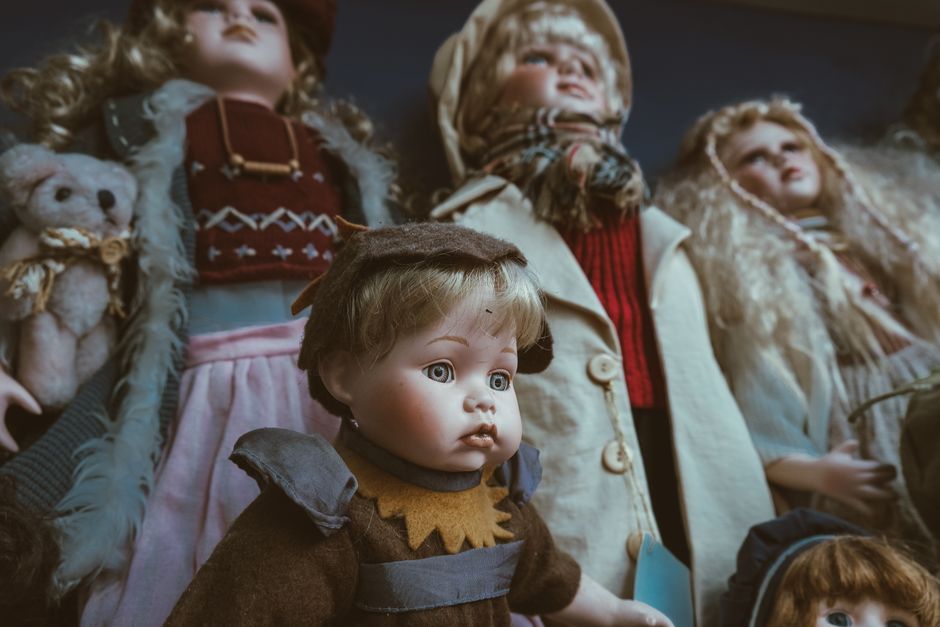
The 2014 film “Annabelle” and its sequels invented an entirely different doll — a porcelain-faced figure with an unsettling painted face, created for visual horror rather than historical accuracy. The films also introduced backstories, characters, and supernatural set pieces that have no connection to the real Raggedy Ann doll or Donna’s original account. This is a case where the distance between the marketing and the source material is unusually wide: audiences who’ve seen the films often assume the real object looks like the porcelain doll on the poster, when it is, by every photograph and video that exists of the actual case at the former Warren museum, a plain cloth doll.
The Warren Occult Museum itself closed to the public in recent years amid zoning disputes with local authorities, though the doll and other collected items reportedly remain in the family’s possession. Access has become far more restricted than in the museum’s operating decades, when tours were a regular, ticketed activity.
What’s Actually Verifiable
What can be confirmed: Ed and Lorraine Warren operated a private paranormal museum in Monroe, Connecticut for years; a Raggedy Ann doll displayed there was the specific object linked to their “Annabelle” case; and the doll’s appearance is a plain cloth toy, not the porcelain figure from the films. What cannot be independently verified: the specific paranormal claims about the doll’s movement or behavior, since those rest on the Warrens’ own case notes and later interviews rather than outside documentation, and academic critics have long argued that much of the Warrens’ investigative record should be read as their own narrative framing rather than verified fact.
FAQ
Is the real Annabelle doll actually porcelain?
No. The real doll linked to the Warren case is a cloth Raggedy Ann doll; the porcelain look is a creation of the 2014 film franchise.
Where is the real Annabelle doll kept?
It was displayed at Ed and Lorraine Warren’s Occult Museum in Monroe, Connecticut, reportedly still in the family’s possession after the museum’s closure.
Who were Ed and Lorraine Warren?
A Connecticut couple who worked as self-described paranormal investigators and demonologists from the 1950s through the 2000s, involved in numerous cases later adapted into films.
Is the Annabelle case scientifically verified?
No independent scientific verification of the doll’s claimed supernatural activity exists; the account comes from the Warrens’ own investigation and later retellings.
Can the public still visit the doll?
Public tours of the Warren Occult Museum have been suspended for years due to zoning issues; it is not a regularly open attraction.
Did the real case involve a family being attacked, as shown in some films?
Some film sequels dramatize additional attacks and characters that have no basis in the original Donna account as recorded by the Warrens.
Gear & Further Reading
The Warrens told their own version of this case, along with dozens of others, in The Demonologist, Gerald Brittle’s book built from interviews and case files. It’s worth reading as a primary account, with the understanding that it presents the Warrens’ own framing of events rather than an independently audited investigation.
Related reading: our piece on the Ouija board’s real 1890 origins covers a different, earlier strand of American paranormal commerce, and our International Ghost Stories & Haunted Places guide has more history-first coverage of cases like this one.
As an Amazon Associate, this site earns from qualifying purchases.

Comments