This article contains affiliate links. If you buy through them, we may earn a commission at no extra cost to you.
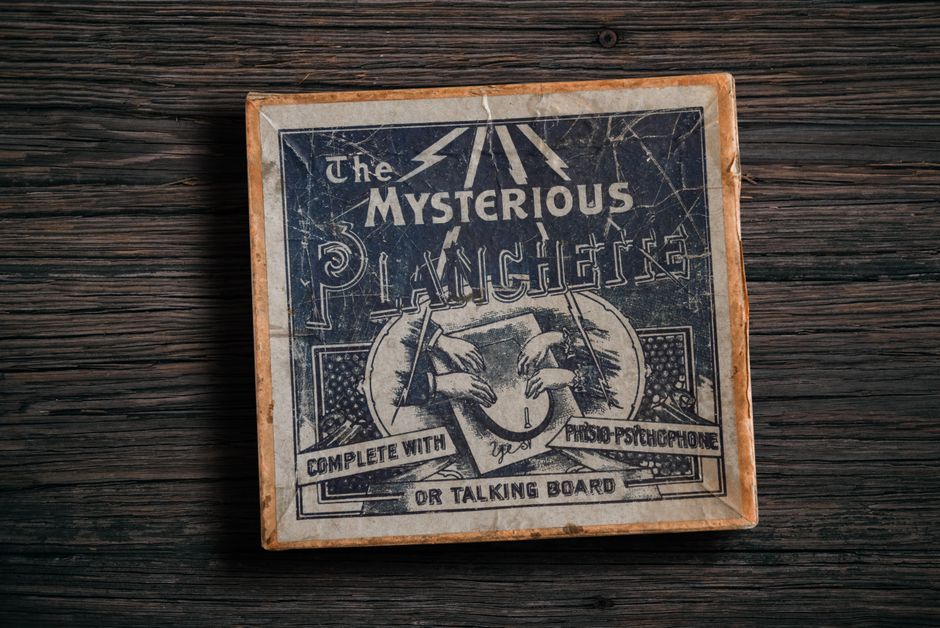
On May 28, 1890, a Baltimore attorney named Elijah Bond filed a United States patent application for a “toy or game,” describing a flat board marked with letters, numbers, and a small heart-shaped pointer meant to spell out messages. The patent was granted the following February as No. 446,054. The men behind it were not mystics claiming a divine gift — they were businessmen who had noticed that Americans were paying good money to talk to the dead, and decided to sell them a product that did it for them. If you want to try a board yourself, see our picks for the best Ouija boards and spirit communication kits.
Verified History: A Business Plan, Not a Séance
The Ouija board’s origin sits inside a much larger movement. After the Civil War, Spiritualism — the belief that the living could communicate with the dead through mediums — had become genuinely popular across the United States, driven partly by widespread grief over the war’s dead. Talking boards and other communication devices already existed in various homemade forms among Spiritualist circles before Bond ever filed his paperwork.
What Bond and his business partners, including Charles Kennard, did was formalize and commercialize the idea. They founded the Kennard Novelty Company specifically to manufacture and sell talking boards, and Bond’s patent gave the venture legal protection as a genuine product. According to the patent record, Bond filed the application in May 1890 and it was granted in February 1891, making the Ouija board — whatever else people believed about it — a real, dated, legally documented American invention.
The Legend That Grew Around a Patent Office Story
Popular retellings of the Ouija board’s history often lean on a colorful tale: that during the patent examination, Bond and his sister-in-law Helen Peters asked the board itself to spell out a word only the patent examiner would know, supposedly the examiner’s own name, and that the board answered correctly enough to unnerve him into approving the application on the spot. It’s a good story, and it circulates widely, but it rests entirely on family retellings passed down generations later rather than on any surviving patent office record, and should be read as folklore layered onto a real bureaucratic event rather than as documented fact.
What is well documented is the business that followed. The Kennard Novelty Company began manufacturing boards in Baltimore, and by the early 1890s had opened additional factories in New York and Chicago along with a London operation, moving roughly 2,000 boards a week at the peak of demand. A later company employee, William Fuld, eventually took over the Ouija trademark and business entirely, and it was Fuld’s name — not Bond’s — that became most associated with the board in the twentieth century after Parker Brothers acquired the rights in 1966.
What’s Actually Verifiable
The patent itself, the filing and grant dates, and Bond’s role as an attorney and initial patent holder are all matters of public record. What is not independently verifiable is the patent-office-séance anecdote, along with claims about exactly how the board’s name was chosen — some accounts say the board itself supposedly spelled out “Ouija” and claimed it meant “good luck,” while other researchers have traced that translation to be inaccurate. Bond died in 1921 and, according to local Baltimore reporting decades later, was buried in an unmarked grave until a marker resembling a talking board was added to his plot in the 1990s, well after his role in the invention had faded from public memory.
FAQ
Who actually invented the Ouija board?
Elijah Bond, a Baltimore attorney, filed the patent in 1890 alongside business partners in the Kennard Novelty Company; it was granted in 1891.
Was Bond a spiritual medium?
No. Available records describe him as a lawyer and businessman capitalizing on the existing Spiritualist movement, not a practicing medium himself.
Is the story about the board spelling the patent examiner’s name true?
It’s a widely repeated family anecdote, not something confirmed by any surviving patent office document.
Why is William Fuld’s name more associated with Ouija than Bond’s?
Fuld worked for the original manufacturing company and later took control of the Ouija trademark and business, building the brand recognition that lasted into the twentieth century.
When did Ouija become a household name?
Parker Brothers bought the rights in 1966, turning it into a mass-market board game sold well beyond Spiritualist circles.
Where can you see Bond’s real grave or patent record?
Bond is buried in Baltimore’s Green Mount Cemetery, and the original 1891 patent document remains publicly searchable through the US patent database.
Learn More
For readers who want the wider Spiritualist-era context this invention came out of, see Occult America, Mitch Horowitz’s history of how mysticism shaped American culture in this same period. Some historians point to that broader Spiritualist boom — not any single inventor — as the real reason a mass-market talking board found a ready audience in 1890s America.
Related reading: our Annabelle doll history covers a different but related strand of twentieth-century American paranormal folklore, and our International Ghost Stories & Haunted Places guide rounds up more history-first coverage like this.
As an Amazon Associate, this site earns from qualifying purchases.

Comments