This article contains affiliate links. If you buy through them, we may earn a commission at no extra cost to you.
Michigan's most haunted places run from the Gilded Age resorts of Mackinac Island to the old asylums of the Lower Peninsula and the copper ghost towns of the Upper Peninsula. Every entry below is tied to a real building or site. For each one we separate the documented history from the legend that grew around it and note whether you can visit.
Quick answer if you're short on time: The Grand Hotel and Mission Point Resort on Mackinac Island are both open to visitors and embrace their ghost stories; the Whitney in Detroit is a working restaurant in the mansion its builder is said to haunt; and the Village at Grand Traverse Commons (formerly Traverse City State Hospital) lets you walk the grounds of Michigan's best-known former asylum.
- 1. Mission Point Resort (Mackinac Island)
- 2. Masonic Temple (Detroit)
- 3. Traverse City State Hospital / Building 50 (Traverse City)
- 4. The Whitney Mansion (Detroit)
- 5. Eloise Psychiatric Hospital & Cemetery (Westland)
- 6. Henderson Castle (Kalamazoo)
- 7. The Landmark Inn (Marquette)
- 8. Felt Mansion (Holland)
- 9. The Grand Hotel (Mackinac Island)
- 10. Doherty Hotel (Clare)
- 11. Paulding Light (Watersmeet)
- 12. Seul Choix Point Lighthouse (Gulliver)
- 13. Holly Hotel (Holly)
- 14. Castle Rock (St. Ignace)
- 15. National House Inn (Marshall)
- 16. Fort Wayne (Detroit)
- 17. Frankenmuth Historical Museum & St. Lorenz Cemetery (Frankenmuth)
- 18. Hell, Michigan
- 19. Terrace Inn (Petoskey / Bay View)
- 20. Calumet Theatre (Calumet)
- 21. Eagle Opera House / Downtown Marshall (Marshall)
- 22. Windemere / Stockton House Museum (Flint)
- 23. Eloise Cemetery (Westland)
- 24. Hoosac Tunnel-style Mine Shafts of the Keweenaw Ghost Towns (Keweenaw Peninsula)
- 25. Whitefish Point / Great Lakes Shipwreck Museum (Paradise)
- Sources
1. Mission Point Resort (Mackinac Island)
Mission Point takes its name from the Protestant mission and boarding school for Native American children that the Rev. William Ferry established on this shore in the 1820s. In the 20th century the site served as a conference center for the Moral Re-Armament movement and, from 1966 to 1970, as the campus of Mackinac College, a short-lived liberal arts school. It later became Mission Point Resort, which still operates as a full-service hotel.
The resort's best-known legend involves a Mackinac College student named Harvey, said to have disappeared one winter after a failed romance and been found dead in the woods in spring. No record of such a student death has been confirmed, but staff say “Harvey” is a prankster who enters guest rooms, jumps on beds, and pokes visitors in the resort theater.
Can you visit: Yes. Mission Point Resort is a working hotel open to overnight guests and day visitors.
2. Masonic Temple (Detroit)
The cornerstone of Detroit's Masonic Temple was laid in 1922, and the building was dedicated in 1926. Designed by architect George D. Mason, it rises about 210 feet and holds more than 1,000 rooms, making it the largest Masonic building in the world. A persistent legend claims Mason went broke building it, lost his wife, and jumped from the roof. That story is false: Mason died of natural causes in 1948 at age 91.
Despite the debunked legend, staff say a figure has been seen climbing the stairwell toward the roof, and the roof door is sometimes found unlocked in the morning after being locked the night before. Visitors on the building's tours describe shadows in the lower corridors and whispering in empty rooms.
Can you visit: Yes. The Masonic Temple offers public history tours, including seasonal ghost tours, and hosts concerts and events.
3. Traverse City State Hospital / Building 50 (Traverse City)
The Northern Michigan Asylum was established by the state legislature in 1881 and admitted its first patients in 1885. It was built on the Kirkbride Plan, with long, well-lit wings meant to help patients recover through light, air, and work, and it later became Traverse City State Hospital. It closed in 1989 as states moved away from large institutions. Building 50, the original main structure, is one of the best-preserved Kirkbride buildings in the country.
Urban explorers who entered the empty wards in the 1990s told of screams and lights coming on in rooms without power. Locals also point to a gnarled willow on the grounds, nicknamed “the Hippie Tree,” which some claim draws restless spirits. The campus has since been redeveloped as The Village at Grand Traverse Commons, with shops, apartments, and restaurants.
Can you visit: Yes. The grounds and Building 50 are a public mixed-use district, open to walk through daily, and historical tours are offered.
4. The Whitney Mansion (Detroit)
Completed in 1894 for lumber baron David Whitney Jr., then one of Michigan's richest men, the 21,000-square-foot mansion on Woodward Avenue has 52 rooms, 218 windows, and a facade of pink jasper from South Dakota. Whitney died in 1900, and his wife Sara continued to live in the house until her death in 1917. The building later housed the Wayne County Medical Society and the Visiting Nurse Association before opening as a restaurant in 1986.
Staff and diners say Whitney's presence is strongest on the third floor, now home to a bar named the Ghost Bar in his honor. They describe glasses moving on shelves, an elevator running on its own, and cold air near the main staircase.
Can you visit: Yes. The Whitney operates as a restaurant and bar open to the public.
5. Eloise Psychiatric Hospital & Cemetery (Westland)
Eloise began as the Wayne County Poor House in 1832 and grew into a huge, largely self-sufficient complex with a psychiatric hospital, tuberculosis sanatorium, general hospital, farm, and power plant. At its peak during the Great Depression it housed about 10,000 people. The psychiatric division began closing in 1977, the last patients were transferred in 1982, and the general hospital closed in 1986. Thousands of patients whose bodies were never claimed were buried nearby under numbered markers.
Reports of paranormal activity are mixed. Some people who have spent years on the grounds say they have seen nothing unusual, while others describe voices and cold spots in the surviving Kay Beard Building, the former psychiatric admissions building. The site's history inspired the horror film Eloise (2016).
Can you visit: Partially. The Kay Beard Building hosts a seasonal haunted attraction and occasional history tours, but most of the original campus has been demolished.
6. Henderson Castle (Kalamazoo)
Businessman Frank Henderson, whose company made uniforms and regalia for fraternal orders, built this Queen Anne-style house on a hill in Kalamazoo, finishing it in 1895 at a reported cost of $72,000. He died in 1899, only a few years after moving in. The house is now a bed-and-breakfast and event venue.
Staff say Frank and his wife Mary are the castle's most often reported spirits. A visiting medium claimed to contact a six-year-old named Christine, said to have fallen from scaffolding and broken her neck, though no record of such a death has been found. Guests describe sudden temperature drops and piano keys moving on their own, and the castle hosts ghost-themed dinners built around these stories.
Can you visit: Yes. Henderson Castle operates as a bed-and-breakfast and restaurant.
7. The Landmark Inn (Marquette)
Opened in 1930 as the Northland Hotel, this six-story hotel overlooking Lake Superior hosted travelers during Marquette's iron-mining and shipping years, with guests reportedly including Amelia Earhart and the comedian Abbott and Costello. It closed in the early 1980s and sat empty for years before a full restoration reopened it as the Landmark Inn in 1997.
The hotel's best-known legend is “the Librarian,” a young woman said to have fallen in love with a sailor in the 1930s. When his ship was lost on Lake Superior, the story goes, she never recovered and died of a broken heart. She is said to look out from the sixth-floor Lilac Room, waiting for his return. A darker story tells of a murder victim whose presence unsettles guests in the basement. Neither tale has been tied to a named person in historical records.
Can you visit: Yes. The Landmark Inn is a working hotel, and the Lilac Room can be booked.
8. Felt Mansion (Holland)
Dorr E. Felt, inventor of the Comptometer adding machine, built this 25-room summer mansion near Lake Michigan for his wife, Agnes, completing it in 1928. Agnes died only weeks after the family moved in, and Dorr died about a year and a half later, in 1930. Over the following decades the estate served as a seminary, a convent, and later a Michigan State Police post before Laketown Township restored it to its 1920s appearance.
Locals say Dorr and Agnes still wander the halls. Paranormal groups have reported activity in the library, the ballroom, and Agnes's bedroom, where French doors are said to open and close on their own, and some visitors describe shadow figures that seem to be dancing in the third-floor ballroom.
Can you visit: Yes. Felt Mansion offers public tours and ghost-hunting events by reservation.
9. The Grand Hotel (Mackinac Island)
Opened in 1887, the Grand Hotel is known for its 660-foot front porch, often described as the longest in the world, and for Mackinac Island's ban on cars. A local legend holds that builders found human remains while digging the foundation and built over the old burial ground; this is repeated in ghost tours but not confirmed by archaeological records.
The hotel's best-known spirit is a “woman in black” said to walk a large white dog along the porch after dark, along with a girl named Rebecca seen in the fourth-floor halls. A story circulating among staff describes a worker being knocked down by a shadowy figure with glowing eyes near the theater stage.
Can you visit: Yes. The Grand Hotel is a seasonal resort open to overnight guests; non-guests pay an admission fee to tour the building and grounds.
10. Doherty Hotel (Clare)
Built in 1924 by former state senator A. J. Doherty, the hotel became a gathering place during the Prohibition and oil-boom years, with connections to Detroit's Purple Gang. Its most infamous moment came on May 14, 1938, when oil promoter Jack Livingston shot and killed attorney Isaiah Leebove, a former Purple Gang lawyer, in the hotel's Tap Room.
Guests and staff blame Leebove's ghost for doors that lock and unlock on their own and knocking in an empty lobby. Others report the ghost of a woman connected to the Doherty family, along with bursts of perfume in the halls.
Can you visit: Yes. The Doherty is a working hotel and restaurant in downtown Clare, still run by the Doherty family.
11. Paulding Light (Watersmeet)
First reported to the local sheriff by a group of teenagers in 1966, the Paulding Light is a glowing light that appears most nights in a valley off Robbins Pond Road near Watersmeet in the Upper Peninsula. The most popular legend claims it is the lantern of a railroad brakeman killed trying to stop a train from hitting stopped cars on tracks that once ran through the valley. Other versions blame a murdered mail carrier or a Native American spirit.
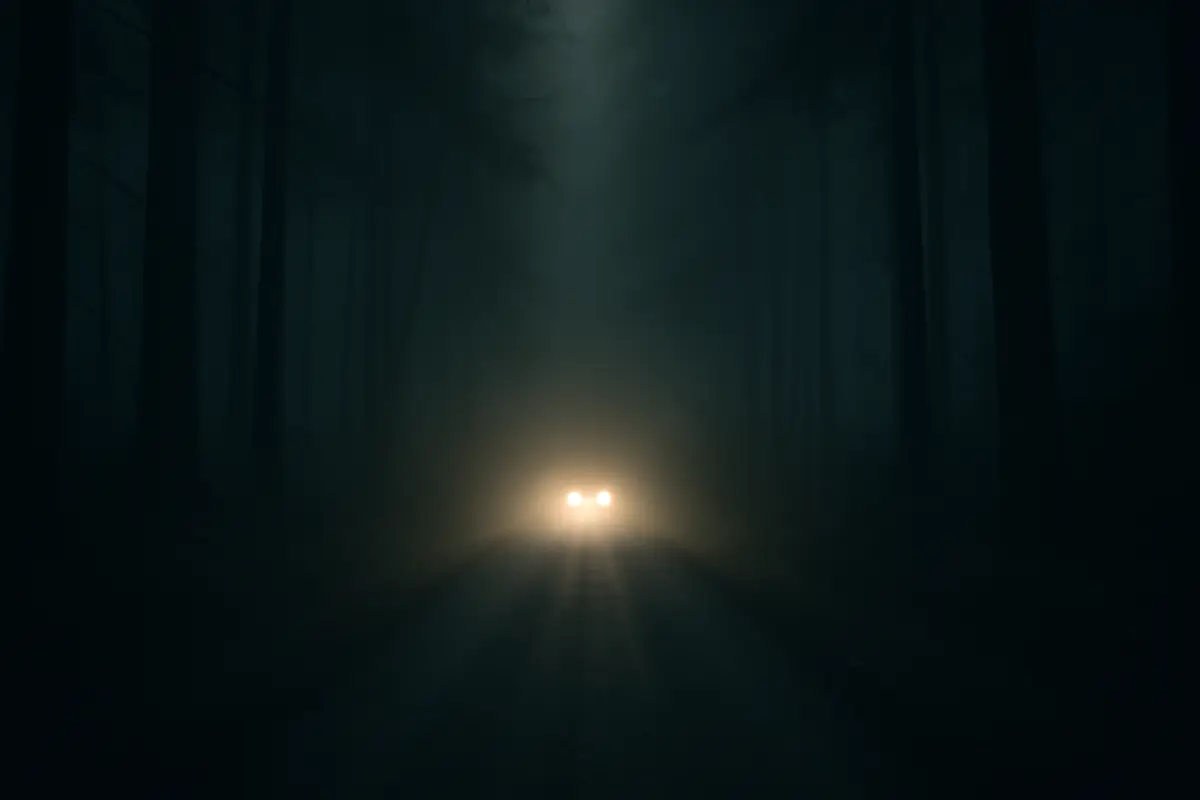
Investigations point elsewhere. In October 1990, researchers using telescopic and spectroscopic analysis identified the lights as headlights and taillights of vehicles on US 45 to the north. In 2010, Michigan Tech students watching through a telescope saw individual cars and even an “Adopt a Highway” sign, and they recreated the light's behavior by flashing headlights on the highway about 4.5 miles away. Many visitors still come to see it.
Can you visit: Yes. There is a public viewing area at the end of Robbins Pond Road, free to visit any night.
12. Seul Choix Point Lighthouse (Gulliver)
The lighthouse at Seul Choix (pronounced “sis-shwa”) Point on Lake Michigan began service in 1895, and its 78-foot tower is now part of a museum run by the Gulliver Historical Society. Its most famous keeper, Capt. Joseph Willie Townsend, served from 1902 until his death at the station in 1910. Local tradition says that because he died in winter, his embalmed body was kept in the house for several weeks until it could be buried.
Staff and visitors say Townsend never left. They describe footsteps on the tower stairs when no one is there and the smell of cigar smoke in the keeper's quarters. He is also said to rearrange table settings that are not laid out the way he liked.
Can you visit: Yes. The lighthouse and museum are open to the public seasonally, usually from Memorial Day through mid-October.
13. Holly Hotel (Holly)
Built in 1891 as the Hirst Hotel to serve railroad travelers, the Holly Hotel has survived serious fires, including one in 1913 and another in 1978, both said to have broken out on February 13. It is often described as one of the most investigated haunted buildings in Michigan.
The hotel's best-loved spirit is Nora Kane, described as a music-loving hostess whose perfume and humming are reported in the bar and hallways. A less friendly presence is attributed to former owner John Hirst, said to become more active whenever the building is renovated.
Can you visit: Yes, but check current status before you go. The Holly Hotel operates as a restaurant and event space, and portions of the building have been under repair in recent years.
14. Castle Rock (St. Ignace)
Known in Ojibwe tradition as a lookout for the region's people and associated in later lore with the Ottawa leader Pontiac, this limestone sea stack rises about 195 feet above the ground just north of St. Ignace. Clarence Eby opened it as a roadside attraction in 1929, and statues of Paul Bunyan and Babe the Blue Ox were added in 1959.
Castle Rock is not tied to a specific ghost story the way most entries here are. Its reputation comes from its long history as a Native American lookout and from informal lore told by local guides, who say some visitors feel watched when they climb the stairs at dusk.
Can you visit: Yes. Castle Rock is a paid attraction open seasonally, with stairs to the summit.
15. National House Inn (Marshall)
Built in 1835 by Col. Andrew Mann, this brick inn on the stagecoach route between Detroit and Chicago is often described as Michigan's oldest operating inn and the oldest brick building in Calhoun County. Local tradition says a hidden basement room sheltered freedom seekers on the Underground Railroad and later hid liquor during Prohibition, though, as with many such claims, documentation is limited.
Ghost reports date to a 1976 restoration, when guests and staff began describing a woman in a red dress gliding through the halls, now called the inn's “Lady in Red.” Guests in the Charles Dickey Room say pictures have fallen from the wall.
Can you visit: Yes. The National House Inn is a working bed-and-breakfast.
16. Fort Wayne (Detroit)
Construction of Fort Wayne on the Detroit River began in 1843, and its limestone barracks, finished around 1848, are among the oldest buildings in Detroit. The star-shaped fort stands beside the site of the Springwells Mound, a Native American burial mound well over 900 years old, and human remains were found during early work on the site.
Volunteers and visitors report soldiers in period uniforms on the fort's 96 acres and footsteps and voices with no clear source. Some local guides connect the activity to Native American traditions about spirits on the nearby creek.
Can you visit: Yes. Historic Fort Wayne opens to the public on scheduled days and events, including seasonal evening ghost tours.
17. Frankenmuth Historical Museum & St. Lorenz Cemetery (Frankenmuth)
The building that houses the Frankenmuth Historical Museum dates to 1905 and was used as a hotel, a saloon, and a newspaper office before becoming a museum. Nearby is the cemetery of St. Lorenz Lutheran Church, founded by the Franconian settlers who established Frankenmuth in 1845.
Museum staff describe an unidentified figure near the front of the building. Locals also tell of a “legless ghost” floating through St. Lorenz Cemetery and of a teacher, said to have been killed by an intruder decades ago, who still watches over the old school site. No record of such a killing has been located, so this remains local lore.
Can you visit: Yes. The museum keeps regular hours, and the cemetery is open to respectful visitors.
18. Hell, Michigan
Hell is a real unincorporated community in Livingston County, settled in the 1830s around a mill run by George Reeves. Accounts differ on how it got its name; one popular story says Reeves answered “Name it Hell for all I care” when asked what to call the place, and another points to the swampy, mosquito-filled land. Today it is a small tourist stop with a general store and wedding chapel that play up the name.
The town has no documented haunting of its own. It is often confused with “Hell's Bridge,” a spot near Rockford in Kent County, far to the west, where legend says you can hear children's voices in the water after midnight.
Can you visit: Yes. Hell is open to visit any time, though most businesses keep daytime hours.
19. Terrace Inn (Petoskey / Bay View)
Indiana banker William DeVol built the Terrace Inn over the winter of 1910–1911 inside Bay View, a Methodist summer community founded in 1875 just north of Petoskey. According to local accounts, two workers died when a beam fell during construction, though no record of the accident has been confirmed.
Staff link those deaths to the inn's most reported spirits: a “Lady in White” called Elizabeth and a “Man in Tweed” called Edward, along with a child's presence nicknamed “the Boy in the Basement.” The inn keeps a folder of guest and staff accounts, with rooms 211, 212, 219, 303, and 318 mentioned most often.
Can you visit: Yes. The Terrace Inn operates as a seasonal hotel and restaurant.
20. Calumet Theatre (Calumet)
Opened in 1900 during the copper boom that made Calumet one of the richest towns in the Upper Peninsula, this theater hosted touring stars including Sarah Bernhardt, John Philip Sousa, and the Polish actress Helena Modjeska. It remains a well-preserved opera house and is part of the Keweenaw National Historical Park area.
The haunting legend dates to 1958, when actress Adysse Lane said she forgot her lines during a performance and saw Modjeska's ghost prompting her from a balcony. Staff and visitors since have reported music with no source and sudden cold drafts in the auditorium.
Can you visit: Yes. The Calumet Theatre hosts public performances and offers tours.
21. Eagle Opera House / Downtown Marshall (Marshall)
Built in 1867 as part of the Eagle Block, the Eagle Opera House opened on the building's third floor around 1870 and staged shows until it was closed in the early 1900s over fire-safety concerns. Some of the stage fittings and old show posters are said to have remained sealed inside afterward.
Locals say an actor's voice can still be heard rehearsing on the closed third floor. Marshall was also the hometown of author John Bellairs, whose fictional town of New Zebedee in The House with a Clock in Its Walls was based on Marshall, and the town is often cited as one of Michigan's most haunted small towns.
Can you visit: Partially. The Eagle Block can be viewed from the street, but the third floor is not open to the public.
22. Windemere / Stockton House Museum (Flint)
Built in 1872 by Col. Thomas Stockton, a veteran of the Mexican-American War and Civil War, and his wife Maria, daughter of Flint founder Jacob Smith, this house later served as a hospital and nursing home. It is now preserved as a museum under ongoing restoration.
Workers and tour groups describe unexplained noises, and one recurring story involves a boy who calls himself “Jonathan,” said to be searching for a lost toy train.
Can you visit: Yes. The Stockton House Museum offers public tours; hours vary, so check ahead.
23. Eloise Cemetery (Westland)
Near the former Eloise complex, this cemetery holds thousands of patients and poorhouse residents who died at the institution over roughly 150 years. Many lie under small numbered markers rather than names because no family claimed them. Volunteer groups have worked to research the burials and add names where possible.
Locals describe a heavy quiet on the grounds and occasional cold spots or voices near the older markers. These stories mix with the wider Eloise legend, but the cemetery's history of forgotten patients is documented apart from any ghost story.
Can you visit: Yes. The cemetery is publicly accessible; visitors are asked to treat it as the memorial site it is.
24. Hoosac Tunnel-style Mine Shafts of the Keweenaw Ghost Towns (Keweenaw Peninsula)
Central, Phoenix, Winona, and other Keweenaw Peninsula communities boomed during the 19th-century copper rush and emptied when the mines closed. Central, home to more than 1,200 people at its height in the 1880s, lost most of its population after its mine shut in 1898. Today the Keweenaw County Historical Society preserves Central as an open-air historic site with original miners' houses and a visitor center.
Visitors describe a heavy stillness across the abandoned townsites, especially near collapsed shaft entrances, and some report feeling watched near the old company houses. That lore rests on a real history: copper mining in the Keweenaw killed hundreds of miners over the decades.
Can you visit: Yes. Central and several other Keweenaw ghost towns are open for walking tours in summer, with a visitor center at Central Mine.
25. Whitefish Point / Great Lakes Shipwreck Museum (Paradise)
Whitefish Point sits at the edge of the stretch of Lake Superior known as the “Graveyard of the Great Lakes,” where hundreds of ships have been lost. Its lighthouse, first lit in 1849, is the oldest operating light on Lake Superior. The Great Lakes Shipwreck Museum here displays the bell of the SS Edmund Fitzgerald, which sank about 17 miles away on November 10, 1975, with all 29 crew. The bell was raised in 1995 at the families' request.
Staff and visitors describe cold spots near the keeper's quarters, and many say the Fitzgerald bell carries a somber weight. Locals tie these feelings to the many sailors who never made it past this point.
Can you visit: Yes. The lighthouse grounds and museum are open seasonally, roughly May through October.
Frequently Asked Questions
What is the most haunted place in Michigan?
The Holly Hotel in Holly is frequently cited as Michigan's most investigated haunted building, drawing paranormal researchers for decades, though Eloise and the Whitney in Detroit in Detroit are close contenders in local rankings.
Can you actually visit Michigan's haunted asylums like Eloise and Traverse City State Hospital?
Yes for Traverse City: Building 50 has been redeveloped into The Village at Grand Traverse Commons, open to the public daily as shops and residences. Eloise is more limited — most of the original campus was demolished, but a portion of the surviving Kay Beard Building operates as a seasonal haunted attraction.
Is the Paulding Light really a ghost?
Most likely not — multiple independent investigations, including an October 1990 telescopic and spectroscopic study and a 2010 Michigan Tech student project, traced the light to distant vehicle headlights on US 45. That hasn't stopped it from being one of Michigan's most-visited “haunted” roadside phenomena.
Sources
- Paulding Light – Wikipedia
- The Village at Grand Traverse Commons – official site
- Historic Fort Wayne Coalition
- Central Mine historic site – Keweenaw County Historical Society
- Great Lakes Shipwreck Museum – Great Lakes Shipwreck Historical Society
- The Doherty Hotel – official site
As an Amazon Associate, this site earns from qualifying purchases.