
This article contains affiliate links. If you buy through them, we may earn a commission at no extra cost to you.
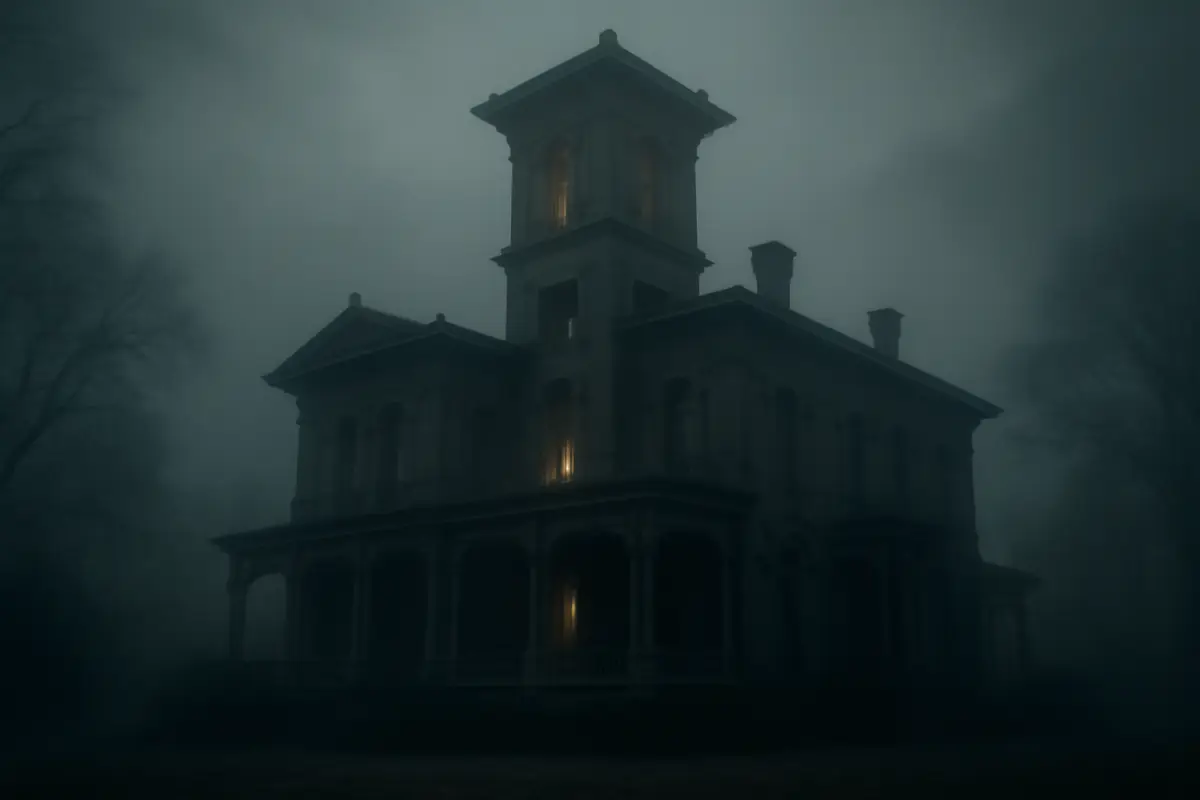
On the edge of downtown Tuscaloosa, a stuccoed brick mansion with a three-story tower has changed roles several times in nearly two centuries: plantation home, public school, parts warehouse, and now event venue. Along the way it picked up one of Alabama's best-known ghost stories, involving a widow, a set of missing candles, and a fire in the tower that firefighters reportedly could never find.
Who Built It
The house was built in 1837 for Dr. John R. Drish, a Virginia-born physician who had settled in Tuscaloosa in 1822. In 1835 he married Sarah Owen McKinney, a wealthy widow, and the couple built their home at the center of a plantation of roughly 450 acres. Like most large homes of the period in the region, it was built with enslaved labor, including skilled artisans whose plasterwork survives in several Tuscaloosa buildings.
Architecturally, the house is regarded as one of Alabama's more distinctive blends of Greek Revival and Italianate design. Work continued in phases until about 1861: before the Civil War the house was remodeled with a three-story brick tower, Ionic columns, and cast-iron side porches, giving it the silhouette visitors recognize today.
The Legend of Sarah Drish
The best-known version of the story was set down by Kathryn Tucker Windham and Margaret Gillis Figh in their 1969 book 13 Alabama Ghosts and Jeffrey, in a chapter titled “Death Lights in the Tower.” In that telling, Dr. Drish died in 1867 after a fall on the staircase (some versions say he had been drinking). Sarah is said to have held his wake in the tower and then put away the candles from the ceremony, asking that the same candles be lit at her own funeral. When she died in 1884, the story goes, nobody could find them.
The deaths of John Drish in 1867 and Sarah Drish in 1884 are documented. The fall, the stored candles, and Sarah's dying request are not found in contemporary records; they come to us through local storytelling and Windham's folklore collection.
The “death lights” themselves are also part of the legend. According to the story, soon after Sarah's funeral neighbors saw what looked like flames in the tower and called the fire department, which found no fire. Similar sightings are said to have recurred in later decades, and they are usually explained in the folklore as Sarah's candles finally being lit.
From Plantation House to School to Warehouse
In the early twentieth century the property passed to the Tuscaloosa Board of Education, which opened Jemison School in the building in 1906. It served as a school until 1925 and was later used for decades as an auto parts warehouse, a period during which the house deteriorated badly. In 2015 it was listed on the National Register of Historic Places as the “Jemison School–Drish House.”
Can You Visit Today?
Partly. The house was bought in 2014, restored, and opened as a private event venue in May 2016. It hosts weddings and corporate events and is not a walk-in museum, so anyone hoping to see the interior should contact the venue about tours or public events. The exterior, including the tower, can be seen from the street.
Frequently Asked Questions
Is the Drish House ghost story documented in a real book?
Yes. It appears in Kathryn Tucker Windham and Margaret Gillis Figh's 1969 book 13 Alabama Ghosts and Jeffrey. The book is a published folklore collection, so it documents the legend, not the supernatural events themselves.
Can you visit the Drish House today?
It operates as an event venue, which makes it easier to see than many sites on this list, but interior access depends on bookings and events.
Sources
- Drish House – Wikipedia
- 13 Alabama Ghosts and Jeffrey – Wikipedia
- Kathryn Tucker Windham – Encyclopedia of Alabama
As an Amazon Associate, this site earns from qualifying purchases.