This article contains affiliate links. If you buy through them, we may earn a commission at no extra cost to you.
Ask someone about the Goatman and the answer depends on where they grew up. In Prince George's County, Maryland, he's a lab accident who escaped into the woods around Beltsville. In Denton County, Texas, he's the thing waiting at the far end of an old iron bridge if you cross it with your headlights off. Both stories share a name and a half-man, half-goat shape, but they were born forty years and 1,300 miles apart, answering to different fears.
The Maryland Original: A Scientist, a Goat, and a Bad Experiment
The Goatman's paper trail starts in Prince George's County in the early 1970s — unusually for a cryptid, in a university archive rather than a campfire.
In May 1971, University of Maryland undergraduate George Lizama turned in a folklore project on local Goatman sightings. It went into the Maryland Folklife Archives and would likely have stayed there if reporter Karen Hosler hadn't found it later that year. Hosler wrote it up for the Prince George's County News in October 1971, and that article is where a class assignment became a regional legend — she placed the sightings near Fletchertown Road in Bowie, just outside Beltsville.
The origin story that grew up around those sightings is the legend's most distinctive feature: a scientist at the U.S. Department of Agriculture's Beltsville Agricultural Research Center, sometimes named Dr. Stephen Fletcher, was supposedly splicing goat and human genes. The experiment went wrong, and instead of a breakthrough he produced a creature permanently fused between the two. It's an origin story that only works next to a real research facility, and the Beltsville center's actual decades of livestock genetics work gave the rumor just enough scaffolding to stick.
University of Maryland folklorist Barry Lee Pearson later studied why the story kept spreading and pointed to something less supernatural than a mutant scientist: teenagers. Legends like Goatman, he argued, are usually kept alive by teens looking for a reason to drive a dark, semi-rural road and dare each other out of the car. Fletchertown Road became that destination, and each generation added its own layer to what the last one had already told.
The Texas Version: A Bridge, a Lynching Story, and No Records to Back It
Thirteen hundred miles southwest, Texas has its own Goatman, and this version isn't tied to a laboratory at all. It's tied to a bridge.
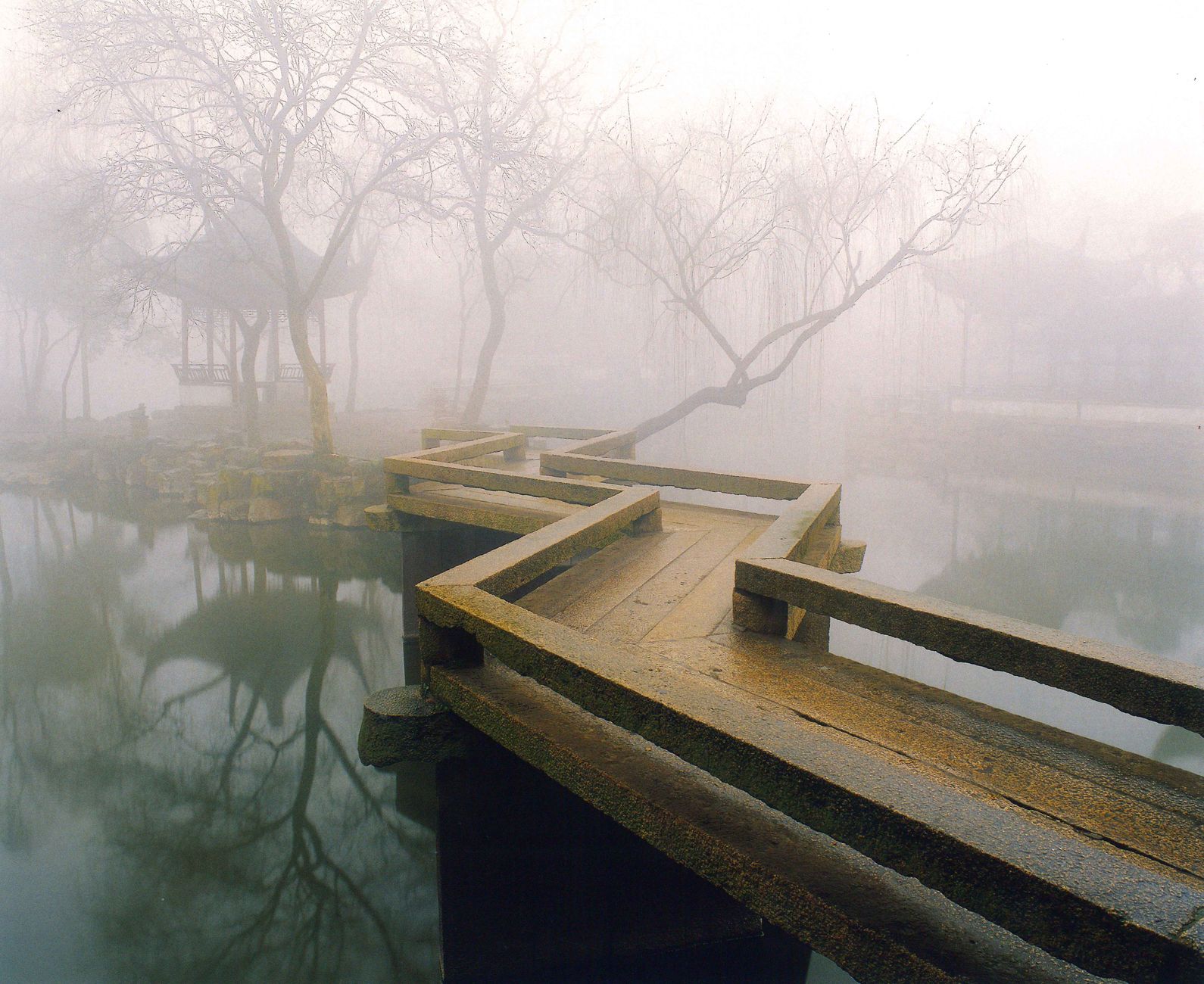
Old Alton Bridge, an iron truss structure over Hickory Creek in Denton County, was built in 1884 by the King Iron Manufacturing Bridge Company to connect the settlement of Old Alton to Denton. It carried traffic for well over a century before a replacement bridge went up nearby in 2001, at which point Old Alton Bridge stopped being a road and started being a destination — under the name it's actually known by today, Goatman's Bridge.
The legend attached to it is darker and more specific than Maryland's. As the story goes, a Black goat farmer named Oscar Washburn lived near the bridge and posted a sign directing customers to his farm: “This way to the Goatman.” In August 1938, the story continues, a group of Klansmen dragged him from his home, hanged him from the bridge, and threw his body into the creek below — only to find the noose empty when they looked down. They supposedly returned to his home in a panic and killed his family.
It reads like documented history, and that's exactly the problem: no one has been able to document it. Researchers who have gone through Denton County death records and period newspapers have found no record of a lynching matching those details, no Oscar Washburn, no corresponding family. The story functions as folklore layered onto a real bridge rather than an account of something that actually happened — a distinction Texas historians covering the bridge have been careful to draw out, given how the legend repurposes a real, violent chapter of the region's history without evidence behind it.
What visitors report today is the more familiar cryptid material: a half-goat figure with glowing red eyes near the creek, cars that stall or lock themselves on the bridge, and a warning that if you drive across without your headlights on, the Goatman will be waiting when you reach the other side.
Two Legends, Two Kinds of Fear
Line the two stories up and the difference in what they're about becomes obvious. Maryland's Goatman is a fear of science outrunning its own judgment, planted next to a federal research facility that genuinely does genetic and agricultural work. Texas's Goatman is heavier: a folk story that borrows the language of a real racial-terror lynching to explain a haunting, with no historical record anchoring it to an actual event.
Both versions share the same practical function, though. They give a real, ordinary place — a two-lane road in Bowie, an out-of-service truss bridge in Denton — a reason to be worth driving to after dark. The scientist and the sign on the bridge are different explanations for the same impulse: turning a stretch of road into somewhere you're not quite sure you want to be alone.
Frequently Asked Questions
Is the Maryland Goatman based on a real scientist?
No verified scientist matching the “Dr. Stephen Fletcher” origin story has been documented at the Beltsville Agricultural Research Center. The name and experiment are part of the oral legend, not a confirmed historical record.
Did the Texas Goatman's Bridge lynching actually happen?
There's no evidence it did. Researchers checking Denton County death records and newspapers from the period have found no documentation of a lynching matching the Oscar Washburn story, which is now generally treated as invented folklore attached to a real bridge.
Can you still visit Goatman's Bridge in Texas?
Yes. Old Alton Bridge is a public pedestrian crossing, though the surrounding land is private, and visiting after dark can raise trespassing concerns.
Are the Maryland and Texas Goatman legends connected?
Not historically. They emerged independently roughly four decades apart and share only the half-man, half-goat concept and the name — there's no documented link between the Beltsville sightings and the Denton bridge story.
Related Reading
Looking for more field gear for late-night legend trips? A reliable EMF meter and a full-spectrum flashlight are the two tools most cryptid-hunting guides actually carry. Learn More about American cryptid research in a field guide to U.S. legends and hauntings.
As an Amazon Associate, this site earns from qualifying purchases.
Comments