This article contains affiliate links. If you buy through them, we may earn a commission at no extra cost to you.
A film opens with the words “based on a true story.” A ghost hunting show cuts to a meter spiking in a dark hallway. Neither of those things means what most viewers assume it means, and the difference is usually where the interesting part of the story lives.
This section of the site covers that gap. Alongside our location and folklore coverage, we publish buyer's guides for ghost hunting equipment, reading lists for true crime and true horror, and fact-checks of horror films that claim a real-world origin. This page indexes all of them and explains what each type of guide is actually good for.
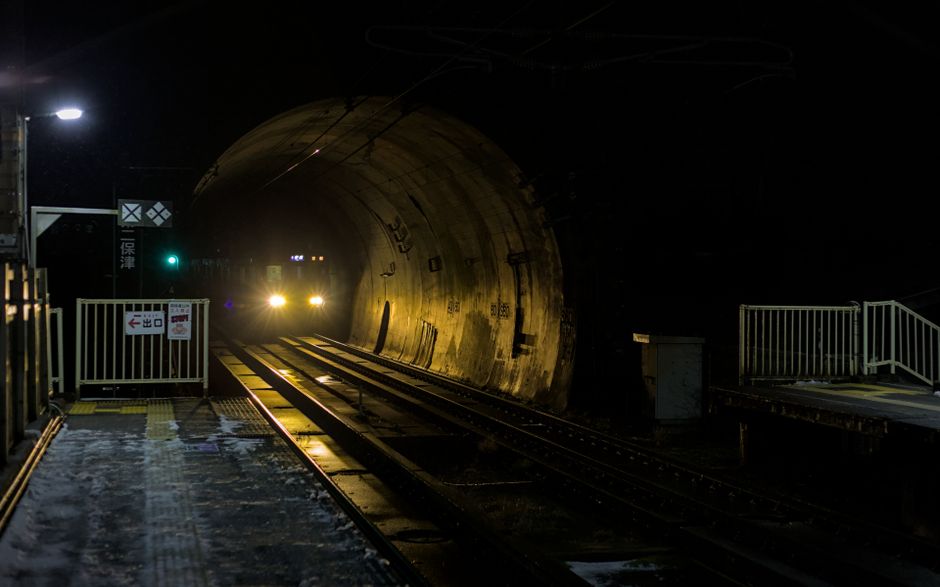
Looking for actual haunted locations instead? See our guides to Haunted Tunnels of Japan, Haunted Places in the United States, and International Ghost Stories.
What “Based on a True Story” Actually Means
There is no legal standard behind the phrase. A studio can attach it to a film that reconstructs a documented court case, and it can attach it to a film whose only connection to reality is that someone once claimed something strange happened in a house. Both get the same three words on the poster.
In practice, horror films that carry the label fall into four rough tiers, and knowing which tier a film sits in changes how you watch it.
Tier one: documented criminal cases. The events are in court records, autopsy reports, and contemporaneous newspaper coverage. Films drawn from the crimes of Ed Gein sit here — the body of evidence is not in dispute, only the dramatization is. Our list of horror movies based on real serial killers works through this tier.
Tier two: documented institutions, invented events. The asylum existed, the patient records existed, the ghost did not. A great many haunted-hospital films work this way, borrowing the genuine and often ugly history of an institution as set dressing for fiction. We separate the two in horror movies set in real asylums and hospitals.
Tier three: a real claim, unverified. Someone reported an experience, the report is on record, and the report is all there is. Most of the Warren-derived films sit here: the case files are real documents, but a case file records what a person said, not what happened. Our breakdowns of The Conjuring: Last Rites and The Ritual (2025) trace the claim back to its source and stop where the evidence stops.
Tier four: marketing. The phrase is attached to a film with no traceable source event at all, sometimes to a film whose entire premise is that it is real footage. Faces of Death is the canonical example of a franchise built on that trick.
When you read any of our film fact-checks, the tier is the first thing we establish. If we cannot trace a claim to a document, a court record, or a named contemporary witness, we say so in the text rather than letting the ambiguity carry the story.
Ghost Hunting Equipment: What Each Device Does
Almost every piece of gear sold as paranormal investigation equipment was invented for something else. Understanding the original purpose is the fastest way to understand what the readings mean and what they do not.
EMF Meters
Electromagnetic field meters were built for electricians and building inspectors, who use them to locate live wiring inside walls and to check for stray fields near appliances and transformers. They respond to the same things in a reputedly haunted house that they respond to in an office: mains wiring, breaker panels, motors, fluorescent ballasts, phone handsets, and the investigator's own equipment.
The K-II model that became standard on television is popular because it displays readings as a row of coloured LEDs rather than a number, which reads well on camera. It is not more sensitive than a laboratory instrument; it is more legible in the dark. A serious investigator sweeps the location before the session, maps the ordinary field sources, and treats anything unmapped as worth investigating rather than as evidence. Our beginner ghost hunting equipment guide covers how to run that baseline sweep.
EVP Recorders
Electronic voice phenomena — audio recordings in which listeners report hearing speech that was not audible at the time — became a subject of organized study after Friedrich Jürgenson published his recordings in the late 1950s and Konstantin Raudive followed with Breakthrough in 1971. The practice has been continuous since.
The technical requirements are unglamorous. A recorder with a genuinely flat response and a clean preamp will pick up less hiss, and less hiss means fewer artefacts for the ear to organize into words. Most disputed EVP is a collision between a noisy recording and auditory pareidolia, the well-documented tendency of the human auditory system to impose speech patterns on ambiguous sound. That tendency is stronger when the listener has been told in advance what the recording is supposed to say — which is why blind listening, without prompting, is the single most useful discipline in the field. Our EVP recorder guide compares the hardware on noise floor rather than on marketing.
Full-Spectrum Cameras
A standard digital camera has an infrared-cut filter sitting in front of the sensor, because the sensor is naturally sensitive to wavelengths the eye cannot see and those wavelengths would otherwise ruin colour accuracy. A full-spectrum conversion removes that filter, letting near-infrared and some near-ultraviolet light reach the sensor.
The result is a camera that genuinely sees more of the spectrum than you do. It also produces far more optical artefacts: lens flare behaves differently, dust and moisture in the air reflect infrared brightly, and synthetic fabrics render in unexpected tones. Most “anomalies” captured on converted cameras are airborne particulates lit by an infrared illuminator close to the lens axis. Our full-spectrum camera guide goes through the conversions and the artefacts each one tends to produce.
Thermal Cameras and REM Pods
Thermal imagers show surface temperature, not air temperature, which is why a “cold spot” on a thermal display is frequently a draught cooling a wall, a plumbing run, or a patch of masonry with different thermal mass. REM pods generate a small electromagnetic field around an antenna and sound an alarm when the field is disturbed — including by a hand, a phone, or a shift in humidity.
None of these instruments detect anything paranormal, because there is no agreed physical signature to detect. What they do is document the physical conditions of a place in the dark, which is a real and useful thing to have when you are trying to work out why a location feels the way it does.
What Is Actually Verifiable
Several ordinary causes of apparently paranormal experience are well established and worth ruling out before anything else. Carbon monoxide poisoning produces confusion, headache, and hallucination, and has been implicated in more than one famous haunting narrative. Infrasound — sound below roughly 20 Hz, produced by fans, traffic, and some architectural cavities — has been linked to feelings of unease and to reported apparitions, most famously by the British engineer Vic Tandy, who traced a haunting in his own laboratory to a vibrating extractor fan and published the finding in 1998. Sleep paralysis, in which the sleeper wakes while the body remains immobile and often perceives a presence in the room, is a documented clinical phenomenon and accounts for a striking proportion of bedroom encounter stories worldwide.
Ruling these out does not make a location less interesting. It makes the residue more interesting.
True Crime and True Horror in Print
Written true crime carries a problem that film mostly evades: the reader can check. A book has citations, a bibliography, and named sources, or it does not, and the difference is visible on the page. When we assemble a reading list we weight heavily toward authors who show their working — court transcripts, interviews conducted by the author, archival material — over authors who repeat a story that has been repeated before.
That standard shapes our true horror reading list and our guide to books about the Salem witch trials, a subject where the primary sources survive in unusual quantity and where the secondary literature ranges from meticulous to invented.
The puzzle and game side of the genre plays by different rules again. Most true crime puzzle books use invented cases with procedural framing rather than real victims, which sidesteps the ethical question entirely — see our guides to true crime puzzle books and murder mystery games.
Movies, Media & Gear Guides
- 10 Best Audiobooks for True Horror and True Crime Fans
- 10 Best Books About the Salem Witch Trials
- 10 Best True Crime and Paranormal Documentaries About Real Hauntings
- 10 Horror Movies Based on Real Serial Killers
- 10 Horror Movies Set in Real (or Real-Inspired) Asylums and Hospitals
- 12 Best True Horror Books Based on Real Events
- 12 True Crime Horror Movies You Won't Believe Are Based on Real Events
- 15 Horror Movies Based on True Stories (That Are Even Scarier Than You Think)
- 6 Best Full-Spectrum Cameras for Paranormal Investigation
- 7 Best EVP (Electronic Voice Phenomenon) Recorders for Ghost Hunting
- 7 of the Most Famous (and Debated) Ghost Photographs in History
- 8 Best Hunt A Killer Alternatives: Murder Mystery Games for Adults (2026)
- 8 Best True Crime Calendars and Gift Countdowns (2026)
- 8 Horror Movies Inspired by Real Cults
- 8 of the Scariest Real Exorcism Cases Ever Documented
- 9 Best True Crime Puzzle Books for Adults (2026)
- 9 Horror Films Set in Actual Real-World Haunted Houses
- Is Faces of Death (2026) Real? The Truth Behind the Legend
- Is The Conjuring: Last Rites Based on a True Story?
- Is The Ritual (2025) Based on a True Story?
- The Best Ghost Hunting Equipment for Beginners (2026 Buying Guide)
Where to Start
If you have never investigated a location and want to try: read the beginner equipment guide first, buy a recorder before you buy anything else, and spend your first three sessions learning what your own building sounds like at three in the morning. Almost everyone skips the baseline and then cannot interpret anything they collect.
If you want to watch rather than investigate: start with the true story horror films list, then read the fact-check for whichever film unsettled you most. The films tend to get better on rewatch once you know which parts were invented.
If you are buying a gift: the calendar and gift guide and the puzzle book list are the two that consistently work for people who like the genre but do not want more equipment in the house.
Ghost-Hunting Gear & Further Reading
- Best ghost hunting equipment for beginners
- Best true horror books based on real events
- EMF meters for paranormal investigation
- Full-spectrum cameras
Frequently Asked Questions
Q1: What ghost hunting equipment should a complete beginner buy first?
A digital audio recorder with a low noise floor, and nothing else until you have used it for a while. Audio is the cheapest data to collect, the easiest to review, and the hardest to fake accidentally if you keep a written log of every sound you make during a session. EMF meters and cameras are more fun to hold and much harder to interpret without a baseline.
Q2: Do EMF meters actually detect ghosts?
No. An EMF meter measures electromagnetic fields, and every reading it produces has a mundane candidate cause: wiring, appliances, radio transmitters, or the investigator's own phone. There is no established physical signature for a ghost, so there is nothing for the instrument to be calibrated against. What a meter can usefully do is map the ordinary electromagnetic environment of a building, which sometimes explains why one room feels wrong.
Q3: Is “based on a true story” regulated in any way for films?
It is not. The phrase carries no legal definition and no minimum standard of accuracy, which is why it appears on films drawn from court records and on films drawn from a single unverified anecdote. Checking what the underlying claim was, and who made it, is the only reliable way to tell the two apart.
Q4: Why do so many real ghost photographs turn out to be explicable?
Because photography produces a large number of artefacts that look intentional. Long exposures smear moving people into transparent figures, flash reflects off airborne dust into bright orbs, lens flare produces geometric shapes, and film emulsion faults produce streaks. Add pareidolia — the brain's tendency to find faces in noise — and a genuinely ambiguous image becomes a face very quickly. Our guide to famous and debated ghost photographs works through the specific cases.
Q5: Are true crime puzzle books based on real murders?
Usually not. Most of the major titles use invented cases dressed in police-procedural framing, which avoids building entertainment around identifiable victims. A minority of books do reference real named cases, generally in trivia and quiz sections rather than in the puzzles themselves.
Q6: What is the difference between a full-spectrum camera and a night vision camera?
A night vision camera amplifies whatever light is present, or floods the scene with infrared and records the reflection, and it typically outputs monochrome. A full-spectrum camera has had its infrared-cut filter physically removed so the sensor records visible light together with near-infrared and some near-ultraviolet, producing colour images with unusual tonality. The two are often used together, and both make dust look dramatic.
Ghost-hunting gear gets real use at genuine cryptid hotspots too — read about the documented 1966-67 Mothman sightings that made Point Pleasant, West Virginia a paranormal tourism destination.
As an Amazon Associate, this site earns from qualifying purchases.
Comments