This article contains affiliate links. If you buy through them, we may earn a commission at no extra cost to you.
Every consumer camera filters out ultraviolet and infrared light before you ever see the photo — a full-spectrum camera removes that filter, and that single modification is the whole reason paranormal investigators use them: some anomalies are said to register only outside the range of normal human vision. Here’s what to know before you buy one. For a broader starter kit beyond cameras, see our best ghost hunting equipment for beginners.
| Option | Best for | Price range |
|---|---|---|
| Converted DSLR/Mirrorless | Investigators who want publication-quality still images | Varies by camera + conversion cost |
| Dedicated Full-Spectrum Camcorder | Investigators who mainly document evidence on video | Mid-range, ready out of the box |
| Budget Night-Vision Camcorder | Beginners who want to start without a full conversion | Lowest cost of the three |
| IR Illuminator (separate purchase) | Anyone lighting a dark room without visible-light contamination | $40–$100 |
What Is Full-Spectrum Photography?
“Full spectrum” refers to a camera that's been modified — typically by removing the internal hot mirror or IR-cut filter that's standard in consumer cameras — so its sensor can pick up ultraviolet, visible, and infrared light simultaneously. Paired with the right lens filters, this lets investigators shoot in near-total darkness using invisible IR illumination, or capture UV detail that a normal camera would never register. It's the same underlying tech used in forensic and scientific photography, repurposed for the paranormal hobby.
Full-Spectrum Converted DSLR/Mirrorless Cameras
A converted DSLR or mirrorless camera gives you the best image quality in this category by a wide margin — full manual control, interchangeable lenses, and a large sensor that performs far better in low light than any point-and-shoot or camcorder. Conversion involves a technician removing the internal IR-cut filter (or you can buy a body that's pre-converted). These are the choice for investigators who want publication-quality still images as evidence, not just quick video clips.
What to look for: a full-spectrum conversion (not just “IR conversion,” which locks you into infrared only), compatibility with screw-on IR/UV pass filters so you can switch between capturing modes, and decent high-ISO performance since you'll often be shooting in near-total darkness.
Shop full-spectrum converted cameras on Amazon
Dedicated Full-Spectrum Camcorders
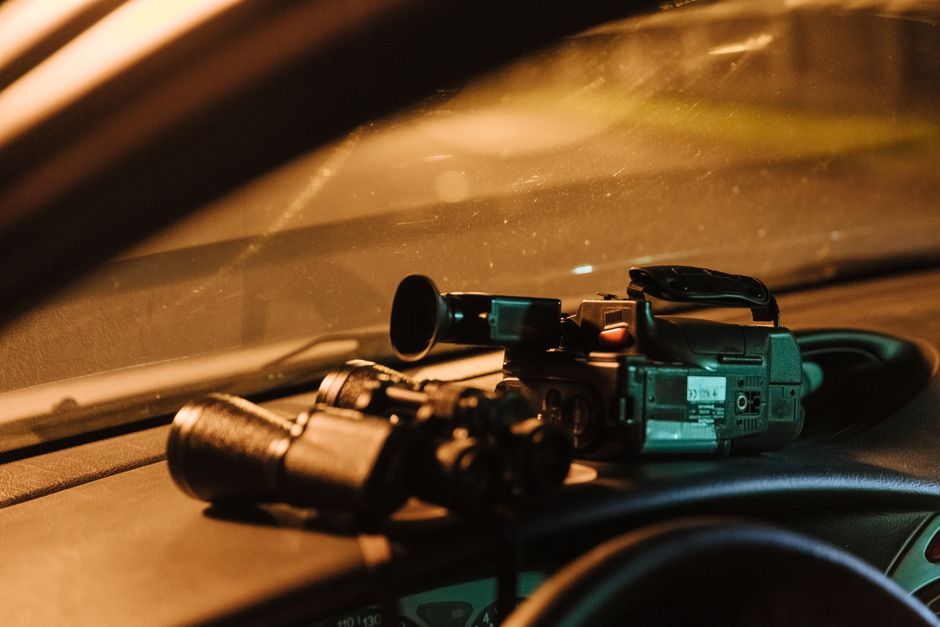
Purpose-built full-spectrum camcorders are the more practical choice for most investigators because video, not stills, is how most modern evidence gets captured and shared. These are typically point-and-shoot or camcorder bodies that ship already converted, often bundled with a built-in or included IR illuminator, so you're not assembling a system from parts.
What to look for: continuous video recording length (some budget units cap clips at a few minutes), a hot shoe or mount for an external IR light, and 1080p as a minimum — 4K if your budget allows, since footage will often get cropped or zoomed during review.
Shop full-spectrum camcorders on Amazon
Budget IR / Night-Vision Options
If a full conversion is out of budget, a standard night-vision camcorder (the kind built for wildlife or security use) with built-in IR illumination is a reasonable starting point. It won't capture the full UV-to-IR range a true full-spectrum conversion does, but it will let you record clearly in complete darkness, which covers a large share of what beginners actually need on their first investigations.
What to look for: IR illuminator range in feet/meters (make sure it covers the size of room you'll typically investigate), and whether the IR light is adjustable — a fixed, always-on IR beam can wash out close-up subjects.
Shop budget night-vision IR cameras on Amazon
IR Illuminators (Buy Separately)
Whatever camera body you choose, you'll usually need a separate IR illuminator — an infrared light source invisible to the naked eye that lights the room for the camera without producing visible light that could distract investigators or introduce visible-light contamination into the footage. Look for adjustable intensity and a stated effective range; a light rated for 10 feet won't do much in a large room or hallway.
Shop IR illuminators for paranormal investigation on Amazon
What to Prioritize When Comparing Models
- IR illuminator range: Match it to the size of the spaces you typically investigate — a 15-foot range is fine for a bedroom, not for a warehouse or asylum hallway.
- Video vs. photo capability: Decide which matters more for how you document evidence; some full-spectrum cameras are strong at one and weak at the other.
- Low-light sensor performance: Larger sensors (as in DSLR/mirrorless conversions) handle near-total darkness with far less grain/noise than small point-and-shoot sensors.
Shop low-light night vision cameras on Amazon
Frequently Asked Questions
Q1: Can I convert my own DSLR to full spectrum?
It's possible with DIY kits, but it's a delicate process that involves opening the camera body and removing an internal filter — done wrong, you can damage the sensor permanently. Most investigators either buy a pre-converted body or send an existing camera to a conversion service.
Q2: Do I need a UV filter as well as an IR one?
Only if you specifically want to isolate the UV range for a shot — a full-spectrum sensor captures everything at once by default, and screw-on filters (IR-pass or UV-pass) let you narrow that down for a specific effect.
Q3: Is a full-spectrum camera necessary for beginners, or can I start with a regular night-vision camcorder?
A standard night-vision camcorder is a completely reasonable starting point. Full-spectrum conversion is worth the extra cost once you're confident you'll keep investigating regularly and want to capture the UV/IR range a standard IR camcorder misses.
As an Amazon Associate, this site earns from qualifying purchases.
Comments