This article contains affiliate links. If you buy through them, we may earn a commission at no extra cost to you.
Drive any mountain road in Japan for an hour and you will pass through a dozen tunnels. Some of them are wide, lit, and new. Beside a few of those, half-hidden by twenty years of vegetation, you will see the mouth of the one that came before — narrower, unlit, brick or hand-cut stone, and usually sealed with a steel plate or a concrete wall.
Those are where the stories are. Not in the working tunnels, which people use every day without incident, but in the abandoned alignments left behind when a new road opened. Japan has produced one of the world's densest concentrations of haunted-tunnel folklore, and the density is not an accident of national temperament. It follows directly from geology, from a century of road building, and from what a tunnel does to the person inside it.
This guide indexes every individual location covered on this site — tunnels, underpasses, caves, and water sites — grouped by type, and sets out the history and the physical explanations that sit behind the legends. Each entry is hedged where the historical record could not confirm the specifics.
For character-based Japanese folklore (yokai, spirits, and urban legend figures not tied to one physical site), see our companion guide: Japanese Yokai & Urban Legends: The Complete Guide.
- Why Japan Has So Many Tunnels
- The “Kyu” Tunnel: Why Abandonment Is the Common Factor
- What a Tunnel Does to Perception
- Tunnels as Boundaries
- Where to Start
- When We Cannot Verify Something
- Before You Go
- Tunnels
- Underpasses & Guard Rails
- Caves & Underground Passages
- Bridges, Dams & Water Sites
- Other Haunted Sites
Why Japan Has So Many Tunnels
Roughly three-quarters of Japan's land area is mountainous, and almost all of its population, industry, and farmland is squeezed into the remaining quarter. Connecting those pockets means going through ridges rather than around them. The result is a national infrastructure of extraordinary tunnel density, built continuously from the Meiji period to the present.
The construction history matters for the folklore. Tunnels driven in the late nineteenth and early twentieth centuries were cut largely by hand, with black powder, picks, and baskets, through unstable rock and under constant risk of collapse and flooding. Fatalities among construction crews were common and, in the earlier projects, poorly recorded. Wartime and immediate postwar projects in particular relied on labour whose conditions and casualty figures were not documented in any way we would now consider adequate.
So when a tunnel legend says that men died building it, the claim is frequently plausible in general terms and almost never verifiable in specific ones. That gap — a real history of death, with no names attached — is the exact condition in which ghost stories grow. Our profile of Utsunoya Tunnel, opened in the Meiji era as Japan's first toll tunnel, is a good place to see how much documented history survives for the earliest examples and how little survives for most of the rest.
The “Kyu” Tunnel: Why Abandonment Is the Common Factor
Scan the list below and you will notice how many entries begin with “Former“ or carry the character 旧 (kyu, meaning old or former). That prefix is the single strongest predictor of a haunted reputation in this entire collection.
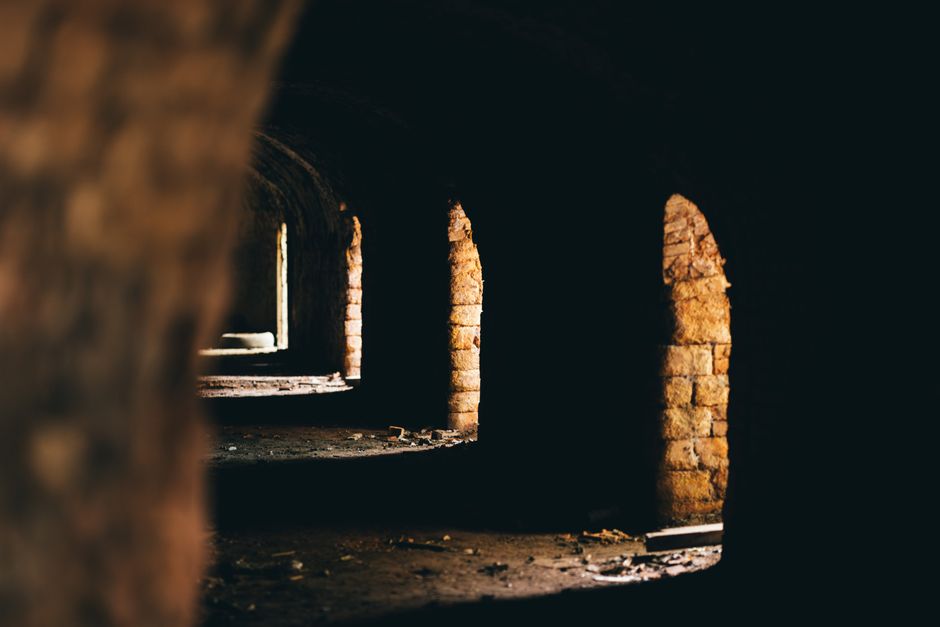
The pattern is consistent. A narrow tunnel is built on a mountain road. Decades later traffic outgrows it, and a wider tunnel is driven on a straighter alignment nearby. The old one is not demolished, because demolition is expensive and pointless — it is simply closed, barriered, and forgotten. What remains is a structure that is genuinely dangerous, genuinely unmaintained, and genuinely unvisited, sitting a hundred metres from a road thousands of people use every day.
Abandoned infrastructure attracts stories the way abandoned asylums do in the United States. It is dark, it is a place adults tell teenagers not to go, and it looks exactly like the setting of a story before anyone has told one. The Old Inunaki Tunnel in Fukuoka is the most famous case, and the reason it dominates Japanese internet folklore is not the legend but the barrier — a sealed tunnel mouth is an invitation that an open one is not.
What a Tunnel Does to Perception
Before reading any individual legend, it is worth knowing what a tunnel does to a human being physically. Several of the recurring reported experiences have well-understood causes.
Lighting. Older Japanese tunnels are lit with low-pressure sodium lamps, which emit at a very narrow band in the yellow-orange range. Under that light human colour vision effectively stops working — skin renders grey, red becomes black, and faces look wrong in a way most people cannot articulate. A large share of “the person in the tunnel looked strange“ reports are a lighting property.
Acoustics. A hard-walled tube reflects sound along its length with very little absorption, which means footsteps, dripping water, and distant traffic arrive at the ear with the wrong directional cues. Sound in a tunnel routinely appears to come from behind.
Air. Poorly ventilated tunnels accumulate exhaust. Carbon monoxide exposure causes headache, confusion, disorientation, and in higher concentrations hallucination, and it is odourless. This is a real hazard in a sealed or unventilated passage, not a hypothetical one.
Driving. The repetitive lighting rhythm of a long tunnel at constant speed is a recognized contributor to highway hypnosis, a state of reduced awareness in which drivers arrive somewhere with no memory of the journey. Add a monotonous mountain road at night and the conditions for a misperceived figure at the roadside are fully assembled.
None of this makes the reports dishonest. It makes them explicable, which is a different thing, and it is the standard we try to apply throughout this collection.
Tunnels as Boundaries
There is also a folkloric reason these sites accumulate stories, and it long predates the tunnels themselves.
Japanese folk geography treats boundaries as dangerous. The edge of the village, the mountain pass, the bridge, the crossroads — these are places where the ordinary world thins out, and traditionally they were marked and protected. Stone Jizo statues and boundary deities stand at passes and roadsides across the country for exactly this reason, placed to guard travellers and to mark the point where safety ended.
A tunnel is the industrial version of a mountain pass. It occupies the same position in the landscape, does the same job, and carries the same conceptual weight: you go in on one side and come out somewhere else. When a legend attaches to a tunnel, it is attaching to a site that was already understood as a threshold, and often to a road that had a fatal reputation long before it was tunnelled. Hakkotsu Jodo in Toyama, the “White Bone Road,“ carries a name that records exactly that older layer.
Where to Start
Three entries give the clearest picture of how these legends work.
Kiyotaki Tunnel in Kyoto is the best-known haunted tunnel in Japan. It is a single-lane passage originally built in the 1920s for a railway line and later converted for road use, controlled at each end by a signal because two cars cannot pass. The documented engineering history explains most of what makes it unnerving; the legends about the signal and the mirror at the far end came later.
Old Inunaki Tunnel in Fukuoka is the case where a real crime sits underneath the folklore. A violent killing in the pass in the late 1980s is frequently cited in Japanese accounts, and the tunnel was subsequently sealed. The internet legend that grew afterwards has almost nothing to do with the actual case, which is worth knowing before reading either.
Sendagaya Tunnel in Tokyo is the urban example. Built as part of the road works for the 1964 Olympics, it runs beneath temple grounds, and the persistent story is that the road was driven under a cemetery because the land could not be acquired. The construction history is a matter of public record; what people report inside it is not.
Also worth reading: Aokigahara, which is not a tunnel but is the site where the gap between international reputation and documented fact is widest — including the frequently repeated claim about compasses failing, which is far more limited than the popular version suggests.
When We Cannot Verify Something
Several entries in the list below carry titles like “A Ghost Story We Could Not Verify“ or “What We Could and Couldn't Verify.“ That is deliberate, and it is the working standard for this collection.
Japanese location legends circulate primarily through message boards, personal blogs, and video, where a detail added in one retelling becomes a fact in the next. For each site we try to establish what is documented — that the tunnel exists, when it was built, when it was closed, whether a named incident appears in any record — and then state plainly where the documentation stops and the legend begins. When a tunnel cannot be located at all under the name it circulates by, as with the Sankyo Tunnel, the entry says so rather than inventing a location.
This makes some entries less satisfying than the versions you will find elsewhere. It also makes them checkable.
Before You Go
Abandoned tunnels in Japan are closed for engineering reasons, not atmospheric ones. Unlined and unmaintained passages shed rock, flood, and collapse, and many are on private or restricted land where entry is an offence. Sealed tunnel mouths in particular are sealed because someone assessed the structure and decided nobody should be inside it.
Working tunnels on public roads are a different matter and can be driven through legally, which is how most of these locations are actually experienced. If you plan to record anything, our beginner ghost hunting equipment guide explains what each instrument measures and what it does not, and the wider gear and media section covers recorders and cameras in more depth. For the folklore behind the figures reported at these sites, see the yokai and urban legends guide.
Tunnels
- Aokigahara: The Real History Behind Japan's “Sea of Trees”
- Hiwasa Tunnel, Tokushima: The Ringing Phone Booth Legend
- Kiyotaki Tunnel: The Haunted History of Kyoto's Most Notorious Passage
- Kotsubo Tunnel
- Kurikara Tunnel (倶利伽羅トンネル), Ishikawa Prefecture
- Old Inunaki Tunnel
- Old Yura Tunnel (旧由良トンネル), Wakayama Prefecture
- Sendagaya Tunnel
- The Former Daikon Tunnel: A Ghost Story We Could Not Verify
- The Former Sawayama Tunnel: A Real Taishō-Era Ruin Near Hikone
- The Former Toguchi Tunnel, Okinawa: What We Could and Couldn't Verify
- The Haunted Story of Aiyoshi Tunnel
- The Haunted Story of Ajigawa Tunnel
- The Haunted Story of Akame Tunnel
- The Haunted Story of Akohsan Tunnel
- The Haunted Story of Ashihara Tunnel
- The Haunted Story of Banzan Tunnel
- The Haunted Story of Chiaki Tunnel
- The Haunted Story of Ehime Prefecture's Tawaratsu Tunnel
- The Haunted Story of Garavii Go
- The Haunted Story of Habisaka Tunnel
- The Haunted Story of Hachioji Tunnel
- The Haunted Story of Hakkotsu Jodo, Toyama's “White Bone Road”
- The Haunted Story of Hakozaki Crossing and Biyo-U Tunnel
- The Haunted Story of Hire Tunnel
- The Haunted Story of Hon-Tani Tunnel
- The Haunted Story of Hoppo Tunnel
- The Haunted Story of Ichishima Tunnel
- The Haunted Story of Igarashi Tunnel
- The Haunted Story of Kamitomi Tunnel
- The Haunted Story of Kanozan Tunnel
- The Haunted Story of Kashida Tunnel
- The Haunted Story of Kaze-fuki Tunnel
- The Haunted Story of Kinsugawa Tunnel
- The Haunted Story of Koseki Second Tunnel
- The Haunted Story of Kurose Tunnel
- The Haunted Story of Miharadanuito Tunnel
- The Haunted Story of Mikumo Tunnel
- The Haunted Story of Motokawa Matarata Tunnel
- The Haunted Story of Oginosaka Tunnel
- The Haunted Story of Rengei Kaido
- The Haunted Story of Ryuo Tunnel
- The Haunted Story of Samagawa Tunnel
- The Haunted Story of Saruo Tunnel
- The Haunted Story of Sasako Tunnel
- The Haunted Story of Shibayama Tunnel
- The Haunted Story of Shimon Tunnel
- The Haunted Story of Taian Tonneru
- The Haunted Story of Tenri Tunnel
- The Haunted Story of Tonegawa Tunnel
- The Haunted Story of Toyosawa Tunnel
- The Haunted Story of Tsunagi Yumefuku Ko
- The Haunted Story of Tsunara Tunnel
- The Haunted Story of Tsurumai Tunnel
- The Haunted Story of Ushikubi Tunnel
- The Haunted Story of Yamaoka Tunnel
- The Haunted Story of Yashima Tunnel
- The Haunted Story of the 8 Tunnels
- The Haunted Story of the Dankei Road Tunnel
- The Haunted Story of the Doll Tunnel
- The Haunted Story of the Former Aoju Tunnel
- The Haunted Story of the Former Ikoma Tunnel
- The Haunted Story of the Former Kamozaka Tunnel: What We Could (and Couldn't) Verify
- The Haunted Story of the Former Kannonzaka Tunnel, Shiga Prefecture
- The Haunted Story of the Former Shininuma Tunnel
- The Haunted Story of the Former Wada Tunnel
- The Haunted Story of the Fune-Akari Tunnel
- The Haunted Story of the Kinuura Seabed Tunnel
- The Haunted Story of the Kubotake Inter-Pedestrian Tunnel
- The Haunted Story of the Night-and-Day Tunnel (Yohiru Tunnel)
- The Haunted Story of the Old Amagami Tunnel
- The Haunted Story of the Old Zenchodori Tunnel
- The Haunted Story of the Pedestrian Tunnel Beside Haratate Tunnel
- The Haunted Story of the Tunnel Near Lake Toyoda
- The Haunted Story of the Tunnel in Oarai Town
- The Sankyo Tunnel: A Name We Could Not Pin Down
- Uchikoshi Tunnel: The Truth Behind Kamakura's “Obake Tunnel”
- Uguisudani Tunnel
- Umegaya Tunnel: The Haunted Rumors Behind One of Tokyo's Newest Roads
- Utsunoya Tunnel: Japan's First Toll Tunnel and Its Ghost Story
- Wariishi Tunnel: The Haunted Story Behind Japan's Obscure “Split Rock” Passage
- Yamagami Tunnel (山神隧道), Kanagawa Prefecture
- Yamanaka Tunnel (山中トンネル), Fukui Prefecture
- Yanagisawa Tunnel, Yamanashi: Separating the Pass from the Legend
- Zushi-oku Tunnel (厨子奥トンネル), Kyoto Prefecture
Underpasses & Guard Rails
- The Haunted Story of Kotoden no Gado Shita
- The Haunted Story of the 21 Guard Underpass
- The Haunted Story of the Hiratsuka Station North Exit Underpass
- The Haunted Story of the Ominji Underpass
- The Kagoshima Airport Underpass: A Quiet Haunted Legend Beneath Kyushu's Busiest Airport
Caves & Underground Passages
- The Haunted Story of Inome Cave
- The Haunted Story of Yuuki-Do Cave
- The Haunted Story of the Cave Legend Known as Akifudo
- The Haunted Story of the Ejiri Cave Entrance
Bridges, Dams & Water Sites
Other Haunted Sites
- Okiku's Well: The True Story Behind Himeji Castle's Counting Ghost
- The Haunted Story of Sakuramachi Kando
Ghost-Hunting Gear & Further Reading
- Books on Japanese haunted places and tunnel legends
- Best ghost hunting equipment for beginners
- Haikyo: Japanese ruins photography books
- Japanese ghost story and kaidan collections
Frequently Asked Questions
Q1: Why are Japanese tunnels considered haunted so often?
Three factors stack. Geography forces an unusually high number of tunnels to be built, mountainous terrain means old narrow ones get replaced and abandoned rather than demolished, and Japanese folk tradition already treats boundary points — passes, bridges, crossroads — as dangerous ground. Add a construction history in which worker deaths were real but rarely documented by name, and every ingredient of a haunting is present before anyone tells a story.
Q2: What is the most haunted tunnel in Japan?
Kiyotaki Tunnel in Kyoto and the Old Inunaki Tunnel in Fukuoka are the two most commonly named. Kiyotaki is the more famous internationally; Inunaki dominates Japanese online folklore, largely because the old tunnel is physically sealed. Neither claim can be measured, and both locations have documented histories more interesting than the legends attached to them.
Q3: Can you visit abandoned tunnels in Japan?
Frequently not, and it is a poor idea where you can. Closed tunnels are unlined, unmaintained, and subject to rockfall and flooding, and many sit on restricted or private land where entry is an offence. Sealed entrances exist because an engineer decided the structure was unsafe. Tunnels still open to traffic can of course be driven through, and that is how most people experience these sites.
Q4: What does “kyu” mean in a Japanese tunnel name?
旧 (kyu) means former or old, and it indicates that the tunnel has been superseded by a newer one elsewhere on the route. In practice it is shorthand for “abandoned,” which is why so many entries in this collection carry it. When you see a name beginning with 旧 or rendered in English as “Former,” expect a barriered mouth and no maintenance.
Q5: Are there physical explanations for what people report in tunnels?
For a good deal of it, yes. Low-pressure sodium lighting collapses colour vision and makes faces look wrong. Hard tunnel walls scatter sound so that footsteps seem to come from behind. Poorly ventilated passages accumulate carbon monoxide, which causes confusion and, at higher exposures, hallucination. Long tunnels at steady speed contribute to highway hypnosis. None of that covers every report, and it is not meant to — it covers the recurring ones.
Q6: Is Aokigahara a haunted forest?
Aokigahara is a real forest grown on a lava flow at the base of Mount Fuji, with a genuine reputation and a genuine set of problems that have nothing to do with folklore. Much of what circulates internationally about it is exaggerated, including the widely repeated claim that compasses do not work there — the volcanic rock does contain magnetic material that can deflect a compass held at ground level, which is a long way from the version usually told. Our profile covers what the historical record supports.
Q7: Why do so many of your entries say the story could not be verified?
Because most Japanese location legends circulate through message boards, blogs, and video rather than through anything with a citation, and details harden with each retelling. We check what can be checked — that the tunnel exists, when it was built and closed, whether a named incident appears in any record — and then say where the documentation runs out. Entries that stop short are doing their job.
As an Amazon Associate, this site earns from qualifying purchases.