This article contains affiliate links. If you buy through them, we may earn a commission at no extra cost to you.
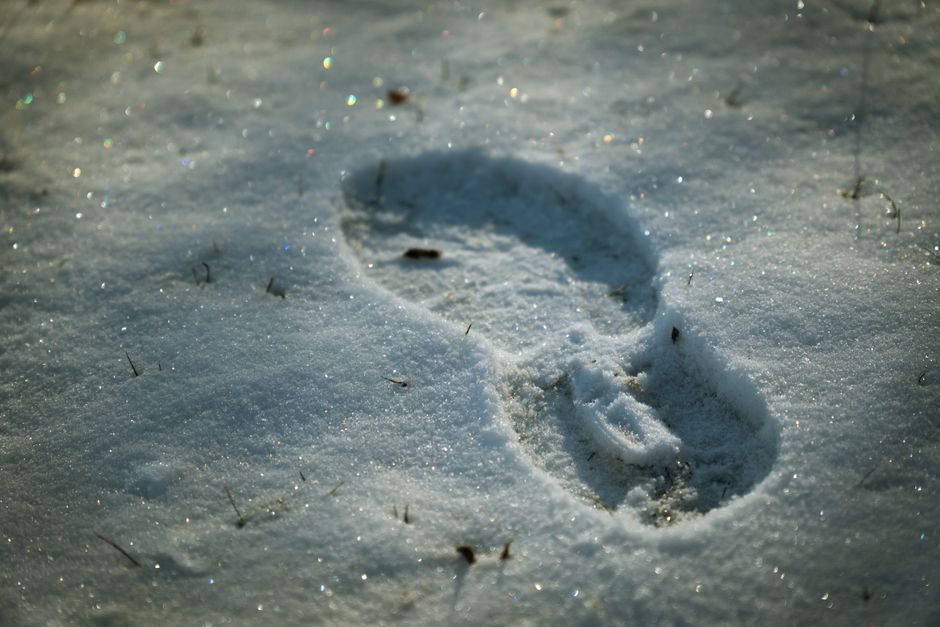
In November 1951, mountaineer Eric Shipton photographed a line of large footprints in the snow of Nepal's Menlung Basin, at roughly 15,000 to 16,000 feet. He had no measuring tools, so he propped an ice axe and a boot next to one print for scale before shooting the frame. That photograph, published in The Times of London in December 1951, is still the single most reproduced piece of Yeti evidence in existence. It also kicked off a decade of funded, scientifically staffed expeditions that most retellings of the legend skip straight past.
Verified History and the Real Expeditions
Shipton and his climbing partner Michael Ward were surveying possible Everest approach routes when they found the tracks. Shipton never stated outright what he believed made them, but he pushed back on contemporary critics who argued the prints were an ordinary animal's track deformed by melting snow. His photographs and his own account, published the following year, made “Yeti” a household word in the West years before Everest itself was summited.
The find drew serious money. Texas oilman Tom Slick sponsored a reconnaissance expedition in 1957 after his team reported Yeti-like tracks along the Arun River, then backed a larger, better-equipped Slick-Johnson Snowman Expedition in 1958 and further trips in 1959. Slick's researchers, including Peter Byrne, worked with monasteries in the Khumbu region and examined relics that local communities had kept for generations as evidence of the creature, including a supposed scalp at Khumjung monastery and a mummified hand at Pangboche monastery. In 1959, Byrne was permitted to examine the Pangboche hand and reportedly removed a thumb bone, replacing it with a human finger bone, so the sample could be smuggled out for lab testing.
A separate 1954 expedition backed by the Daily Mail, chronicled by journalist Ralph Izzard in “The Abominable Snowman Adventure,” borrowed the Khumjung scalp for outside analysis. When Sir Edmund Hillary borrowed the same scalp again in 1960 and had it examined by specialists at Chicago's Field Museum, the verdict was that it had been molded from the skin of a serow, a Himalayan goat-antelope, not an unknown primate.
The Legend and the Sightings
Sherpa oral tradition describes several distinct beings sometimes lumped together under “Yeti” in Western reporting, ranging from a small, aggressive creature said to prey on livestock to a larger, more elusive figure associated with high, uninhabited terrain. According to local accounts collected by multiple expeditions, the Yeti is said to avoid direct human contact and to leave tracks in remote snowfields precisely where climbing parties happen to cross. Sightings reported by Western mountaineers span decades, from footprint sightings on 1920s British Everest reconnaissance trips through repeated 20th-century track reports at high camps.
What's Actually Verifiable
Physical evidence collected on Yeti expeditions has, without exception, resolved to known animals once independently tested: the Khumjung scalp to a serow, and various hair and skin samples over the decades to bears, according to lab analyses. The most recent major test came in 2013, when Oxford University geneticist Bryan Sykes analyzed hair samples, including one from an alleged Yeti mummy in Ladakh and one from Bhutan, and found both matched the genetic profile of a roughly 40,000-year-old polar bear jawbone from the Norwegian Arctic. Sykes proposed the samples might come from an unrecognized bear hybrid. A follow-up study published in Proceedings of the Royal Society B by researchers at the Natural History Museum of Denmark, using the same underlying remains, concluded one sample came from a modern polar bear and the other from a rare living brown bear lineage, not a hybrid.
We could not verify a single Yeti specimen that has survived independent testing as belonging to an unclassified species. What is verifiable is that the search was conducted by real, credentialed expeditions rather than amateur speculation, and that Sherpa communities maintained physical relics long before Western expeditions arrived to test them, which at minimum documents a sustained, serious local tradition rather than a story invented for tourists.
For sighting traditions with a similar pattern, our Bigfoot: The Real Sightings, the FBI File, and the 1958 Hoax piece covers North America's parallel case, including a federal hair analysis with a similarly mundane result.
Cultural Significance Today
The Yeti remains central to Himalayan mountaineering culture, referenced in expedition briefings and regional tourism alike, and Reinhold Messner, one of the most accomplished high-altitude climbers alive, spent over a decade chasing his own 1986 sighting before publishing his conclusions. Whatever the biology turns out to be, the mountain search itself is a real, well-documented chapter of 20th-century exploration.
Ghost-Hunting Gear & Further Reading
- “My Quest for the Yeti” by Reinhold Messner — an elite mountaineer's decade-long investigation into his own high-altitude sighting: search on Amazon
- “The Abominable Snowman Adventure” by Ralph Izzard — a journalist's firsthand account of the 1954 Daily Mail expedition: search on Amazon
- “The Field Guide to Bigfoot, Yeti, and Other Mystery Primates Worldwide” by Loren Coleman — places the Yeti alongside other cryptid sighting traditions: search on Amazon
- Cold-weather trekking gear, for anyone drawn to the same high-altitude terrain: search on Amazon
As an Amazon Associate, this site earns from qualifying purchases.
FAQ
Q1: What was in Eric Shipton's famous 1951 photograph?
A set of large footprints in the snow of the Menlung Basin in Nepal, photographed with a boot and ice axe placed alongside for scale. Shipton never stated a firm conclusion about what made them.
Q2: What happened to the Khumjung monastery “Yeti scalp”?
When examined by specialists at Chicago's Field Museum in 1960, after Sir Edmund Hillary borrowed it, it was identified as molded from the skin of a serow, a Himalayan goat-antelope.
Q3: What did the 2013 Oxford DNA study find?
Geneticist Bryan Sykes matched hair samples to the genetic profile of an ancient polar bear jawbone and proposed a possible bear hybrid. A later study using the same remains attributed the samples to a modern polar bear and a rare living brown bear.
Q4: Has any physical Yeti evidence been confirmed as an unknown species?
Not that we could verify. Every tested sample we found documentation for resolved to a known animal, including serow, bear, and other Himalayan wildlife.
Q5: Who was Tom Slick and why does his expedition matter?
Slick was a Texas oilman who financed multiple well-organized Yeti expeditions in the late 1950s, bringing trained researchers and lab testing to what had previously been informal sighting reports.
Frequently Asked Questions
What is the most famous piece of Yeti evidence?
A photograph taken by mountaineer Eric Shipton in November 1951 of large footprints in the snow of Nepal’s Menlung Basin, published in The Times of London in December 1951.
Did scientists ever test physical Yeti evidence?
Yes. A supposed Yeti scalp from Khumjung monastery was examined by specialists at Chicago’s Field Museum in 1960 after Sir Edmund Hillary borrowed it, and the verdict was that it had been molded from the skin of a serow, a Himalayan goat-antelope.
Who funded serious Yeti expeditions?
Texas oilman Tom Slick funded a reconnaissance expedition in 1957 and a larger Slick-Johnson Snowman Expedition in 1958-59, which examined monastery relics in the Khumbu region including the Khumjung scalp and the Pangboche hand.
Has any Yeti physical evidence held up to testing?
No. According to the article, every piece of physical evidence collected on Yeti expeditions has resolved to known animals once independently tested.

Comments