This article contains affiliate links. If you buy through them, we may earn a commission at no extra cost to you.
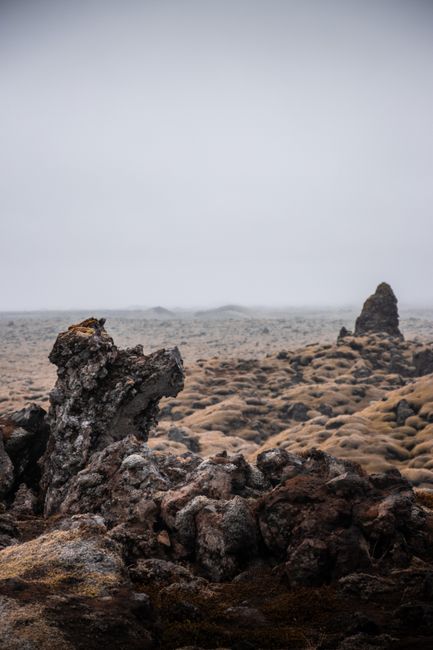
In 2013, Iceland's Supreme Court put a highway project on hold. The dispute wasn't over an endangered bird or a protected wetland — it was over a 70-tonne lava boulder in the Gálgahraun field near Reykjavík, which a local activist group said served as a chapel, or “Ófeigskirkja,” for the Huldufólk, Iceland's hidden people. The case made international news precisely because it wasn't a joke to everyone involved. A crane eventually moved the rock a short distance rather than destroying it, and the relocation was reportedly done in coordination with a self-declared seer who consulted the elves believed to use it. This article is about that real-world influence — not the folklore for its own sake, but the documented, sometimes bureaucratic ways a centuries-old belief still shapes decisions in a modern European country.
Documented History and Where the Belief Comes From
The Huldufólk (“hidden people”) trace back to medieval Icelandic folk belief, first recorded in writing in folktale collections from the 17th through 19th centuries, most notably Jón Árnason's mid-1800s compilation, which did for Iceland roughly what the Grimm brothers did for Germany. In the folklore, the Huldufólk live alongside humans but in a parallel, usually unseen world, inhabiting rocks, hills, and boulders said to be their homes or churches. They're typically described as resembling ordinary humans, not diminutive storybook fairies, and the stories follow a consistent pattern: those who respect Huldufólk dwellings are left alone, while those who disturb them face bad luck or worse.
Folklorist Terry Gunnell, who leads the University of Iceland's national folk-belief surveys, has traced the belief's unusual persistence through the country's shift from a rural, isolated society to a modern one. The most recent survey, conducted in 2023 with roughly 2,800 respondents, found that about 45% of Icelanders consider elves' existence at least possible, with some analyses of the same data putting the figure closer to 54% for hidden people generally, against a minority who call it firmly impossible. That's a meaningfully different claim than “everyone in Iceland believes in elves,” which circulates online without a source, but it's still higher than most comparable countries would report for an equivalent folk belief.
The Legend
According to the folklore, disturbing a Huldufólk dwelling — through construction, farming, or carelessness — brings misfortune on whoever's responsible. Stories collected over generations describe equipment mysteriously failing near certain rocks. One of the most repeated concerns Hafnarfjörður, sometimes called the “elf capital” of Iceland, where builders reportedly altered a structure's layout after workers described disturbances tied to a boulder on the property. The town's tourism office now runs an “elf garden” walking map for visitors, treating the folklore as genuine local heritage rather than an invented gimmick.
What's Actually Verifiable
No investigation has ever documented a Huldufólk sighting or recording that withstood scrutiny, and no engineering firm has published data showing rock-avoidance changes outcomes. What is verifiable is the paper trail: Iceland's national road agency, Vegagerðin, has acknowledged fielding public concerns about elf habitats during planning and has, in documented cases including the 2013 Gálgahraun dispute, altered construction plans or consulted local seers, a fact reported by the BBC, Iceland Magazine, and Fast Company. This isn't a one-off event — reroutes tied to reported elf concerns recur across projects over decades, though inconsistently and often driven by vocal activists rather than official policy. What can't be verified, and what no serious folklorist claims, is that the beings themselves exist — the record shows a durable cultural practice of caution, not proof of the folklore's literal truth.
Cultural Significance Today
The Huldufólk remain visible in Icelandic life well beyond road disputes. School curricula and tourism materials treat the folklore as heritage, and Icelandic musicians, including Björk, have referenced the hidden people in their work. The belief sits within a broader European tradition of nature spirits tied to specific places, a theme explored further in our guide to the Rusalka and other Slavic water spirits, where a comparable tradition also shaped real seasonal customs rather than staying confined to storybooks.
Frequently Asked Questions
Q1: Do most Icelanders actually believe in elves?
Not in the simple sense often reported. The 2023 University of Iceland survey found roughly 45% consider elves' existence at least possible, a meaningfully different claim than active belief, while a plurality of the rest were undecided rather than firm disbelievers.
Q2: Has a road project in Iceland really been changed because of elves?
Yes, this part is documented. The 2013 Gálgahraun lava field dispute near Garðabær is the best-recorded case: Iceland's Supreme Court paused construction, and a 70-tonne boulder said to be an elf church was relocated rather than destroyed, a story covered by the BBC and other international outlets.
Q3: Is there a specific 2004 case where a road was rerouted for elves?
We could not independently verify a specific, well-documented 2004 incident. The Álftanes/Gálgahraun case from 2013 is the most thoroughly reported example of this phenomenon, and readers should treat undated or uncited “2004 elf road” claims circulating online with caution until a primary source is found.
Q4: What do Huldufólk look like in the original folklore?
Unlike diminutive storybook fairies, they're typically described as resembling ordinary humans in size and appearance, living in a parallel society inside rocks and hills, complete with their own farms, livestock, and churches.
Q5: Is Hafnarfjörður really known as Iceland's “elf capital”?
The town's tourism office does promote an “elf garden” and elf-spotting map for visitors, treating the association as part of local identity, though this is civic branding built on long-standing local folklore rather than a claim of documented sightings.
Q6: Where can I learn more about Icelandic folklore beyond the Huldufólk?
Terry Gunnell's academic work and Alda Sigmundsdóttir's translated folktale collections (listed below) are the most-cited English-language starting points, alongside Jón Árnason's original 19th-century compilation that preserved much of this material in the first place.
Gear & Further Reading
- The Hidden People of Iceland by Terry Gunnell — an illustrated survey by the folklorist behind Iceland's national belief surveys.
- The Little Book of the Hidden People by Alda Sigmundsdóttir — twenty translated elf stories drawn from Icelandic folklore archives.
- Icelandic Folk Legends by Jón Árnason (trans.) — the 19th-century compilation that first collected much of this material in writing.
As an Amazon Associate, this site earns from qualifying purchases.
Comments