- Native
- Chickcharney
- Type
- Folklore creature
- Region
- Andros Island
- Verification
- Oral tradition
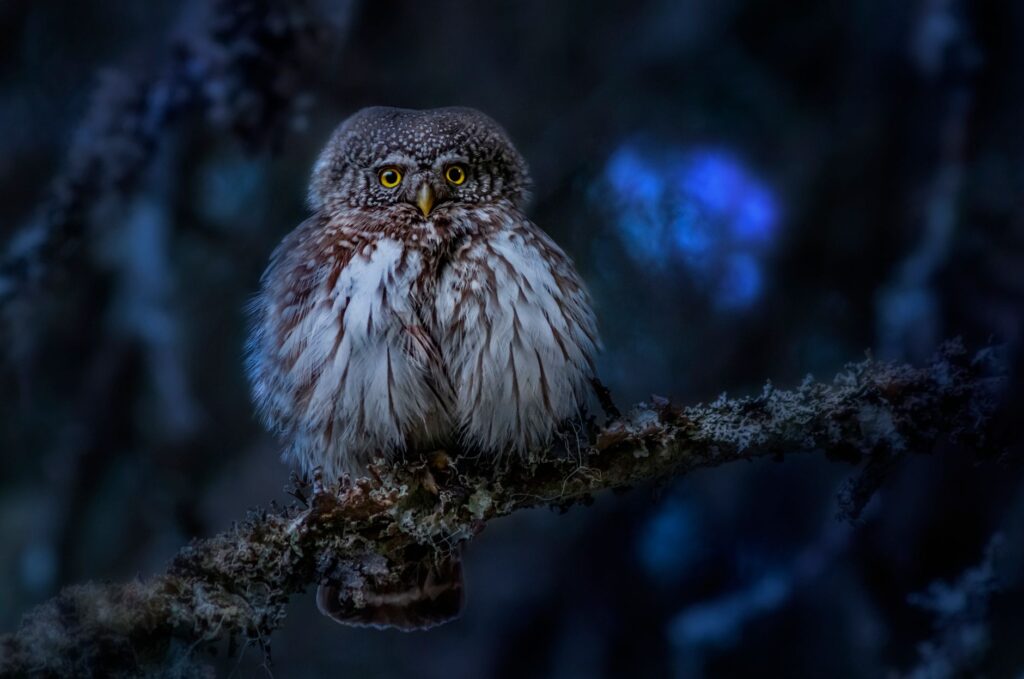
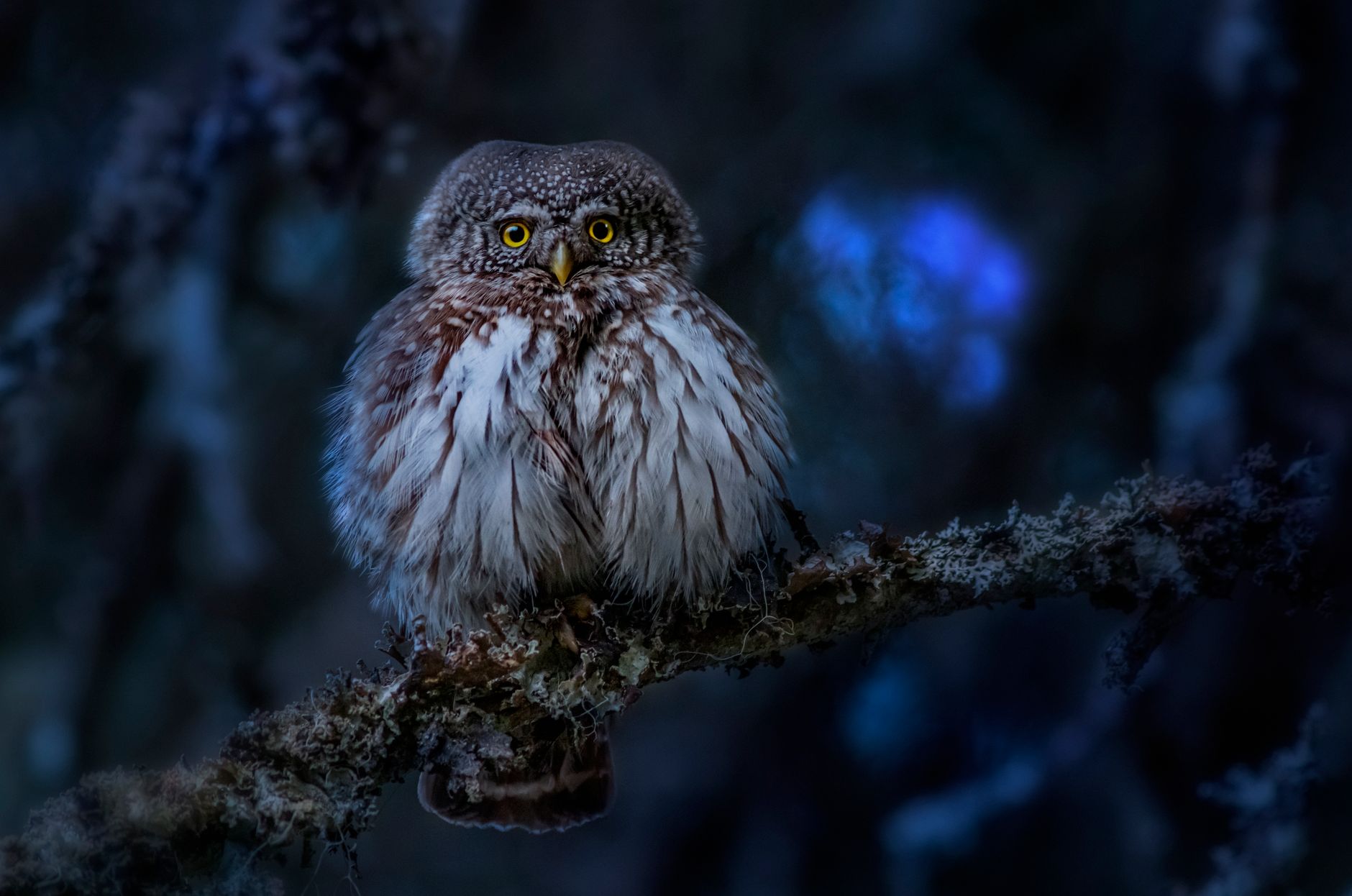
The chickcharney is a red-eyed, owl-like creature said to live in the pine forests of Andros, the largest island in the Bahamas. It brings luck to people who leave it alone and misfortune to those who cut its trees. One story even blames it for Neville Chamberlain's failures. A forester suggested in 1995 that the legend grew from a real giant owl, but the fossils do not quite say that.
In the record
- Wikipedia describes the chickcharney as a legendary creature of Andros folklore, with red eyes, three toes on each foot, a prehensile tail and a head that turns all the way round.
- In 1995 the forester Bruce G. Marcot of the US Forest Service proposed that the legend came from the extinct owl Tyto pollens.
- Tyto pollens is a real fossil species, found on Little Exuma and New Providence in the Bahamas, according to Wikipedia.
- A 1966 account quotes an Andros guide, Rudy Knowles, describing the creature, per the site Gods and Monsters.
Not in the record
- Any fossil of Tyto pollens from Andros itself. Wikipedia says none is known.
- A source for the Chamberlain curse story. It circulates as local tradition only.
- An agreed origin for the legend. Three different ones are on offer.
What's Actually Verifiable
The island, the pine forest and the owl fossils are real. The creature is a story. What can be checked is narrow: Andros folklore includes a feathered, owl-like being, and a giant owl once lived elsewhere in the Bahamas. Whether the two are connected is a guess, and a debated one.
What People Describe
Accounts disagree on the basics. Wikipedia says the chickcharney is either a large owl or a feathered humanoid that only resembles one. Gods and Monsters, which cites little, gives a height of about eighteen inches and mentions both a red-eyed bird and a small feathered man with a flame-coloured beard. Treat those details as one writer's summary, not a settled description.
The common points are these: red eyes, three toes, a tail it can grip with, and a head that swivels. Rudy Knowles, the guide quoted in the 1966 account, said it had a black ring round its neck and looked like a dove, which is a different picture again.
Nests and Pine Trees
The best-known detail is the nest. The chickcharney is said to pull the tops of two pine trees together and bind them into a single crown. Anyone who finds a pair of pines joined that way is looking at its home. Felling either tree is thought to bring the nest down and anger whoever lives in it. This detail comes from Wikipedia and from Gods and Monsters, where it is not sourced further.
Luck and Curses
The creature is not a hunter. It is said to reward those who treat it with respect and to punish those who mock it or damage its trees. Gods and Monsters reports a story from Knowles about a sceptical man who laughed into a nest and later found the tyres of two cars flat. It is told as a comic warning, and nobody has checked it.
The Chamberlain Story
The most repeated tale involves a British prime minister. Wikipedia reports a legend that Neville Chamberlain, as a young man of about twenty, ran a sisal plantation on Andros for his father, Joseph Chamberlain. He is said to have cut down trees that belonged to the chickcharnies, and the plantation failed. A later twist claims the same curse undid the Munich Agreement.
Gods and Monsters places the felling in the 1890s and says a tree was cut so a railway could be built, but it names no source for any of it. This guide has not found one either. Read it as a joke told about a famous man, not as history.
Where Did the Legend Come From?
There are three explanations on offer.
- A giant owl. Marcot's 1995 report suggested the legend came from Tyto pollens, a large extinct barn owl relative. Wikipedia says the paleontologist Lisa G. Buckley called the idea likely because the owl's range and the legend's origin overlap in place and time.
- A hunting story. Gods and Monsters repeats a claim that a Nassau sportsman invented it to protect duck-hunting grounds. The source is given only as unnamed travel writing.
- Seminole influence. The same page says people from Florida may have brought the tale to the island. Again no source is named.
Why the Owl Theory Is Shaky
Wikipedia's entry on the owl is blunt about Marcot's claims. He called the bird flightless; the entry says it certainly was not. He said it lived in the old pine forests of Andros; the entry says no fossils are known from there, only from Little Exuma and New Providence. The New Providence remains are about 20,000 years old. The Little Exuma site was never dated precisely, but it lies just below a layer marking the arrival of the Lucayans, the island's early people.
So an owl once lived in the Bahamas, and an owl-like creature lives in Andros stories, but a direct line between them is unproven. Wikipedia suggests habitat change and possibly hunting by the Lucayans may have helped finish the owl off. Whether anyone passed down memory of it for thousands of years is the open question.
Why the Story Lasts
Andros is large, low and thickly forested, with long stretches of pine and marsh. Owls are heard far more often than seen. A creature that watches from the branches, turns its head the wrong way and punishes carelessness suits that setting well.
For other creatures of the Caribbean and the forest, see the Rolling Calf of Jamaica, the Soucouyant of Trinidad and Tobago and El Tunche of the Peruvian Amazon.
Visiting Andros
Andros has large areas of forest and wetland. This guide has not checked current access or conditions, so ask locally, hire a guide for remote areas and do not cut or damage trees to test the legend.
Related: More Caribbean legends and ghost stories.
Frequently Asked Questions
What is the chickcharney?
The chickcharney is a legendary creature from Andros in the Bahamas. It is described as a red-eyed, three-toed, owl-like being with a gripping tail and a head that turns all the way round.
Where does the chickcharney live?
It is tied to the pine forests of Andros. It is said to join the tops of two pine trees to make its nest.
Is the chickcharney dangerous?
The stories say it is not a hunter. It brings luck to people who respect it and misfortune to those who harm its trees or mock it.
Did the chickcharney curse Neville Chamberlain?
That is local tradition, not documented history. The story says Chamberlain cut its trees on an Andros sisal plantation, but no source for it has been found.
Was the chickcharney based on a real owl?
Possibly. A 1995 report proposed the extinct owl Tyto pollens as the source. But no fossils of it are known from Andros, so the link is unproven.
Is there proof the chickcharney exists?
No. There is no photograph, specimen or record that identifies a living chickcharney. It remains a folk legend.