This article contains affiliate links. If you buy through them, we may earn a commission at no extra cost to you.
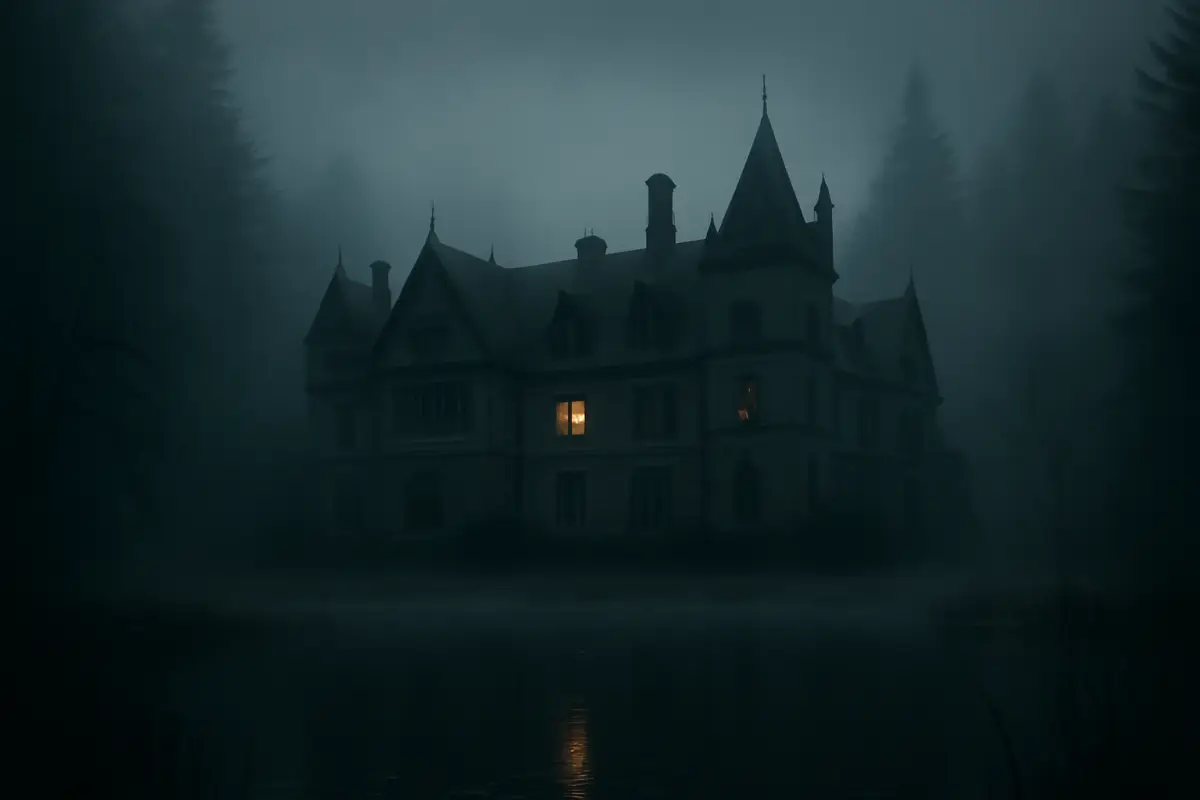
Washington State's haunted reputation spans European-style castles shipped stone-by-stone around Cape Horn, an abandoned asylum with over 1,400 burials, and one of the oldest public markets in the country. Below are 19 real, verifiable locations, each with the documented history behind the legend — including two corrections to claims that don't hold up: no, Charles Manson is not buried in Seattle, and no, the “Lone Fir Cemetery” entry in the old version of this list wasn't even in Washington (it's in Portland, Oregon, as the original article itself admitted).
Quick answer if you're short on time: Manresa Castle, Thornewood Castle, and Pike Place Market are the most historically documented and most tourable sites on this list.
- 1. Manresa Castle (Port Townsend)
- 2. Thornewood Castle (Lakewood)
- 3. Northern State Hospital (Sedro-Woolley)
- 4. Kell's Irish Pub (Seattle)
- 5. The Oxford Saloon (Snohomish)
- 6. Starvation Heights Sanitarium Ruins (Olalla)
- 7. The Moore Theatre (Seattle)
- 8. Black Diamond Cemetery (Black Diamond)
- 9. Port Gamble (the whole historic town)
- 10. The Palace Hotel (Port Townsend)
- 11. Maltby Cemetery (Snohomish County)
- 12. Pike Place Market (Seattle)
- 13. Point Defiance Park (Tacoma)
- 14. Washington State Capitol (Olympia)
- 15. Lake View Cemetery (Seattle)
- 16. Fort Worden (Port Townsend)
- 17. Tokeland Hotel (Tokeland)
- 18. Washington Governor's Mansion (Olympia)
- 19. Old Capitol Building / Thurston County Courthouse (Olympia)
1. Manresa Castle (Port Townsend)
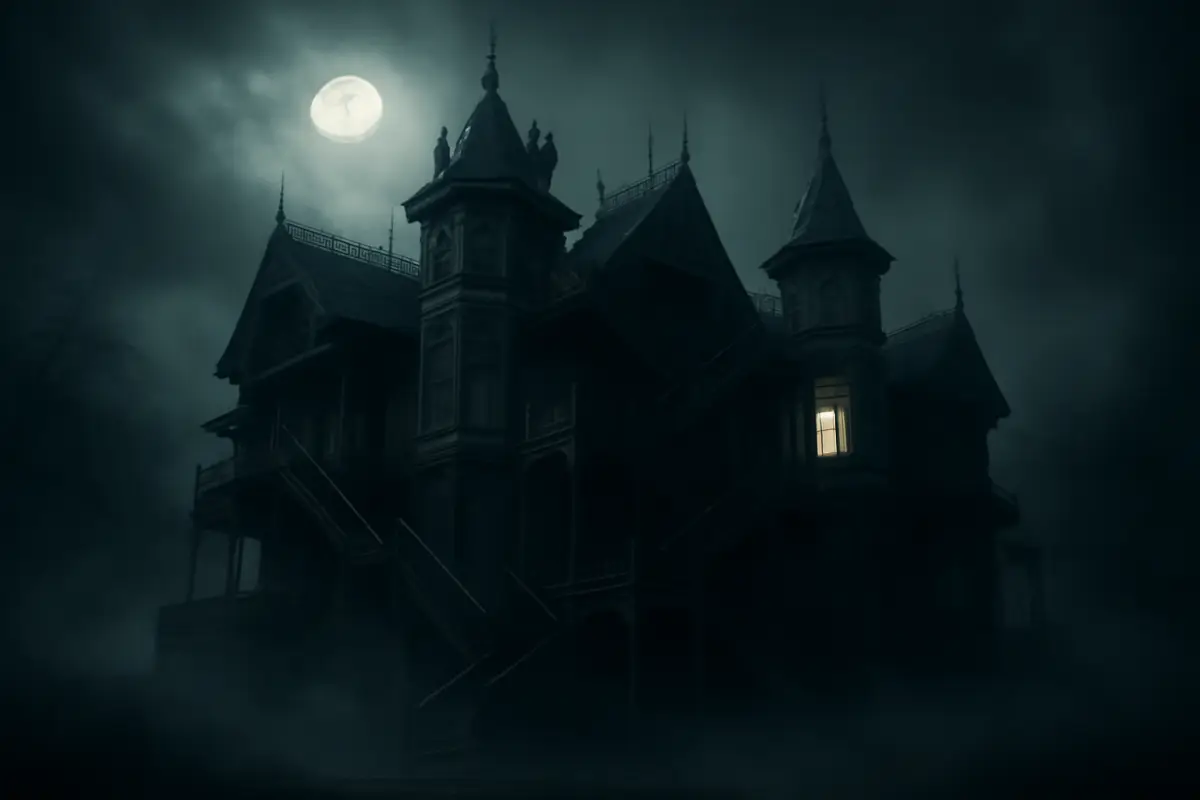
Manresa Castle was built in 1892 as a private residence for Charles Eisenbeis, a Prussian immigrant who became Port Townsend's first mayor. The 30-room mansion, styled after European castles, was the largest home in town at the time. After Eisenbeis died in 1902, the Jesuit order purchased it to train seminarians, renaming it Manresa Hall. In 1968 it was converted into a hotel, which still operates today, and the building appeared on Travel Channel's “Ghost Adventures” in 2015.
Locals say room 306 is haunted by a woman who threw herself from the window after learning of her lover's death, and room 302 holds the spirit of a monk who hanged himself in the bell tower. No historical records from the Eisenbeis or Jesuit era corroborate either death — both stories appear to be folklore that developed after the hotel era began.
Can you visit: Yes — it operates as a hotel and restaurant open to overnight guests and diners.
2. Thornewood Castle (Lakewood)
Thornewood Castle was built between 1908 and 1911 for Chester Thorne, a Port of Tacoma founder. Thorne purchased an Elizabethan-era English manor, had it disassembled, and shipped its brick, timber, and windows around Cape Horn to be reassembled on the shore of American Lake. The 54-room Tudor/Gothic mansion hosted guests including Presidents Theodore Roosevelt and William Howard Taft, and was added to the National Register of Historic Places in 1982.
Locals say the spirits of Chester, who died in the house in 1927, and his wife Anna, who lived there until 1954, still linger — reportedly seen arm in arm at the top of the staircase before vanishing.
Can you visit: Partially — it's a private event/wedding venue and inn, generally limited to booked guests.
3. Northern State Hospital (Sedro-Woolley)
Northern State Hospital opened in 1912, operating as a state psychiatric institution until it closed in 1973. Designed with grounds laid out by the Olmsted Brothers landscape firm, it became the largest asylum in the state, peaking at over 2,700 patients in a facility built for 1,800. More than 1,400 former patients are buried in the hospital's on-site cemetery, and public access to portions of the grounds was restored in 2019.
Locals say the abandoned wards and the cemetery carry a heavy, watched feeling. No documented paranormal investigation has produced verified evidence — the accounts are personal impressions rather than recorded incidents.
Can you visit: Partially — grounds and trails are publicly accessible, but many original buildings are unsafe or restricted.
4. Kell's Irish Pub (Seattle)
The building housing Kells Irish Restaurant & Pub at Pike Place Market was constructed in 1903 as the Butterworth & Sons mortuary, reportedly the first structure on the West Coast built specifically as a mortuary, processing large numbers of the dead during Seattle's 1918 influenza pandemic. Kells moved into the basement, the former embalming room, in 1983.
Locals say “The Lady in Waiting,” believed to be a flu-pandemic victim, haunts the space, along with a red-haired little girl said to move objects for children.
Can you visit: Yes — it's an operating restaurant and pub open to the public.
5. The Oxford Saloon (Snohomish)
The Oxford Saloon was built in 1890, originally as a general store before becoming a saloon and, during Prohibition, a speakeasy and brothel. Local histories cite roughly ten deaths connected to the building over its early decades, and the Washington State Ghost Society began formal investigations in 2005.
Locals say the saloon is haunted by at least three spirits: “Henry the Cop,” a lawman said to have been fatally stabbed breaking up a bar fight; “Kathleen,” a woman believed to have lived upstairs; and “Amelia,” a woman forced into prostitution.
Can you visit: Yes — it operates as a public bar and restaurant, including ghost tours.
6. Starvation Heights Sanitarium Ruins (Olalla)
“Starvation Heights” was the nickname for a sanitarium run by Linda Burfield Hazzard, a self-styled “fasting specialist” who was not a licensed physician. Hazzard treated patients with prolonged fasting; dozens died under her care in the early 1900s. She was convicted of manslaughter in 1911 after the death of British heiress Claire Williamson, served two years, and was later pardoned on condition she leave the country. She died of starvation in 1938 while fasting herself.
Some visitors report faint moaning near the old foundation — anecdotal folklore layered onto a location whose real history is disturbing enough on its own.
Can you visit: No — the site is private property with no public access.
7. The Moore Theatre (Seattle)
The Moore Theatre was built in 1907, opening in time to serve visitors to the 1909 Alaska-Yukon-Pacific Exposition. It is Seattle's oldest continuously operating theater. The theater sits on the site of one of Seattle's earliest cemeteries, used from 1853 to 1860; most burials were relocated before construction, though not all remains were confirmed removed.
Locals say the ghost of builder James Moore still checks in on shows, and staff describe applause erupting from an empty balcony.
Can you visit: Yes — it's an active, publicly ticketed performance venue.
8. Black Diamond Cemetery (Black Diamond)
Black Diamond Cemetery was established in 1884 for the coal-mining town founded that same year. The 3.5-acre cemetery holds an estimated 1,200 graves, including immigrant miners from Italy, Russia, Croatia, and Wales, with a shared marker for several killed in a 1910 mine explosion. It was listed on the National Register of Historic Places in 2000.
Locals say visitors have described swinging lantern lights bobbing between headstones after dark — folklore, not a documented phenomenon.
Can you visit: Yes — a public cemetery accessible during daylight hours.
9. Port Gamble (the whole historic town)
Port Gamble was founded in 1853 around a sawmill that operated continuously until December 1995, at the time the longest continuously running sawmill in the U.S. The town's New England-style architecture is preserved intact as a National Historic Landmark District.
Locals say the Walker-Ames House (1889) and other Victorian buildings are thick with restless spirits from the mill's 140-year history; the town now runs organized ghost walks.
Can you visit: Partially — the town is open to the public, but many haunted buildings are private or tour-only.
10. The Palace Hotel (Port Townsend)
The Palace Hotel building was constructed in 1889. From roughly 1925 to 1933, the upper floors operated as a hotel doubling as a brothel during Prohibition. The building has since been restored as a bed-and-breakfast-style hotel.
Locals say the “Lady in Blue,” known as Claire, worked out of Room 4 during the brothel years. Guests in Rooms 3 and 4 report the sudden scent of perfume and beds that shake at night.
Can you visit: Yes — it operates as a working hotel, and guests can request Claire's rooms.
11. Maltby Cemetery (Snohomish County)
Maltby Cemetery was established around 1901. Its real claim to local legend is the “13 Steps to Hell,” a staircase said to lead to a sealed hillside crypt, where walking down and turning around reportedly reveals a vision tied to the afterlife. (A commonly repeated “Hattie Braile” ghost name could not be verified in any source and should be treated as unconfirmed.)
Visitors describe an oppressive stillness and footsteps following behind them on the stairs.
Can you visit: Yes — a public cemetery, though visiting after dark may draw police attention.
12. Pike Place Market (Seattle)
Pike Place Market opened in 1907 after public outrage over price-fixing by produce middlemen. It survived a 1971 push for urban renewal that would have demolished it, thanks to a citizen-led preservation campaign.
Locals say “Arthur,” believed to be fishmonger Arthur Goodwin who worked the stalls for over forty years until his 1956 death, still lingers near the fish counters.
Can you visit: Yes — open to the public daily during normal business hours.
13. Point Defiance Park (Tacoma)
Point Defiance Park was established in 1888, one of the oldest and largest public parks in the state at roughly 760 acres. Its Japanese-style Pagoda, built in 1914, was damaged by fire in 2011 and later restored. The park was also the site of the real, unsolved 1986 murder of 14-year-old Jennifer Bastian.
Locals say the Pagoda is the park's most active spot, and some visitors report a girl standing beside a bicycle on Five Mile Drive — a connection to the Bastian case that is folklore, not a claim made by investigators or her family, and should be treated with care given it involves a real unsolved crime.
Can you visit: Yes — the park is open to the public during posted hours; the drive closes at night.
14. Washington State Capitol (Olympia)
The Legislative Building was completed in 1928 and has survived two major earthquakes: a 7.1-magnitude quake in 1949 that destroyed the dome's stone cupola, and a 6.5-magnitude quake in 1965 that badly cracked the dome's buttresses, prompting a reinforced retrofit.
Given that history of structural damage, some staff and visitors report cold spots and shadowy figures after hours, though no single named ghost is consistently tied to the building.
Can you visit: Partially — public tours are offered during business hours.
15. Lake View Cemetery (Seattle)
Lake View Cemetery, established in 1872, is most famous as the burial site of Bruce Lee, who died in 1973, and his son Brandon Lee, who died in 1993 during the filming of The Crow. Their side-by-side graves draw thousands of visitors annually. Correction: some online lists claim Charles Manson is buried here — this is false. Manson died in California in 2017 and was never buried in Seattle.
Locals say shadowy figures are sometimes seen drifting among the older headstones at dusk.
Can you visit: Yes — open to the public daily from 9 a.m. until dusk, free of charge.
16. Fort Worden (Port Townsend)
Fort Worden was built between 1898 and 1902 as part of the “Triangle of Fire” coastal artillery defense system guarding Puget Sound. It was decommissioned in 1953 and later became a state park; it also served as a filming location for An Officer and a Gentleman (1982).
Locals say the old barracks and underground tunnels are the site's most active spots, with staff describing disembodied footsteps echoing from the tunnels.
Can you visit: Yes — a Washington State Park open to the public, with camping, lodging, and tours.
17. Tokeland Hotel (Tokeland)
(Replaces an out-of-state “Rainier Hotel, Enumclaw” entry that could not be verified to exist.) The Tokeland Hotel, built in 1885, is recognized as Washington State's oldest hotel and has been on the National Register of Historic Places since 1978, perched near Willapa Bay on the southwest coast.
Locals say the hotel's best-known spirit, “Charley,” died in the building in the 1930s while hiding from smugglers in a secret compartment; guests report a hazy white figure on the second floor.
Can you visit: Yes — it operates as a functioning inn and restaurant open to overnight guests.
18. Washington Governor's Mansion (Olympia)
The Governor's Mansion was completed in 1908 and remains the official residence of the state's governor. The 19-room Georgian Revival building has hosted every Washington governor since construction and underwent a significant 1970s renovation.
Locals say the mansion's most talked-about resident is a young boy in a blue sailor suit, said to appear at the edges of visitors' vision — folklore, with no documented historical child's death tied to the property.
Can you visit: Partially — public tours are offered on a limited, reservation basis.
19. Old Capitol Building / Thurston County Courthouse (Olympia)
Built in 1892 and nicknamed “The Castle,” the building became Washington's temporary state capitol in 1905. It suffered a devastating 1928 fire that destroyed its clock tower and further damage in the 1949 earthquake. It now houses the state's Office of Superintendent of Public Instruction.
Locals say staff have reported the security alarm triggering overnight with no intruder found, and footsteps climbing the stairwells after hours.
Can you visit: Partially — a working state office, not generally open for public tours, though the exterior and grounds are accessible.
As an Amazon Associate, this site earns from qualifying purchases.
Frequently Asked Questions
What is the most haunted place in Washington State?
Manresa Castle in Port Townsend and Thornewood Castle in Lakewood are the two most documented and most-visited haunted locations, both offering tours or overnight stays.
Is Charles Manson buried in Seattle?
No. This is a persistent but false claim about Lake View Cemetery. Manson died in California in 2017 and was never buried in Washington State.
Can you stay overnight at a haunted location in Washington State?
Yes. Manresa Castle, the Palace Hotel, the Tokeland Hotel, and Thornewood Castle are all working hotels or inns where guests can book the rooms most associated with their ghost stories.
Is Starvation Heights in Olalla open to the public?
No — the site is private property, and trespassing has been a recurring legal issue there. Its real history (a fatal unlicensed “fasting” sanitarium run by a woman convicted of manslaughter) is documented and disturbing without any embellishment.
Comments