This article contains affiliate links. If you buy through them, we may earn a commission at no extra cost to you.
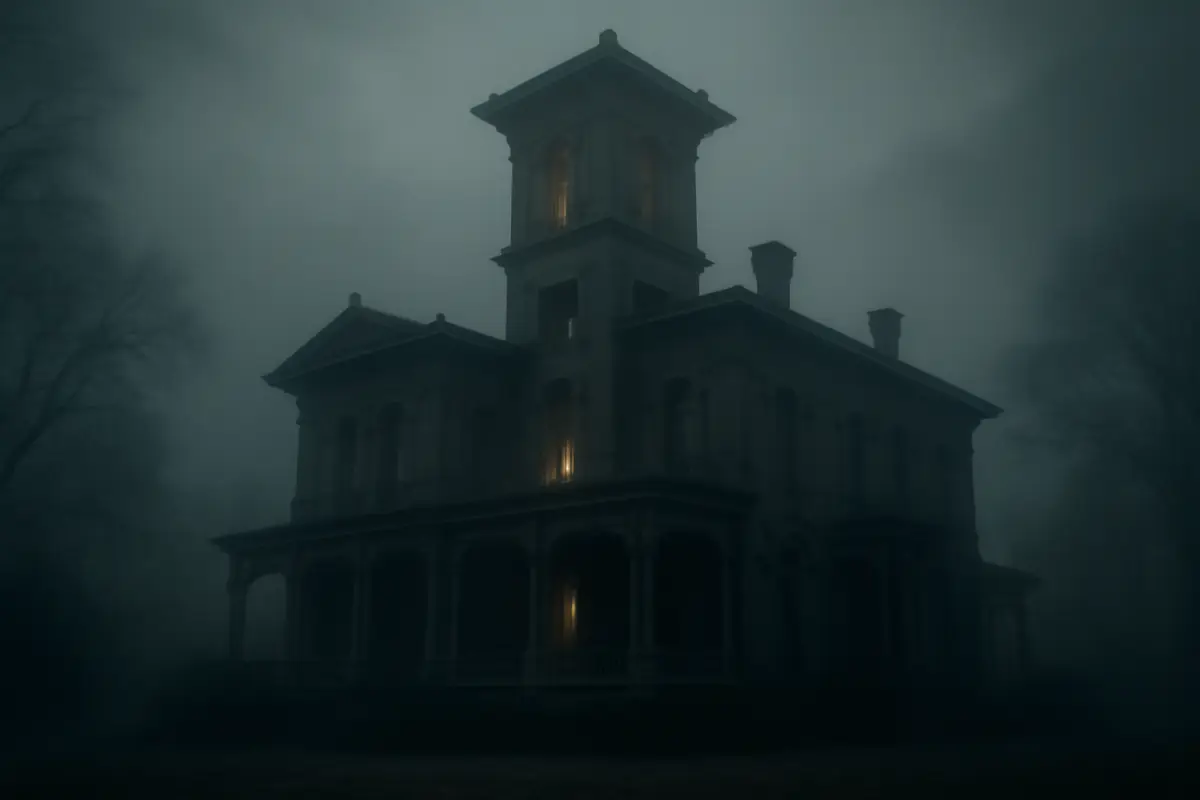
Alaska's isolation, brutal winters, and Gold Rush-era boomtowns left behind a smaller but stranger collection of haunted sites than the Lower 48. Many of the state's ghost stories are tied to real tragedies — shipwrecks, epidemics, mining deaths, and one of the worst earthquakes in North American history. Here are 10 Alaska locations where documented history and hedged local legend intersect.
Quick answer if you're short on time: The Alaskan Hotel & Bar in Juneau and the Red Onion Saloon in Skagway are both still open to the public and lean into their haunted reputations with tours and events; the Historic Anchorage Hotel is bookable for an overnight stay.
- 1. The Alaskan Hotel & Bar (Juneau)
- 2. Golden North Hotel (Skagway)
- 3. Red Onion Saloon (Skagway)
- 4. Jesse Lee Home for Children (Seward)
- 5. Fourth Avenue Theatre (Anchorage)
- 6. Portlock Ghost Town (Kenai Peninsula)
- 7. Historic Anchorage Hotel (Anchorage)
- 8. Kenai Cemetery (Kenai)
- 9. Igloo City Hotel (Cantwell)
- 10. Baranov Museum / Kodiak History Museum (Kodiak)
- Sources
1. The Alaskan Hotel & Bar (Juneau)
The Alaskan Hotel opened in 1913 and is the oldest operating hotel in Juneau. It was built by the McCloskey brothers and Jules B. Caro during the region's hard-rock gold-mining boom, and local histories say its rooms also served as a bordello in the early decades. The building was briefly condemned in the 1970s before new owners rehabilitated it, and it was added to the National Register of Historic Places in 1978. It remains a working hotel and bar in downtown Juneau.
The best-known story says the spirit of a woman named Alice, who reportedly died in what is now Room 219, appears in a flowing gown with arms outstretched and has been seen sitting on beds or reflected in mirrors throughout the building. Guests describe a cold, damp air settling into the room just before she appears.
Can you visit: Yes — it operates as a hotel and bar open to the public.
2. Golden North Hotel (Skagway)
Built during the 1898 Klondike Gold Rush, the Golden North Hotel was for decades one of Skagway's most recognizable landmarks, its golden dome visible from the town's main street. The hotel closed to overnight guests in 2002, though the building and its sign remain standing. Local historians note that the hotel's owners were already promoting its ghost story to attract business by the late 1960s, which is worth keeping in mind.
According to the legend, a young woman named Mary, who came to Skagway with her prospector fiancé and died alone in what is now Room 23 while waiting for his return, still haunts the room. Visitors passing the building report a cold, choking sensation and glimpses of white fabric moving past darkened windows.
Can you visit: Partially — the building still stands in Skagway's historic district but is closed to overnight guests.
3. Red Onion Saloon (Skagway)
The Red Onion Saloon was built in 1898 at the peak of the Klondike Gold Rush and operated as one of Skagway's most well-known bordellos, with ten upstairs “cribs” serving prospectors passing through town. It closed as a brothel within two years as the gold rush moved on to Nome, and the building has since served as a dance hall, army barracks, bakery, and television station before reopening as a saloon and museum.
Locals say the ghost of a madam named Lydia still tends to the upstairs rooms, her presence marked by a strong scent of perfume and sudden cold spots. Staff also describe a second spirit, a madam nicknamed “Diamond Lil,” said to place a hand on male guests' legs, and a foul-smelling, more aggressive presence nicknamed “John.”
Can you visit: Yes — it operates as a saloon and museum with historical tours.
4. Jesse Lee Home for Children (Seward)
The Methodist-run Jesse Lee Home began in the Aleutians at Unalaska in 1890 and opened its Seward campus in 1926, taking in children from across the territory, many orphaned by the 1918–19 influenza epidemic. That year 13-year-old resident Benny Benson won the contest to design Alaska's flag, and the flag was first raised at the home on July 9, 1927. The 1964 Good Friday earthquake badly damaged the buildings; the church closed the Seward home and opened a new one in Anchorage. After years of preservation debate, the Seward City Council voted to demolish the remaining structure in July 2020, and demolition began on November 4, 2020.
Before demolition, visitors claimed the sound of children giggling and a jump rope tapping on pavement could be heard on the empty grounds. Some say it still can.
Can you visit: No — the building was demolished in 2020; only the site remains.
5. Fourth Avenue Theatre (Anchorage)
Begun in 1941 and delayed by World War II, the Art Deco Fourth Avenue Theatre was built by Alaska businessman Austin “Cap” Lathrop to a design by theater architect B. Marcus Priteca. It opened on May 31, 1947, with nearly 1,000 seats and The Jolson Story on the screen. It survived the 1964 earthquake largely intact and was listed on the National Register of Historic Places in 1982, but it sat vacant for more than 15 years before its owners judged restoration too costly. Demolition began in August 2022, with some artwork and the neon sign salvaged for a planned redevelopment of the block.
Locals say the ghost of Cap Lathrop himself lingered in the building, along with a woman in mid-century dress reportedly seen in a mirrored corridor near the old restrooms. Visitors described cold spots and shadowy movement in the balcony and projection booth in the years before demolition.
Can you visit: No — the theater was demolished in 2022.
6. Portlock Ghost Town (Kenai Peninsula)
Portlock was a salmon-cannery settlement on Port Chatham bay, at the southern tip of the Kenai Peninsula about 16 miles south of Seldovia. It was named for British captain Nathaniel Portlock, who sailed there in 1786. A post office opened in 1921, and the population was largely Alutiiq (Russian-Aleut). Most residents moved to Nanwalek and Port Graham in the 1940s, as road-connected towns on the other side of the peninsula drew people away, and the post office closed in 1950–51. The site is reachable only by boat or floatplane.
A popular story claims the town was abandoned because of a Bigfoot-like forest being called Nantiinaq that destroyed fishing gear and stalked workers. Those accounts only appeared in the 2000s, long after the town's ordinary economic decline, and have since been reported as fabricated.
Can you visit: Partially — the ghost town's remains are accessible by boat or floatplane, but there is no road access.
7. Historic Anchorage Hotel (Anchorage)
The original Anchorage Hotel was a wood-frame building put up in 1916, two years after Anchorage began as a railroad tent camp; the brick annex that operates today opened in 1936 and was listed on the National Register of Historic Places in 1999. It is the city's oldest hotel still in operation. On February 20, 1921, Anchorage's first police chief, John “Black Jack” Sturgus, was found fatally shot near the hotel in a killing that was never solved.
Hotel lore says Sturgus's ghost returns to the site each year, and staff maintain a guest log of reported encounters, including moving curtains and objects shifting on their own. A separate legend describes a bride who died by suicide in her room after being left at the altar, said to appear in a flowing white dress near the hotel's mirrors.
Can you visit: Yes — it operates as a hotel open to the public.
8. Kenai Cemetery (Kenai)
Kenai Cemetery, located near 1st Avenue and Coral Street, serves as one of the oldest burial grounds on the Kenai Peninsula, reflecting the area's Russian colonial and gold-mining past. Local lore holds that laborers brought in during the region's gold-mining period were killed rather than fed once the mines ran dry, and buried in unmarked graves outside the cemetery's main plots — a claim that is part of oral tradition rather than a documented historical record.
Local stories describe a heavyset woman named Marie and a caretaker-like spirit named Arthur are both seen at night tending the graves. Visitors have reported unexplained figures appearing in photographs taken at the site, particularly near the older, unmarked section.
Can you visit: Yes — it's a public cemetery, though visitors should be respectful of it as an active burial ground.
9. Igloo City Hotel (Cantwell)
Begun in the 1970s by developer Leon Smith, Igloo City was intended as a novelty roadside hotel shaped like a giant igloo along the George Parks Highway. It never opened as a hotel because the four-story concrete structure failed to meet building codes, and after briefly functioning as a gas station stop, it was fully abandoned by the 2000s.
Passing drivers claim strange lights are seen glowing from inside the empty structure at night, and some report the shape of a woman in white standing in one of the upper windows.
Can you visit: No — the building is private property and entry is prohibited, though it's visible from the highway.
10. Baranov Museum / Kodiak History Museum (Kodiak)
Built around 1808 as a storehouse for the Russian-American Company, the log building that now houses the Kodiak History Museum (known as the Baranov Museum until 2019) is the oldest of four surviving Russian-era structures in Alaska. After the 1867 sale of Alaska it passed to American trading firms, and in 1911 W. J. Erskine bought it as a family home, which is why it is also called the Erskine House; he sold it in 1948. Museum lore holds that a man named McIntyre was killed in the building in 1886, when it was an Alaska Commercial Company station, and that a skeleton was later found in the woods nearby. We could not find an independent record of that killing, so treat it as local tradition.
The story goes that McIntyre's ghost still haunts the back rooms of the museum, and staff describe unexplained footsteps and cold drafts in that section after closing.
Can you visit: Yes — it operates as a public museum.
Frequently Asked Questions
Why does Alaska have fewer famous haunted places than other states?
Alaska's small historical population, remote geography, and relatively recent statehood (1959) mean it has far fewer centuries-old buildings and documented tragedies than states with longer non-Indigenous settlement histories, so its haunted lore leans heavily on Gold Rush-era buildings and a handful of well-known 20th-century tragedies.
Are any of these Alaska locations no longer standing?
Yes — the Jesse Lee Home in Seward and the Fourth Avenue Theatre in Anchorage were both demolished (work began in 2020 and 2022, respectively), so those entries are included for their historical significance even though the buildings themselves are gone.
Which Alaska haunted spot is easiest for tourists to visit?
The Red Onion Saloon and Alaskan Hotel & Bar in Southeast Alaska are both fully open, operating businesses that welcome tourists, including on cruise ship stops in Skagway and Juneau, making them the most accessible entries on this list.
Sources
- Jesse Lee Home for Children – Wikipedia
- Efforts fail to save Anchorage's historic 4th Avenue Theatre from demolition – Alaska Public Media
- Alaskan Hotel – Wikipedia
- Portlock, Alaska – Wikipedia
- Kodiak History Museum – Wikipedia
- Klondike Gold Rush National Historical Park (Skagway) – National Park Service
As an Amazon Associate, this site earns from qualifying purchases.