This article contains affiliate links. If you buy through them, we may earn a commission at no extra cost to you.
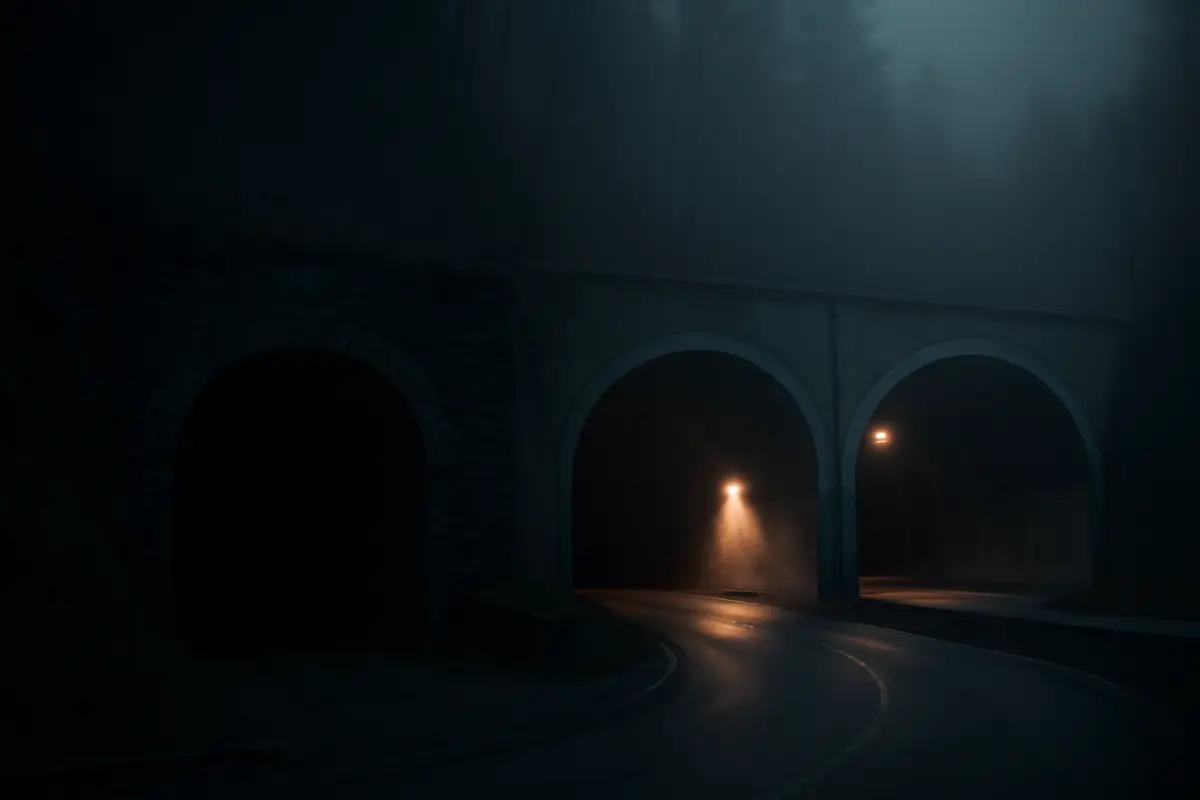
Uguisudani Tunnel (鶯谷トンネル) runs through Mount Kinka in Gifu City, Gifu Prefecture, the same mountain that carries Gifu Castle.
- Verified history
- The legend
- Our take
- The Kuchisake-onna Connection, Examined
- Part of a Wider Pattern: Haunted Tunnels Across Japan
- Frequently Asked Questions
- Is Uguisudani Tunnel really where Kuchisake-onna originated?
- Did people actually die in Uguisudani Tunnel during WWII?
- Is Uguisudani Tunnel open to the public?
- Is the shrine near the tunnel entrance officially recognized?
- Why are so many tunnels in Japan considered haunted?
- Is Japan considered a haunted country?
- What makes an abandoned tunnel a likely setting for a ghost story in Japan?
- Related Stories
Verified history
The original tunnel opened in 1947. Local sources describe funding difficulties resolved partly because the tunnel was designated for use as an air-raid shelter during WWII, covering part of its construction cost through national funding. A second, newer tunnel, Shin-Uguisudani, opened alongside it in 1972.
Several Japanese sources state people died inside during air raids, though we found no precise casualty figures or records — this detail is repeated across ghost-story sites but appears to originate from oral history. A small shrine near the entrance is locally believed to memorialize war victims, though its founding is undocumented.
The legend
Some Japanese sources cite Uguisudani as a possible birthplace of the “Kuchisake-onna” (Slit-Mouthed Woman) urban legend, though this claim is disputed given multiple competing origin claims nationally. Visitors report cold spots and a female apparition entering vehicles — personal anecdotes without independent verification.
Our take
The wartime shelter use is the best-documented and most plausible source of the haunted reputation. The Kuchisake-onna origin claim and specific sightings are folklore layered on top.
Can you visit: Yes. Both tunnels are ordinary public roads in daily use.
The Kuchisake-onna Connection, Examined
The claim that Uguisudani is a birthplace of Kuchisake-onna deserves more scrutiny than it usually gets. The 1978-79 nationwide panic has been traced by folklorists to a specific first report in rural Gifu Prefecture — the same prefecture Uguisudani sits in, which is likely why the tunnel gets named at all. But “somewhere in Gifu Prefecture” and “this specific tunnel in Gifu City” are not the same claim, and we found nothing tying the documented 1978 report to Uguisudani specifically rather than to the prefecture broadly.
Part of a Wider Pattern: Haunted Tunnels Across Japan
Uguisudani Tunnel is one of dozens of similar sites documented across this site, and it fits a recognizable pattern rather than standing alone. Roughly three-quarters of Japan’s land area is mountainous, which has required over a century of tunnel construction, and older bores are typically sealed or abandoned rather than demolished once a wider, better-lit replacement opens nearby. Those abandoned alignments — not the tunnels still in daily use — are where the folklore tends to concentrate: narrow, unlit, and left to decay in a way that reads as ominous even when the underlying cause is a routine highway upgrade. Japan’s long kaidan (ghost story) storytelling tradition, which attaches spirits to liminal spaces such as tunnels, bridges, and mountain passes, gives these sites a ready-made narrative frame.
Frequently Asked Questions
Is Uguisudani Tunnel really where Kuchisake-onna originated?
Unconfirmed. The tunnel is in the right prefecture for the documented 1978 origin report, but we found no source tying that specific report to this specific tunnel rather than the region generally.
Did people actually die in Uguisudani Tunnel during WWII?
Plausibly, given its documented use as an air-raid shelter, but we found no precise casualty records — this detail circulates as oral history rather than documented fact.
Is Uguisudani Tunnel open to the public?
Yes — both the original tunnel and the newer Shin-Uguisudani tunnel alongside it are ordinary public roads in daily use through Mount Kinka.
Is the shrine near the tunnel entrance officially recognized?
It’s locally believed to memorialize wartime victims, but we found no documented founding record — it’s treated by nearby residents as a small memorial rather than a maintained religious institution with formal records.
Why are so many tunnels in Japan considered haunted?
Japan’s mountainous terrain (roughly three-quarters of the country) has required over a century of tunnel construction, and old bores are typically abandoned rather than removed once a newer route opens nearby. Combined with a long kaidan (ghost story) tradition of attaching spirits to liminal spaces, these abandoned tunnels became natural settings for local ghost stories.
Is Japan considered a haunted country?
Japan has one of the world’s richest documented traditions of ghost stories and haunted-location folklore, built up over centuries through kaidan storytelling, yokai folklore, and site-specific legends attached to tunnels, forests, and other liminal places. That reflects a deep cultural and narrative tradition — not a verifiable claim about supernatural activity.
What makes an abandoned tunnel a likely setting for a ghost story in Japan?
Age, disuse, and physical decay do most of the work: a dark, damp, overgrown structure that once carried traffic and now carries none reads as unsettling on its own, independent of any specific incident. As with Uguisudani Tunnel, the underlying history is often more mundane — a routine bypass or road realignment — than the legend suggests.
As an Amazon Associate, this site earns from qualifying purchases.
Comments