
This article contains affiliate links. If you buy through them, we may earn a commission at no extra cost to you.
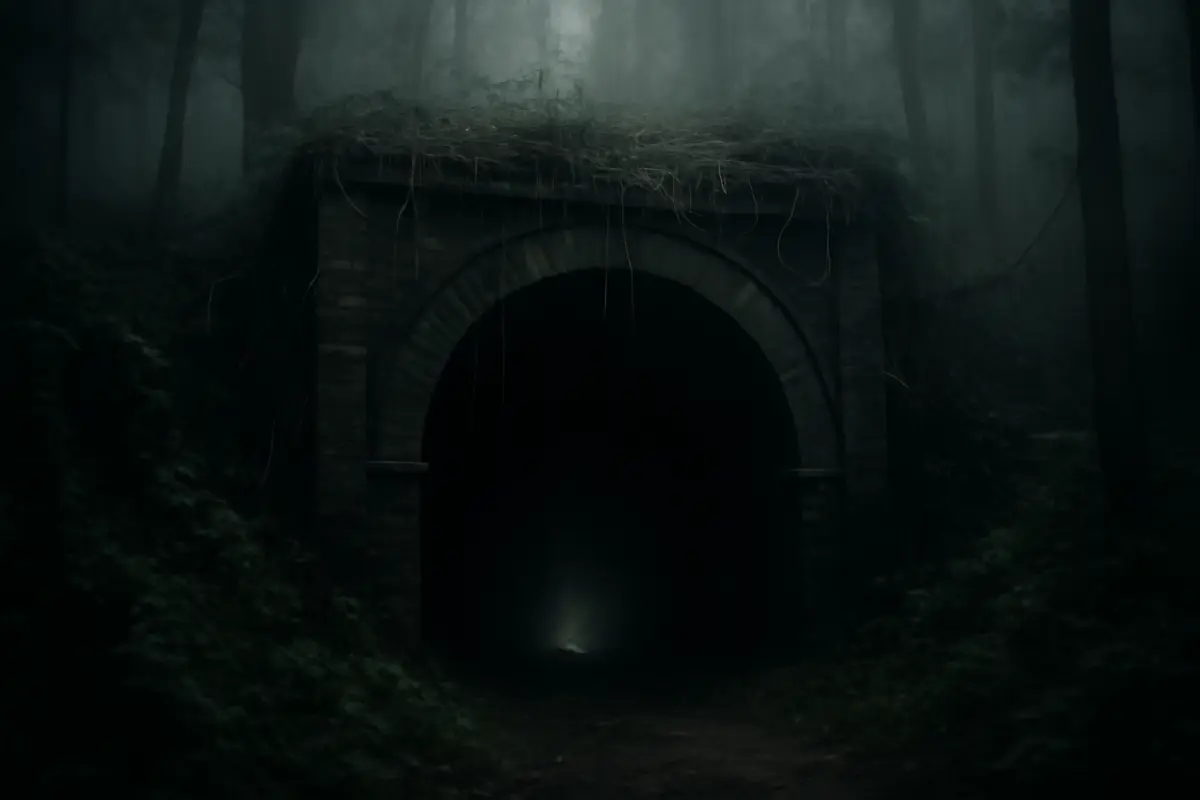
Deep in the hills of Kakegawa, Shizuoka Prefecture, old brick-and-stone tunnels sit abandoned along a former mountain road once known as the Kakegawa-Ōdai route. Together they’re known as the Kazefuki (or Fukibuki) Tunnels, and their history is unusually well documented for a haunted-tunnel legend — down to the name of the man who built the first one.
Built by One Farmer’s Ambition, 1902
The Kazefuki tunnels were built to connect farming communities in the hills above Kakegawa to the markets of the Tōkaidō corridor below. Before the Meiji era, this was a poor farming district; residents grew what rice and vegetables the land allowed and supplemented their income burning charcoal and selling firewood. When tea cultivation took hold in the area from roughly the 1880s onward, it improved local livelihoods, but farmers still had to carry their harvest over a steep, three-sided mountain barrier to reach the roads toward Kakegawa.
The first tunnel was completed in 1902 (Meiji 35), built through the efforts of local resident Aono Ukichi, with financial backing from Okada Ryōichirō, chairman of the regional Hōtokusha mutual-aid organization — a Meiji-era self-help and agricultural cooperative movement. The tunnel system was expanded in stages: a second tunnel was added around 1929 (Shōwa 4), and further renovation followed in 1957 (Shōwa 32), after which the pair became known locally as Kazefuki Tunnel and Second Kazefuki Tunnel. The route stayed in use until a new road opened nearby in 1999 (Heisei 11), after which the old tunnels were retired.
The Haunting
Locals describe a female spirit inside the oldest of the tunnels, along with a more diffuse but frequently repeated sensation: an unexplained unease on entering, and the feeling of another person’s presence in the passage when the tunnel is empty. Unlike tunnels whose hauntings trace to a specific construction accident or wartime death, Kazefuki’s story is less anchored to one named victim — it reads more as an atmosphere that accumulated across nearly a century of continuous local use, three separate construction and renovation phases, and the tunnels’ eventual abandonment once modern paved roads over the barrier finally arrived.
Why This Tunnel’s History Outshines Its Ghost Story
What makes Kazefuki unusual among Japan’s haunted tunnels is that its documented civil history — a named local builder, a named financial backer, a specific cooperative movement, three distinct construction phases spanning 1902 to 1957 — is more detailed than the ghost story attached to it. Most tunnel legends run the opposite way: rich haunting, thin infrastructure record. Here, the haunting is comparatively vague while the tunnel’s origin as a piece of Meiji-era rural self-help infrastructure is unusually well preserved.
Can You Visit?
The tunnels sit along the old, retired alignment of what’s now bypassed road infrastructure near Kakegawa. As with most of Japan’s abandoned brick-and-stone tunnels from this era, structural condition can vary and isn’t guaranteed to be maintained or inspected, since the route has been out of official service since 1999.
Frequently Asked Questions
Who built the first Kazefuki Tunnel?
Local resident Aono Ukichi built the first tunnel in 1902, with financial backing from Okada Ryōichirō, chairman of the regional Hōtokusha mutual-aid organization.
When did the tunnels stop being used?
A new road opened nearby in 1999, after which the Kazefuki tunnels — by then more than 90 years old and rebuilt in stages since 1902 — were retired from regular use.
As an Amazon Associate, this site earns from qualifying purchases.