This article contains affiliate links. If you buy through them, we may earn a commission at no extra cost to you.
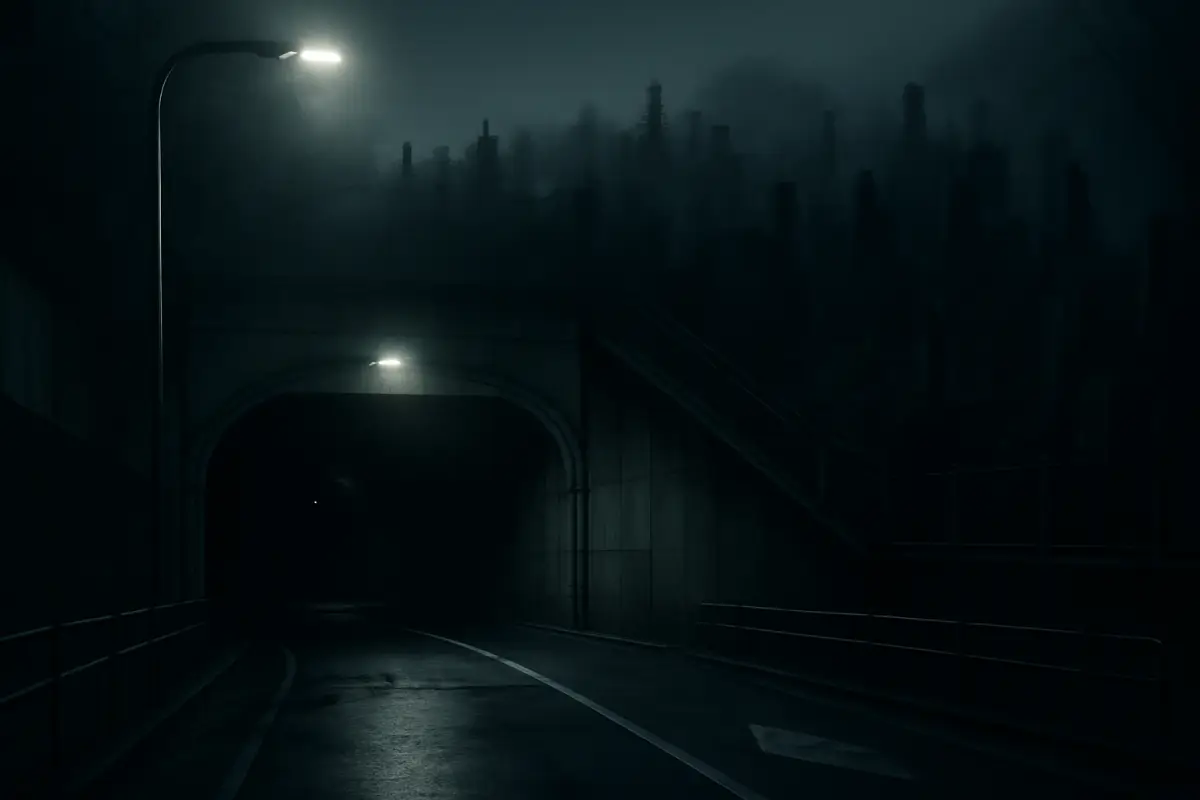
Sendagaya Tunnel (千駄ヶ谷トンネル) is a roughly 300-meter road tunnel in Sendagaya, Shibuya Ward, Tokyo, and one of the most cited haunted spots in central Tokyo.
- Verified history
- The legend
- Our take
- Why Japan Has So Many Haunted Tunnel Legends
- Part of a Wider Pattern: Haunted Tunnels Across Japan
- Frequently Asked Questions
- Why is Sendagaya Tunnel considered haunted?
- Has anyone died in Sendagaya Tunnel?
- Is Sendagaya Tunnel connected to Jujutsu Kaisen?
- Why are so many tunnels in Japan considered haunted?
- Is Japan considered a haunted country?
- What makes an abandoned tunnel a likely setting for a ghost story in Japan?
- Related Stories
Verified history
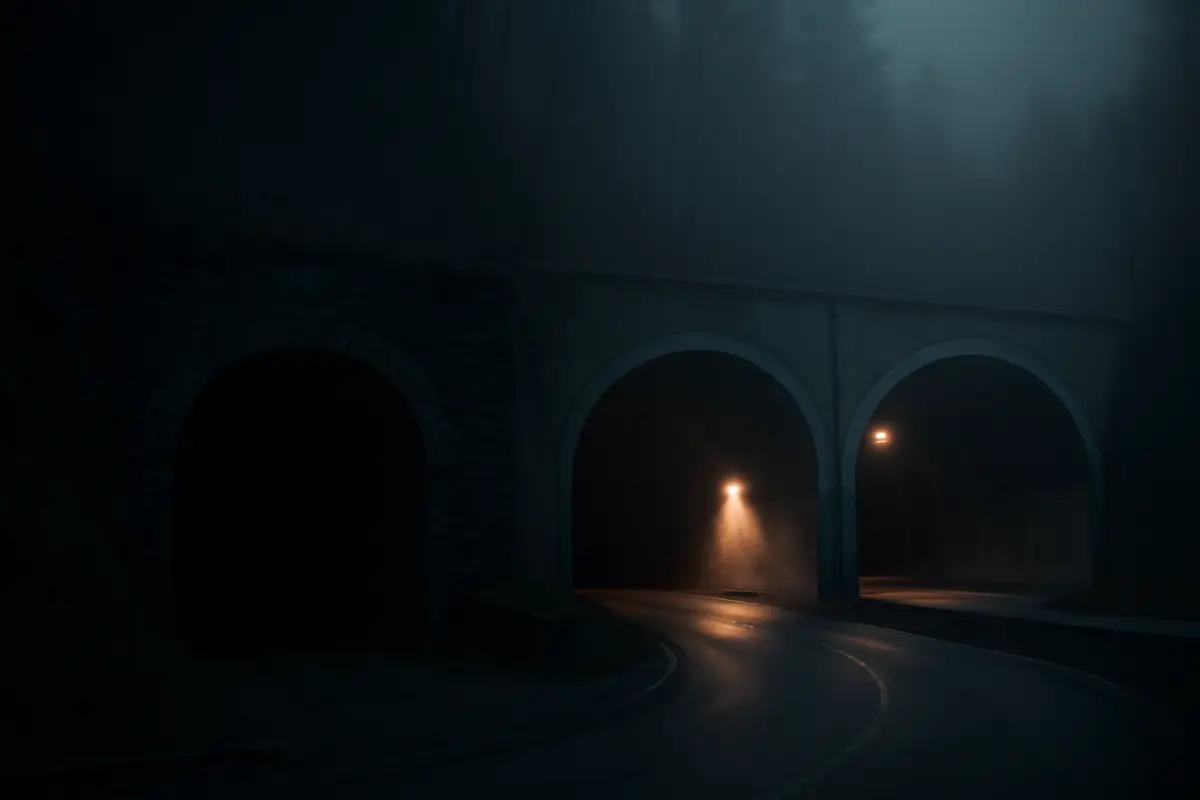
The tunnel was built ahead of the 1964 Tokyo Olympics near the newly built National Stadium. Multiple sources agree on an unusual detail: to save time, it was routed directly beneath the cemetery of Senjuin, a Nichiren-sect temple, rather than diverted around it.
The legend
According to the legend, a “white human silhouette” is said to appear ahead in the tunnel at night, vanishing when approached; a second, less common version describes a woman's figure hanging from the ceiling. We found no photographic, video, or investigative evidence behind either version, and no news coverage of deaths or crimes inside the tunnel itself. It has become a minor pop-culture pilgrimage site in recent years after being referenced in the anime Jujutsu Kaisen, which likely explains why the story is now told more widely than its thin evidentiary base would otherwise support.
Our take
The haunted reputation rests almost entirely on the structural fact of running beneath a cemetery, rather than any documented death connected to the tunnel itself.
Can you visit: Yes. It is an active public road tunnel with regular traffic.
Why Japan Has So Many Haunted Tunnel Legends
This site has now covered dozens of Japanese tunnels with near-identical ghost-story structures, and the pattern itself has a plausible, unsensational explanation. Japan built an enormous amount of mountain and rural road infrastructure in two distinct eras — pre-war/wartime construction that genuinely did rely on forced or dangerous labor in some documented cases, and the postwar/1960s highway-expansion boom that cut hundreds of short tunnels through remote terrain on tight schedules. Tunnels are also structurally suited to ghost stories independent of any real history: they’re dark, acoustically strange, single-entry, and often built near or through older burial ground because that was the cheapest available land. A story doesn’t need a real death to take root in a place that already feels wrong to drive through alone at night.
Part of a Wider Pattern: Haunted Tunnels Across Japan
Sendagaya Tunnel is one of dozens of similar sites documented across this site, and it fits a recognizable pattern rather than standing alone. Roughly three-quarters of Japan’s land area is mountainous, which has required over a century of tunnel construction, and older bores are typically sealed or abandoned rather than demolished once a wider, better-lit replacement opens nearby. Those abandoned alignments — not the tunnels still in daily use — are where the folklore tends to concentrate: narrow, unlit, and left to decay in a way that reads as ominous even when the underlying cause is a routine highway upgrade. Japan’s long kaidan (ghost story) storytelling tradition, which attaches spirits to liminal spaces such as tunnels, bridges, and mountain passes, gives these sites a ready-made narrative frame.
Frequently Asked Questions
Why is Sendagaya Tunnel considered haunted?
Almost entirely because it was built running directly beneath the cemetery of Senjuin temple rather than around it — a genuine, documented routing decision from the 1964 Olympics construction push. The “white silhouette” and hanging-figure reports layered on top have no corroborating evidence.
Has anyone died in Sendagaya Tunnel?
We found no news coverage of deaths or crimes inside the tunnel itself. Its reputation rests on the cemetery-routing fact, not on any documented fatal incident at the site.
Is Sendagaya Tunnel connected to Jujutsu Kaisen?
Yes — a reference in the manga/anime series brought the tunnel a wave of pop-culture pilgrimage visits, on top of its older, independently-circulated ghost-story reputation.
Why are so many tunnels in Japan considered haunted?
Japan’s mountainous terrain (roughly three-quarters of the country) has required over a century of tunnel construction, and old bores are typically abandoned rather than removed once a newer route opens nearby. Combined with a long kaidan (ghost story) tradition of attaching spirits to liminal spaces, these abandoned tunnels became natural settings for local ghost stories.
Is Japan considered a haunted country?
Japan has one of the world’s richest documented traditions of ghost stories and haunted-location folklore, built up over centuries through kaidan storytelling, yokai folklore, and site-specific legends attached to tunnels, forests, and other liminal places. That reflects a deep cultural and narrative tradition — not a verifiable claim about supernatural activity.
What makes an abandoned tunnel a likely setting for a ghost story in Japan?
Age, disuse, and physical decay do most of the work: a dark, damp, overgrown structure that once carried traffic and now carries none reads as unsettling on its own, independent of any specific incident. As with Sendagaya Tunnel, the underlying history is often more mundane — a routine bypass or road realignment — than the legend suggests.
As an Amazon Associate, this site earns from qualifying purchases.
Comments