This article contains affiliate links. If you buy through them, we may earn a commission at no extra cost to you.
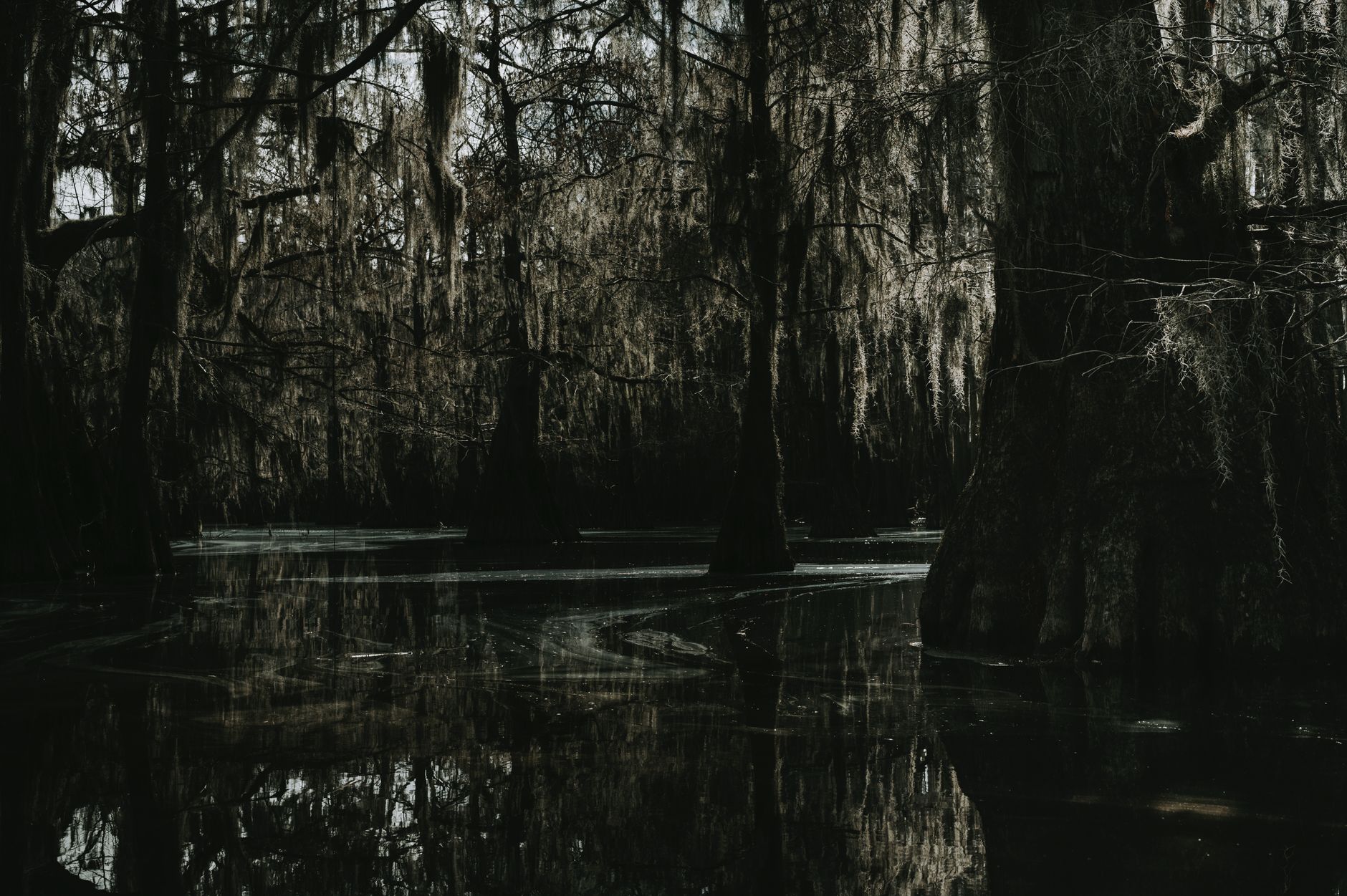
In the bayous south and west of New Orleans, older Cajun families still warn children not to wander into the marsh after dark because of the rougarou — a wolf-headed, sometimes swamp-dwelling creature said to hunt those who break religious rules. The word itself is not Louisiana in origin. It’s a Cajun French mutation of “loup-garou,” the medieval French term for werewolf, carried across the Atlantic by French and French-Acadian settlers starting in the 1700s and reshaped by generations of oral, Francophone storytelling in the bayou parishes.
Verified History: From Medieval France to the Bayou
The loup-garou tradition is documented in French folklore going back to at least the 16th century, a period when unexplained livestock deaths and disappearances in rural France were sometimes blamed on people believed to transform into wolves. French courts of that era occasionally tried actual defendants as accused loup-garous, and those trial records are part of why historians treat the werewolf-panic period as a real, documented social phenomenon rather than pure invention. When Acadian exiles and French colonists resettled in Louisiana after 1755, they brought this belief with them.
Linguists point to a specific mechanism for the name change: in Cajun French dialects, “l” sounds shifted or dropped in casual speech, and “loup-garou” gradually reshaped into “rougarou,” with regional variants like “roux-ga-roux” and “rugaru” documented by folklorists collecting oral histories in south Louisiana through the 20th century. The Terrebonne Parish Library and other regional archives have recorded dozens of firsthand oral accounts from Cajun elders describing the legend as it was told to them as children, which is the strongest verifiable record of how the story actually functioned in these communities: less as a literal belief in a monster, and more as a tool parents used to keep children out of dangerous swampland after dark.
The Legend Itself
According to the folklore as it’s told across south Louisiana, a person becomes a rougarou after breaking a religious obligation — most commonly failing to observe Lent for seven years in a row, though some versions center on breaking a specific vow or a curse passed from an existing rougarou to a new victim. The transformation is said to last 101 days, after which the curse can pass to someone else if that person draws the rougarou’s blood and keeps the secret. Descriptions vary by parish and storyteller: some describe a wolf-headed, human-bodied creature roughly seven feet tall; others describe something closer to a large dog or wild dog-man that stalks people who stray into cane fields or cypress swamps alone.
The legend is often described as functioning similarly to the American “boogeyman” — less a fully believed supernatural entity for most modern tellers, and more a cautionary figure invoked to keep children close to home and away from real, physical swamp hazards like alligators, deep water, and getting lost.
What’s Actually Verifiable
No physical evidence of a wolf-human hybrid has ever been documented in Louisiana, and no serious wildlife or law enforcement investigation has substantiated rougarou sightings as anything other than misidentified animals, hoaxes, or folklore retellings. What is verifiable is the linguistic and cultural record: the loup-garou legend’s presence in French court and folklore archives predates Louisiana settlement, and the shift to “rougarou” is a documented feature of Cajun French rather than a story invented from nothing in the swamps. Some researchers have also noted parallels between the Lent-breaking curse motif and older European werewolf legends tied to failed Christian observance, though a single unbroken textual chain connecting every regional variant has not been established — we could not verify one continuous, documented lineage covering all versions of the tale.
Cultural Significance Today
The rougarou remains an active part of Cajun cultural identity rather than a forgotten legend. Houma, Louisiana holds an annual Rougarou Fest celebrating Cajun and Creole folklore, and the creature appears regularly in regional tourism branding, local breweries, and Louisiana-set horror fiction. For many Cajun and Creole families, telling rougarou stories is less about believing a monster prowls the bayou and more about passing down a specific regional identity and a French linguistic heritage that predates Louisiana becoming part of the United States.
FAQ
Q1: Is the rougarou the same thing as a werewolf?
It comes from the same root legend. “Rougarou” is the Cajun French descendant of “loup-garou,” the French word for werewolf, so the two traditions share a direct historical link rather than being coincidentally similar.
Q2: How does someone become a rougarou, according to the legend?
The most common version says breaking Lent for seven consecutive years triggers the curse, which then lasts 101 days and can be passed to another person who draws the rougarou’s blood and keeps quiet about it.
Q3: Has anyone actually documented a rougarou sighting?
No verified physical evidence exists. Reported sightings are generally attributed to nighttime misidentification of animals, local folklore retellings, or intentional tall tales, and no wildlife agency has substantiated a rougarou encounter.
Q4: Where did the name “rougarou” come from?
It’s a Cajun French phonetic evolution of “loup-garou,” reflecting sound shifts common in Acadian and Cajun dialects as the legend was retold across generations in south Louisiana.
Q5: Is the rougarou still part of Louisiana culture today?
Yes. Houma’s annual Rougarou Fest, regional tourism material, and ongoing oral storytelling in Cajun and Creole communities keep the legend active as a piece of living cultural heritage, not just historical folklore.
Q6: Is the rougarou connected to other werewolf legends around the world?
It shares its root story with broader European werewolf folklore, but no documented historical contact connects it directly to unrelated shapeshifter traditions elsewhere in the world — the resemblance comes from a shared European folk-belief category, not a confirmed shared origin.
Learn More
- Books on Louisiana folklore and Cajun legends
- Werewolf and loup-garou folklore history books
- Field guide to American regional folklore and cryptids
As an Amazon Associate, this site earns from qualifying purchases.
Frequently Asked Questions
Where does the word “rougarou” come from?
It’s a Cajun French mutation of “loup-garou,” the medieval French word for werewolf, carried to Louisiana by French and Acadian settlers after 1755 and reshaped by generations of oral Francophone storytelling.
How does someone supposedly become a rougarou?
In the folklore, a person becomes a rougarou after breaking a religious obligation, most commonly failing to observe Lent for seven years in a row, or by having the curse passed to them by an existing rougarou.
How long does the rougarou curse last, according to the legend?
Storytellers describe the transformation lasting 101 days, after which the curse can pass to someone else if that person draws the rougarou’s blood and keeps the secret.
Is the rougarou meant to be taken literally?
Regional archives of oral histories from Cajun elders show the legend functioned less as literal belief and more as a tool parents used to keep children out of dangerous swampland after dark.

Comments