This article contains affiliate links. If you buy through them, we may earn a commission at no extra cost to you.
Most yokai get scarier the more you learn about their origins. Rokurokubi is the rare case where the origin story is stranger than the monster — because the defining feature everyone recognizes, the impossibly stretching neck, may not have been the original idea at all. It may be the result of an audience misreading their own folklore art.
- What Is Rokurokubi?
- Rokurokubi vs. Nukekubi: What’s the Actual Difference?
- Where the “Stretching Neck” May Have Actually Come From
- Documented Literary History
- A Yokai With a Moral
- Cultural Significance Today
- Modern Adaptations
- Related Yokai
- Frequently Asked Questions
- Did rokurokubi originally have a stretching neck?
- Is rokurokubi the same as nukekubi?
- When was rokurokubi first documented in writing?
- Who standardized rokurokubi’s classic image?
- Why does the transformation happen to the person?
- Is rokurokubi based on a real medical condition or historical event?
- Where does rokurokubi appear in popular culture today?
- Learn More
- Related Stories
What Is Rokurokubi?
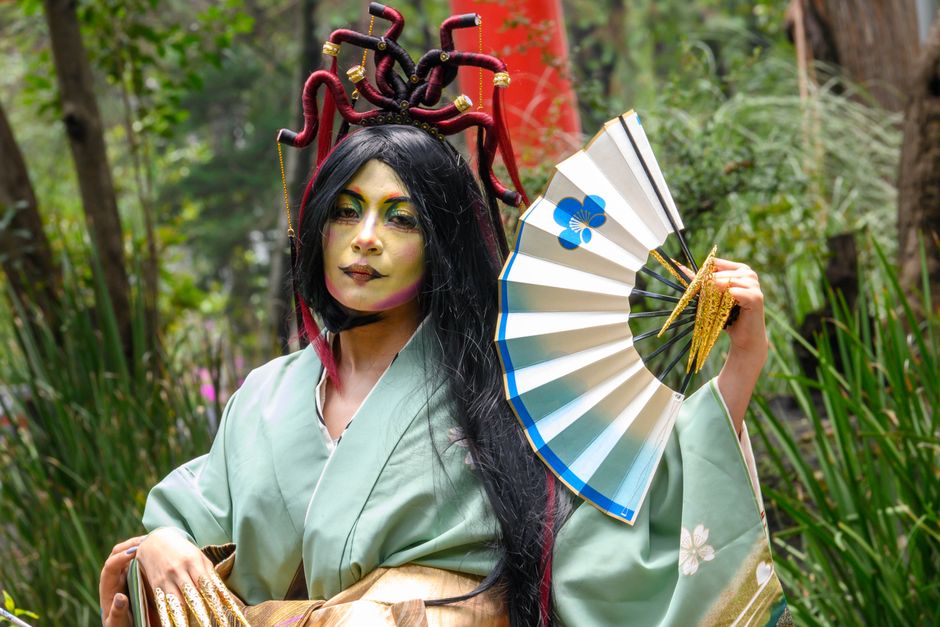
Rokurokubi (ろくろ首) is a Japanese yokai that looks, by daylight, like an ordinary person — almost always depicted as a woman. At night, or while she sleeps, her neck stretches to an enormous length, letting her head travel far from her body to spy on people, lick the oil out of paper lanterns, or frighten anyone who catches her wandering. The name itself points to the stretching: “rokuro” refers to a potter’s wheel or a well’s pulley mechanism, both objects associated with long, winding motion, and “kubi” simply means neck.
A closely related but distinct type severs the connection entirely — the head detaches from the body and flies on its own. Some scholars treat this as a separate species, nukekubi, rather than a variation of the same yokai, which is the first thing worth untangling before going further.
Rokurokubi vs. Nukekubi: What’s the Actual Difference?
The two names get used almost interchangeably in casual retellings, but the folkloric distinction is specific:
- Rokurokubi keeps the head attached by an impossibly elongated neck. The body stays put; only the neck travels.
- Nukekubi detaches completely — the head flies free while the body remains behind, motionless, as if asleep.
Folklorists studying the textual history generally consider nukekubi the older, more violent figure. Older tellings describe nukekubi hunting for blood, with the detached head behaving like a predator rather than a mischievous prowler — a trait rokurokubi mostly lost by the time the Edo period standardized her image. Rokurokubi, by contrast, is typically framed as a nuisance rather than a killer: she peers into rooms she has no business seeing into, drains lamp oil, or startles anyone unlucky enough to spot her at the wrong hour.
Both figures trace back to the same imported source, which is where the story gets genuinely strange.
Where the “Stretching Neck” May Have Actually Come From
Here’s the detail that makes rokurokubi worth its own article rather than a footnote to other yokai: the earliest source material may not describe a stretching neck at all. The prototype is generally traced to a creature called hitōban (“flying head barbarian”), recorded in older Chinese strange-tale collections and imported into Japan, where it was reinterpreted over generations.
Edo-period picture scrolls illustrating the creature depicted a thin, spirit-like thread connecting a detached head to its body — a visual shorthand for a soul temporarily separating during sleep. One scholarly account holds that audiences viewing these scrolls widely misread that thread as a literal, elongated neck, and that misreading then became the standardized image going forward. If this account is accurate, the single most recognizable feature of rokurokubi — the stretching neck itself — would be a documented case of visual folklore mutating through a reading error, rather than an original design choice. We could not independently verify the misreading claim beyond the scholarly summary, so we note it as a documented account rather than settled fact.
Documented Literary History
Regardless of exactly how the neck-stretching image formed, the written trail is genuinely traceable through named Edo-period texts. In the 1663 collection Sorori Monogatari, a chapter describes a woman’s head separating from her body while she sleeps — interpreted at the time as her soul wandering, not a physical monster attacking anyone. The same book includes an account of a man chasing a flying head with his sword, only for the head to flee home and, from inside, complain in a voice that it had “a scary dream” about being chased.
The 1677 regional ghost-story compilation Shokoku Hyakumonogatari, which drew heavily on Sorori Monogatari, explicitly names rokurokubi as women whose necks extend to spy on or frighten people — a specific, dated textual reference rather than a vague oral-tradition attribution. In both early texts, the phenomenon is framed as “soul separation”: a woman’s jealousy or unresolved attachment causes her head, or her spirit, to detach and wander at night, independent of her conscious will.
The image was further standardized by the ukiyo-e artist Toriyama Sekien, whose 1776 illustrated yokai catalog Gazu Hyakki Yagyō includes an entry for the creature — labeled with the characters for hitōban but read aloud as “rokurokubi” — fixing the now-familiar depiction for later generations of readers and artists. Sekien’s later volumes, published through 1784, cemented the visual convention that illustrators still draw on today. This is a real, checkable detail rather than an assumed connection: Sekien’s yokai catalogs are physical, cataloged Edo-period woodblock print collections, and rokurokubi’s entry in them is well documented in scholarship on his work.
A Yokai With a Moral
Unlike purely predatory yokai, rokurokubi in many Edo-period tellings carries a specific narrative function: the transformation is framed as a punishment or consequence for some past moral failing on the part of the person who becomes one, usually a woman. This ties rokurokubi to a broader pattern in Edo-period yokai literature, where physical monstrosity often functions as visible evidence of a hidden inner flaw. The daytime disguise as an ordinary person makes the nighttime transformation read as exposure rather than simple horror — the neck doesn’t create the monster, it reveals one that was already there.
Cultural Significance Today
Rokurokubi remains one of the most recognizable yokai internationally, largely because the stretching-neck image translates so directly into visual media — illustration, animation, and horror games can depict it with a single, instantly legible gesture. Scholars studying the yokai’s textual history frequently cite it as a useful case study in how folklore images can shift meaning through transmission across media (scroll to print to popular retelling), independent of whatever the earliest tellers actually intended to depict.
Modern Adaptations
It’s worth separating what Edo-period texts actually recorded from how rokurokubi gets used in contemporary fiction, since the two are frequently blended together online. In modern media, the yokai has softened considerably from its punitive Edo-period framing:
- In the long-running anime and manga series GeGeGe no Kitarō, a rokurokubi character named Rokuko appears as a friendly member of the yokai cast rather than a cursed or predatory figure.
- The manga and anime Demi-chan wa Kataritai (Interviews With Monster Girls) features a rokurokubi high school student whose main challenges are practical rather than horrific — she needs a special pillow to sleep safely and has to watch her neck around corners.
- The Shin Megami Tensei video game series includes rokurokubi as a recruitable demon, drawing on the same stretching-neck imagery within its broader yokai and demon roster.
None of these portrayals reflect the moral-punishment framing found in the Edo-period sources above — they’re contemporary creative reinterpretations, not continuations of the original folklore’s meaning. That gap between “what was recorded” and “what gets made today” is itself part of the yokai’s history, not a contradiction of it.
Related Yokai
Rokurokubi belongs to a wider catalog of Edo-period yokai whose defining trait is bodily transformation or distortion rather than outright monstrosity. If the misread-thread theory behind rokurokubi’s stretching neck interests you, a few other Japanese yokai share a similar pattern of an ordinary form concealing something stranger underneath: Noppera-bō, whose entire “monstrosity” is a face that isn’t there at all; Nurikabe, an invisible wall yokai that blocks travelers on rural roads at night; and Kappa, whose river-dwelling folklore has its own layered history of moral warnings dressed up as monster stories. Kuchisake-onna, Japan’s slit-mouthed woman, works from the same ordinary-stranger premise from a different angle — she looks like anyone else on a dark street until she stops you with a single question, and the danger only becomes clear once you answer.
Frequently Asked Questions
Did rokurokubi originally have a stretching neck?
Possibly not — the earliest source material may not describe a stretching neck at all, with some scholars tracing the image to a misread or reinterpreted Chinese “flying head” creature (hitōban) rather than an original Japanese concept.
Is rokurokubi the same as nukekubi?
Not exactly. Nukekubi is generally considered the older, more predatory form, in which the head fully detaches and flies free; rokurokubi keeps the head attached by a stretching neck and is typically framed as mischievous rather than violent. Some scholars treat them as separate species, others as two forms of the same folkloric idea.
When was rokurokubi first documented in writing?
Rokurokubi-like figures appear in 17th-century Japanese texts, including the 1663 Sorori Monogatari, and the 1677 regional ghost-story compilation Shokoku Hyakumonogatari explicitly names rokurokubi as women whose necks extend to spy on or frighten people.
Who standardized rokurokubi’s classic image?
Toriyama Sekien’s illustrated yokai catalog Gazu Hyakki Yagyō (1776), and later volumes through 1784, fixed the depiction of rokurokubi that later illustrators, animators, and video games still draw on today.
Why does the transformation happen to the person?
In many Edo-period tellings the transformation isn’t random — it’s framed as punishment for a past moral failing, usually by a woman, which makes the nighttime stretching neck read as a form of exposure rather than an arbitrary curse.
Is rokurokubi based on a real medical condition or historical event?
No verified real-world case underlies the legend. The stretching neck is folkloric imagery, and the leading scholarly theory for its origin is a misread illustration convention rather than any documented medical or historical incident. We could not find a credible source connecting rokurokubi to an actual event.
Where does rokurokubi appear in popular culture today?
Contemporary portrayals include the yokai character Rokuko in GeGeGe no Kitarō, a rokurokubi student in the manga/anime Demi-chan wa Kataritai, and a recruitable demon of the same name in the Shin Megami Tensei game series. These modern versions are generally friendlier and less morally punitive than the Edo-period originals.
Learn More
As an Amazon Associate, this site earns from qualifying purchases.
Comments