This article contains affiliate links. If you buy through them, we may earn a commission at no extra cost to you.
Beneath the streets of Paris lies an underground ossuary holding the remains of more than six million people — a scale of death so large that the site's real history is more startling than most of the legends attached to it.
The History
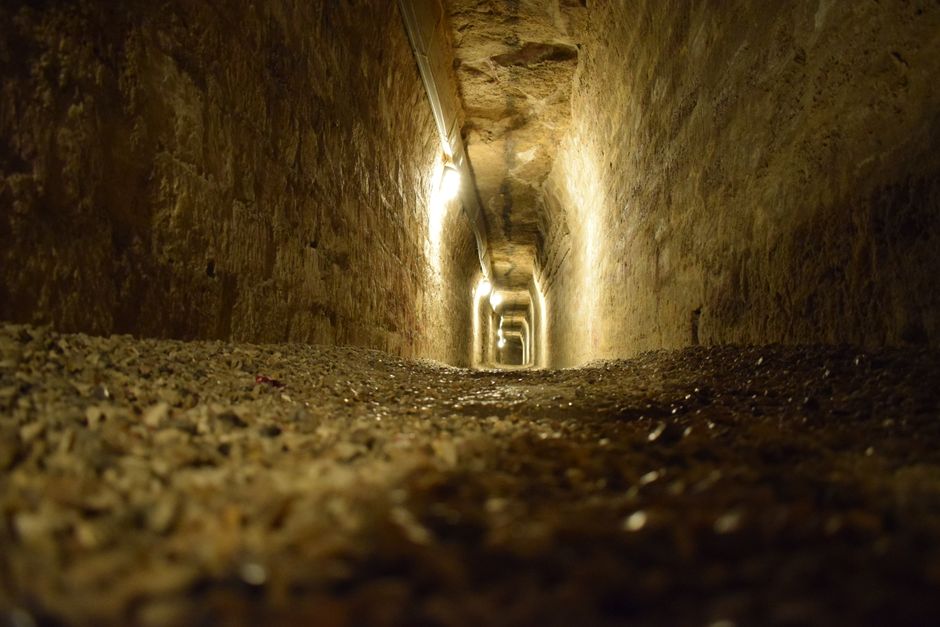
The catacombs exist because of two separate 18th-century crises. In 1774, a massive sinkhole opened on the Rue de l'Enfer — literally “Road to Hell” — swallowing houses, carts, and people into a collapse more than 84 feet deep. In response, King Louis XVI established the Inspection Générale des Carrières in 1777 to map and stabilize the extensive quarry tunnels beneath the city.
Around the same time, Paris faced a second, unrelated problem: catastrophically overcrowded cemeteries. Basement walls near the Holy Innocents' Cemetery had begun collapsing under the sheer volume of buried remains. Beginning in 1786, the city organized nightly processions of covered wagons carrying remains from Paris's cemeteries into the mapped quarry tunnels — a systematic, government-organized relocation that continued into the mid-19th century, ultimately transferring the remains of an estimated six million people.
From Dumping Ground to Deliberate Ossuary
The bones weren't always arranged with the care visitors see today. Initially, remains were simply dumped into the tunnels in disorganized piles. It was only later that the city's quarry inspector oversaw a deliberate reorganization, arranging bones into the walls of tibias, femurs, and skulls that give the catacombs their distinctive, unsettling visual character. Some of the more elaborate arrangements were carved between 1777 and 1782 by a quarry worker named Décure, adding a level of deliberate craftsmanship to what began as an emergency public health measure.
What's Actually “Haunted” Versus What's Documented
Here's an important distinction: the catacombs' status as a mass grave holding six million people is thoroughly documented history, verified through city records of the cemetery relocations. Their “haunted” reputation is a different matter entirely — we could not locate documented historical incidents supporting specific ghost sightings, and most sources researching the site's reputation describe it as more cultural and atmospheric than evidence-based. Visitors and explorers have reported eerie sensations and unexplained noises in the tunnels, and some tellers claim to have heard whispers or footsteps with no visible source, but an underground network built specifically to house millions of human remains would understandably feel unsettling regardless of anything genuinely paranormal occurring there. We could not verify any specific reported sighting against an independent record.
Can You Visit?
A managed section of the Paris Catacombs is open to the public as an official municipal museum, with marked, safe walking routes distinct from the much larger network of unofficial, illegal tunnels beneath the city that urban explorers (“cataphiles”) continue to access at real legal and physical risk. Visitors should stick to the official, ticketed entrance and treat the site with the gravity due any location holding the remains of six million people.
Frequently Asked Questions
How many people are buried in the Paris Catacombs?
An estimated six million, transferred through a systematic, government-organized relocation beginning in 1786 — a documented historical fact, not an exaggerated legend.
Why were the remains moved underground in the first place?
Two 18th-century crises drove it: a 1774 sinkhole collapse and catastrophically overcrowded Paris cemeteries whose basement walls had begun failing under the volume of buried remains.
Ghost-Hunting Gear & Further Reading
As an Amazon Associate, this site earns from qualifying purchases.

Comments