This article contains affiliate links. If you buy through them, we may earn a commission at no extra cost to you.
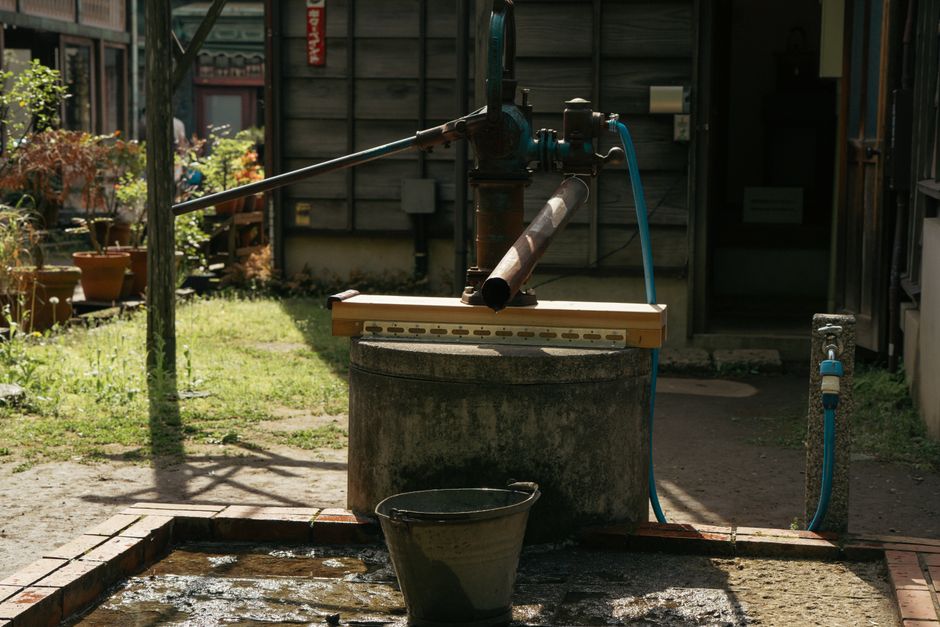
Visitors to Himeji Castle can walk right up to a specific, ordinary-looking well and be told, matter-of-factly, that a ghost has been counting plates inside it for roughly three centuries. Unlike most yokai on this site, Okiku isn't a folk figure who accumulated a story over time — she's a stage character whose tale was written down, dated, and performed before it ever attached itself to a real well.
The Legend
According to the story, Okiku was a maid in the household of a samurai named Tessan Aoyama. Aoyama pursued her repeatedly, and when she refused him, he hid one of ten precious plates from a set and accused her of losing it — offering to clear her name only if she became his mistress. In despair, Okiku threw herself into the household well and drowned. From that night on, her ghost is said to rise from the well after dark, counting the plates aloud — “one… two… three…” — up through nine, then breaking into a wail before starting again, the tenth plate never reached. The nightly counting eventually drives Aoyama to madness.
Where the Story Actually Comes From
Okiku's tale is unusually well-documented for a ghost story, because it began life as theater rather than rumor. The earliest known dramatized version is the 1741 Bunraku puppet play Banshū Sarayashiki (“The Dish Mansion of Banshū”), credited to Tamenaga Tarobei and Asada Itchō. That gives Okiku a dated point of origin most yokai simply don't have — we're not reconstructing when belief in her began, we're citing a specific play text.
The story proved durable enough to be restaged repeatedly, including Kabuki adaptations that sometimes relocate the setting from Banshū to Bancho, a similarly named district of old Edo (Tokyo) — a detail that has led to some regional confusion about where “the real” well is supposed to be, since multiple locations across Japan lay claim to versions of the tale.
The Himeji Castle Connection
Himeji Castle's Okiku's Well is the site most strongly associated with the legend today, and it remains a marked, visitable feature of the castle grounds. We could not verify a documented historical incident matching the play's plot at this specific well — the connection between the 1741 stage play and this particular well appears to be a case of a popular story attaching itself to a suitably atmospheric real location, a pattern folklorists see across many “haunted well” and “haunted castle” legends worldwide, rather than a case of the well's history producing the play.
One of Japan's “Big Three”
Okiku holds a specific, named place in Japanese ghost story tradition: alongside Oiwa (from the kabuki play Yotsuya Kaidan) and Otsuyu (from Botan Dōrō), she's counted among the Nihon San Dai Kaidan — Japan's Big Three Ghost Stories, a canonical grouping used by scholars and storytellers alike. That classification itself tells you something about how differently Japanese ghost tradition treats “top-tier” stories compared to the more diffuse, orally-transmitted yokai this site has covered elsewhere: Okiku's fame rests on repeated, datable theatrical performance, not on centuries of scattered village retellings.
Cultural Significance Today
Okiku's story has been reproduced constantly in ukiyo-e woodblock prints, kabuki performances, and modern retellings, and her image — a woman rising from a well, counting — has become one of the most visually iconic ghost images in Japanese art. Some scholars and enthusiasts have also noted the thematic resemblance between Okiku's well-bound haunting and the well-dwelling spirit later popularized internationally by the horror film Ringu, though the film's creators drew on a different, contemporary source material rather than adapting the Edo-period play directly — a case of parallel imagery rather than a documented direct lineage.
Can You Visit?
Himeji Castle is a UNESCO World Heritage Site and one of Japan's best-preserved original castles, open to the public with Okiku's Well marked as a specific stop within the castle grounds. Visitors should treat the site as they would any historic building with an attached folk legend — with curiosity about the story's theatrical history, not an expectation of encountering anything at the well itself.
Frequently Asked Questions
Is Okiku’s story based on a real historical event?
It’s unusually well-documented as literature rather than pure oral legend — the earliest known version is the dated 1741 Bunraku puppet play, meaning the story was written and performed before it attached itself to the real well at Himeji Castle.
Can you visit the well today?
Yes — it’s a real, accessible part of Himeji Castle that visitors can walk up to, one of the more physically verifiable ghost-story locations on this site.
Ghost-Hunting Gear & Further Reading
As an Amazon Associate, this site earns from qualifying purchases.
Visiting Himeji Castle
Himeji Castle is a working tourist site, not just a legend backdrop, and Okiku’s Well is one stop along a much larger route through Japan’s best-preserved original castle. The grounds are open daily except Mondays (the castle opens instead on the following weekday if Monday falls on a national holiday), and the whole site closes for a stretch around New Year’s, roughly December 25 through January 5. Hours run 9:00–17:00 (last entry 16:00) for most of the year, extending to 9:00–18:00 (last entry 17:00) during the peak summer stretch from late April through August. Admission has separate rates for residents and non-residents and has changed more than once in recent years, so treat any specific yen figure as a starting point and check the official Himeji Castle website for the current fee before you go — visitors under 18 have historically been admitted free.
From JR Himeji Station, the castle is a straight, hard-to-miss walk: exit through the north side of the station and follow Otemae-dori, the broad boulevard that points directly at the keep, for about a kilometer (15–20 minutes on foot, with the castle visible almost the entire way). A loop bus and taxis also run the route for visitors who’d rather not walk in summer heat.
The main reason people make the trip is the daitenshu, the six-story main keep rising roughly 46 meters above its stone base, wrapped in the white plaster (shiro-shikkui) that earned the castle its “White Heron” nickname. Inside, a massive central pillar runs from basement to top floor as a piece of earthquake engineering centuries before the term existed. Okiku’s Well sits within the same castle grounds as this keep, so most visitors reach it as one stop on a longer walk through baileys, gates, and turrets rather than a destination on its own — worth keeping in mind if you’re budgeting time for a visit. For a broader look at how other haunted sites across the country handle visitor access, see this site’s guide to haunted Japan travel.
Local Specialties Near Himeji Castle
Himeji has its own food identity separate from the ghost story, and it’s worth building into a castle visit. The city’s signature dish is Himeji oden, a regional take on the standard oden hot pot that layers konjac cooked in a rich, dark broth and serves it with a ginger-soy dipping sauce — that ginger-soy pairing is the detail that marks it as Himeji’s version rather than a generic one. The dish was formally branded “Himeji Oden” in 2006 as part of a local revitalization push, and more than a hundred restaurants around the city now serve it, including in school lunches.
The other local specialty worth knowing about is anago, conger eel, pulled from the Harima Sea along Himeji’s coast. The shallow, sandy waters there are particularly good anago habitat, and a larger regional variety known as Densuke anago (several times the size of standard conger eel) is sold as a premium catch out of Himeji Port. Readers who want a taste of the region before or after visiting can look at general guides to Japanese hot-pot and regional cooking, such as Japanese oden and regional cookbooks.

Comments