This article is part of World Urban Legend's ongoing survey of creation myths and trickster deities across Oceania. Some sections below include Amazon affiliate links. If you buy something through them, we may earn a small commission at no extra cost to you. We only recommend books and resources we believe add real value to readers researching Pacific folklore.
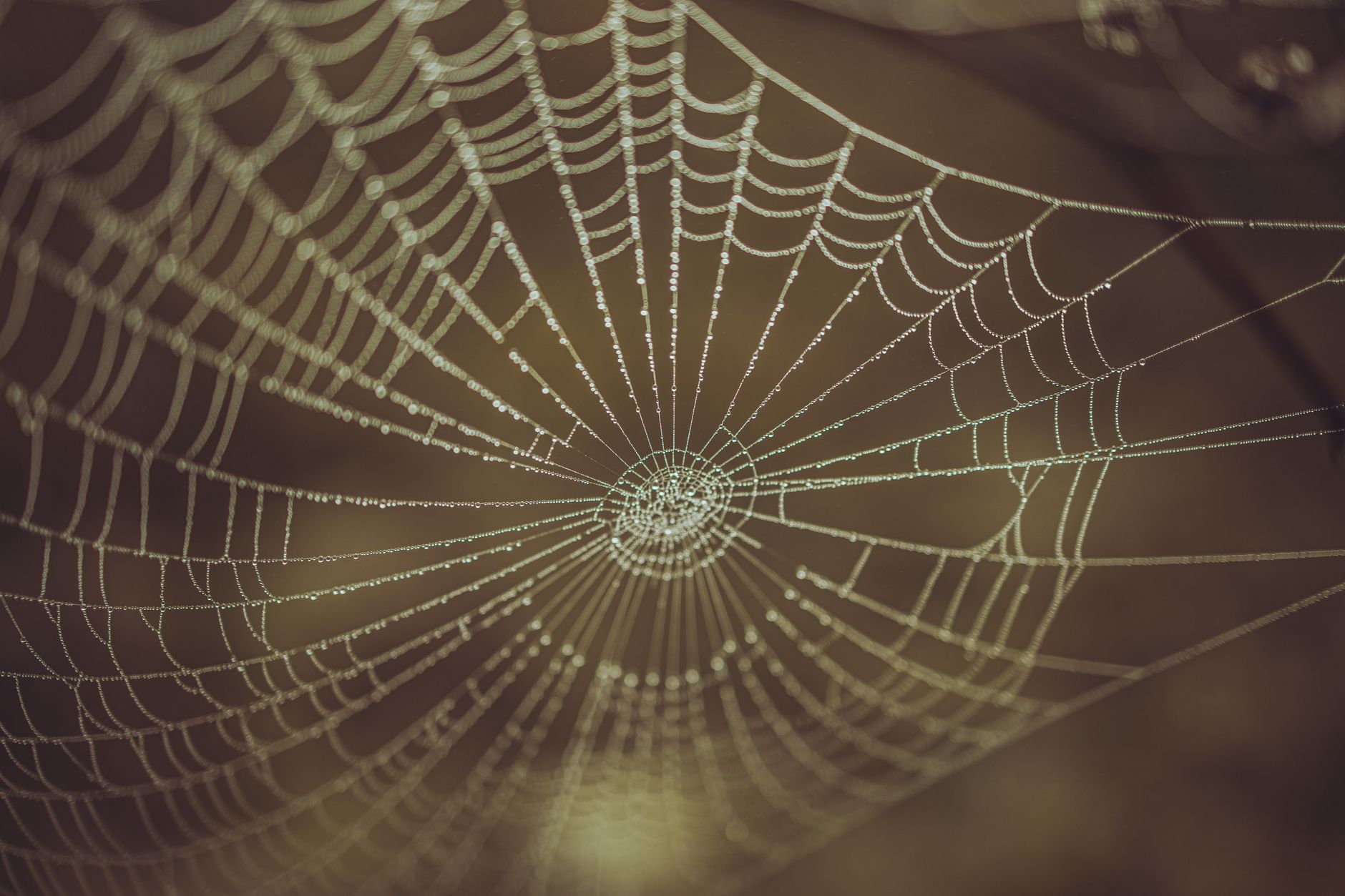
Before there was sky, sand, or a single grain of anything, the people of the Gilbert Islands say there was only a spider sitting in the dark. Not a god with a throne. Not a voice booming out of nowhere. A spider, alone, in a universe that hadn't decided what it was yet. That spider's name was Nareau, and depending on which island you ask, he either built the world out of nothing or simply woke up one day and started rearranging what was already there.
Kiribati — the string of coral atolls in the central Pacific once called the Gilbert Islands — has no article on this site yet, which is a strange gap for a mythology this strange. Nareau isn't a distant, dignified creator sitting above the action. He's a trickster who happens to also be a god, and the difference matters.
A Name That Means “Spider Lord”
Nareau's name translates roughly to “spider lord” in Gilbertese, and the imagery isn't accidental. Spiders spin, wait, and catch things — three verbs that describe exactly what this god does across the different tellings collected from the islands. His fuller title, recorded in some versions as Nareau te Moa-ni-bai, translates to something like “Weaver Lord of the First Things,” which fits a being credited with spinning existence itself out of nothing.
Before Nareau got to work, there was only what the old tellings call Te Bo ma Te Maki — the darkness and the cleaving, a kind of formless split-apart nothing. Nareau walked through it alone. There was no ground to walk on and no light to walk by. He was simply there, and then, gradually, things weren't nothing anymore.
Building the World Out of Sand and Water
Accounts differ on whether Nareau wove the first beings into existence or shaped them by hand, but most agree on the raw materials: sand and water. From these he made two primeval figures, Na Atibu and Nei Teukez — a foundation stone and a foundation woman, more or less, though “stone” undersells what Na Atibu was about to become.
Together, this first pair produced a small generation of lesser deities: Te Ikawai, Nei Marena, Te Nao the wave, Na Kika the octopus, and Ruki the eel. The Pacific's landscape is already present in that list — waves, octopuses, eels — long before the physical islands existed to hold them.
Then comes the part of the myth that separates Kiribati's creation story from most others: Na Atibu didn't simply fade into the background once his job was done. He was torn apart.
The World Made From a Body
In the Gilbertese telling, the physical universe isn't spoken into being or shaped from clay on a wheel. It's assembled from the pieces of a dismantled god. Na Atibu's right eye became the sun. His left eye became the moon. His brain became the scattering of stars overhead. His bones and flesh became the land itself — the islands, the trees, the ground under people's feet.
It's a striking image once you sit with it: every atoll in the Gilbert chain, every coconut palm, is quite literally cast as a piece of a god's body, still out there doing its work long after he stopped being a person. Some versions credit Nareau himself with taking Na Atibu apart and arranging the pieces. Others introduce a second figure to do it — which is where the myth gets its trickiest turn.
One Nareau, or Two?
Gilbertese oral tradition doesn't always agree on how many Nareaus there actually are, and this isn't sloppiness — it's a structural feature. In several versions, the being who first walked through the darkness and produced Na Atibu and Nei Teukez is Nareau the Elder. Once the gods and the physical universe existed, Nareau the Elder considered his portion of the work finished and handed the next task to Nareau the Younger: building a world fit for human beings.
Other tellings simplify this into a single Nareau who does it all — creator, then shaper, then trickster who keeps meddling after the “important” work is done. Either way, the throughline is consistent: creation in Kiribati mythology isn't a one-time event followed by rest. It's ongoing tinkering, handed down or continued by a figure who never quite stops rearranging things.
Why the Trickster Label Sticks
Calling Nareau a trickster isn't just a scholarly label pasted onto a creator god after the fact. It comes from how he operates within the stories: not through commands or decrees, but through cunning, deception, and improvisation — the same toolkit spiders use to survive. He doesn't announce the world into existence with authority. He works it into shape the way a spider works a web, testing, adjusting, catching what he needs.
That framing puts Nareau closer to figures like Maui in wider Polynesian tradition or Coyote in North American storytelling than to a sky-father type who simply speaks and is obeyed. The world he leaves behind isn't tidy or finished. It's the product of an improviser who moved on to the next problem the moment the last one was more or less solved — which may explain why the myth itself stayed loose enough to be told a dozen different ways across a dozen different atolls, never quite settling into one official version.
A Myth Still Waiting to Be Heard Wider
Micronesian mythology gets far less attention outside the Pacific than Polynesian or Melanesian traditions, and Kiribati's Nareau cycle is a good example of why that's a loss. It has everything a creation myth needs — darkness before form, a body that becomes a world, a trickster who never fully retires — and almost none of the audience that similar stories from better-documented regions receive.
For a nation made of low-lying coral atolls, increasingly discussed in the context of rising seas, there's something worth sitting with in a founding story where the land itself is understood as a body: something that can be taken apart, and in theory, something that deserves to be treated as more than raw material.
Frequently Asked Questions
Is Nareau a real deity worshipped in Kiribati today?
Nareau belongs to the traditional oral mythology of the Gilbert Islands, recorded mainly through 19th- and 20th-century ethnographic work before Christianity became the dominant religion across Kiribati. He isn't part of active worship today, but the stories remain part of the islands' cultural and oral heritage.
What does the name Nareau actually mean?
It's generally translated as “spider lord” in Gilbertese, referencing the spider imagery tied to his creative, weaving role in the myth. A fuller title recorded in some tellings, Nareau te Moa-ni-bai, is rendered as “Weaver Lord of the First Things.”
How is Nareau different from other Pacific creator gods?
Most Pacific creation figures either shape the world from an existing void or descend from an established sky. Nareau is distinct for the double act: he's credited with weaving the first beings from nothing, and the physical world is then built from the dismembered body of one of his own creations, Na Atibu — a more visceral, hands-on origin than most regional counterparts.
Learn More
Readers interested in going deeper into Pacific and Micronesian creation mythology may find these resources useful starting points:
- Pacific Mythology and Oceanic Folklore Collections — broader surveys of creation myths across Micronesia, Polynesia, and Melanesia
- Micronesian and Gilbert Islands Culture and History — background on the islands and communities that preserved the Nareau cycle
- World Mythology Reference Guides — for readers comparing trickster-creator figures across cultures
As an Amazon Associate, World Urban Legend earns from qualifying purchases.
Comments