This article contains affiliate links. If you buy through them, we may earn a commission at no extra cost to you.
In the Chocó region along Colombia's Pacific coast, one detail separates La Tunda from a generic forest monster: she has a single physical flaw she can never fully hide. No matter whose face or voice she borrows, one of her legs stays shaped like a molinillo, the wooden stick used across Colombia to stir hot chocolate. Folklorists studying Afro-Colombian oral tradition treat that detail as the story's built-in escape hatch — the one thing a careful observer can supposedly still catch.
Verified History and Cultural Origin
La Tunda is documented as a myth of Colombia and Ecuador's Pacific coastal region, concentrated in the Afro-Colombian communities of Colombia's Chocó department. Folklorists trace the belief system's roots to the transatlantic slave trade, which brought large West African populations to work the Pacific coast's gold mines and plantations beginning in the 1500s under Spanish colonial rule. Researchers including Colombian folklorist Rogelio Velásquez and later ethnographers such as Aureliano González Cortés have documented La Tunda as part of the broader Pacific coast oral tradition, alongside figures like the Riviel and the Duende, in works examining Chocoano myth collections. A separate 2000 study by Puertas Arias examined La Tunda's social function within these communities specifically.
There is no verified historical figure or documented case behind the legend. What is documented is the story's consistency across multiple independent Afro-Colombian coastal communities, and its clear connective tissue to broader West African spiritual traditions about spirits that mimic the living — a pattern found in West African diaspora folklore elsewhere in the Americas as well.
The Legend Itself
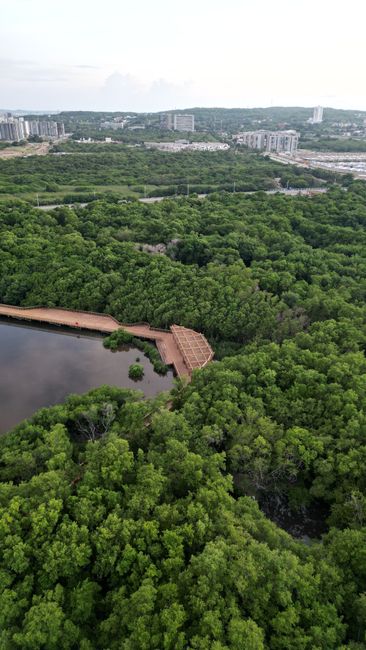
According to Chocoano oral tradition, La Tunda was once a woman, and versions of the story disagree on why she was transformed — some say she was punished for infidelity, others for practicing dark magic. In her true form she is described as strikingly ugly, but her defining power is shapeshifting: she can take on the appearance of a child's mother, a man's wife, or a wandering traveler's sweetheart to lure the victim deep into the mangrove forest.
Once a victim is lured in, tradition holds that she feeds them camarones — shrimp cooked using her own flesh — to keep them docile in a state called “entundamiento,” or being “entundado.” A victim under her spell is said to lose track of time and direction, sometimes wandering in circles near home for days without realizing it. Storytellers describe her preferred targets as unfaithful men and children who wander too far from their families, framing the legend explicitly as behavior correction rather than random horror.
What's Actually Verifiable
No forensic investigation has ever confirmed a disappearance caused by a shapeshifting entity, and folklorists are explicit that La Tunda belongs to oral tradition rather than documented history. What is verifiable is the depth and consistency of the belief system: independent ethnographic studies from Colombian researchers have documented the same core details — the molinillo leg, the shrimp, the entundamiento state — across communities along the Pacific coast, which is unusual for oral folklore and suggests a genuinely old, widely shared tradition rather than one town's invented story. We could not verify a single point of origin for exactly when the “wooden leg” detail entered the tradition, since oral accounts by nature predate any written record.
Cultural Significance Today
La Tunda remains part of everyday cultural memory in Chocó and Colombia's broader Pacific coast region, still invoked by parents warning children not to stray into the forest and by communities marking cultural identity tied to the region's Afro-Colombian heritage. The legend is frequently discussed alongside Colombia's Muisca-rooted mythology and other national folklore in cultural surveys of the country. It also connects naturally to nearby traditions covered on this site: Venezuela's El Silbón, a whistling forest spirit from the neighboring Llanos region, and Brazil's Curupira, a forest guardian built around a similarly punitive logic — see our international ghost stories guide for the full regional picture.
Related: La Bola de Fuego: The Legend Behind Colombia’s Burning Ghost, More South American folklore and urban legends.
Frequently Asked Questions
Q1: What is La Tunda's one physical flaw?
Tradition holds that no matter what form she takes, one of her legs remains shaped like a molinillo, the wooden stick Colombians use to stir hot chocolate — the detail said to give her away.
Q2: Where does the legend come from?
The Pacific coastal region of Colombia and Ecuador, especially the Afro-Colombian communities of Colombia's Chocó department, with roots tracing to West African spiritual traditions carried over during the transatlantic slave trade.
Q3: Who does La Tunda target?
Oral tradition describes her primarily luring children who wander too far from home and men who are unfaithful, framing the legend as a behavioral warning.
Q4: What does “entundado” mean?
It describes someone caught under La Tunda's spell, kept docile and disoriented by shrimp she is said to have prepared using her own flesh.
Q5: Is there any documented historical basis for La Tunda?
No verified case or historical figure exists behind the legend. It is documented consistently in Colombian ethnographic research as oral tradition rather than recorded history.
Q6: Is La Tunda still culturally significant today?
Yes. It remains part of Chocó and Pacific-coast Colombian cultural identity and continues to be referenced by parents, storytellers, and cultural institutions today.
This tradition shares its cautionary structure with Brazil’s Curupira and Guatemala’s El Sombrerón, two other Latin American forest-and-town legends built around punishing bad behavior.
Learn More
- Colombian and Afro-Latin American folklore collections
- West African diaspora folklore in the Americas
- Chocó Colombia Pacific coast history and culture
As an Amazon Associate, this site earns from qualifying purchases.

Comments