This article contains affiliate links. If you buy through them, we may earn a commission at no extra cost to you.
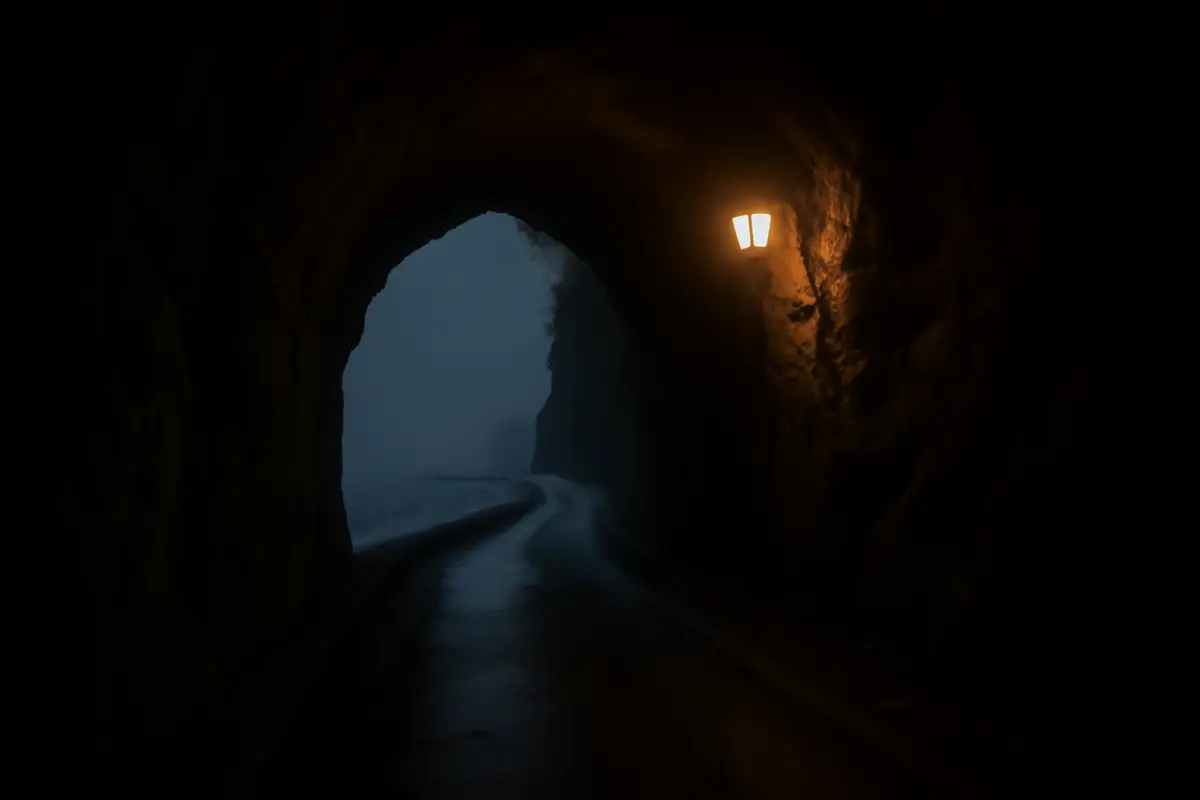
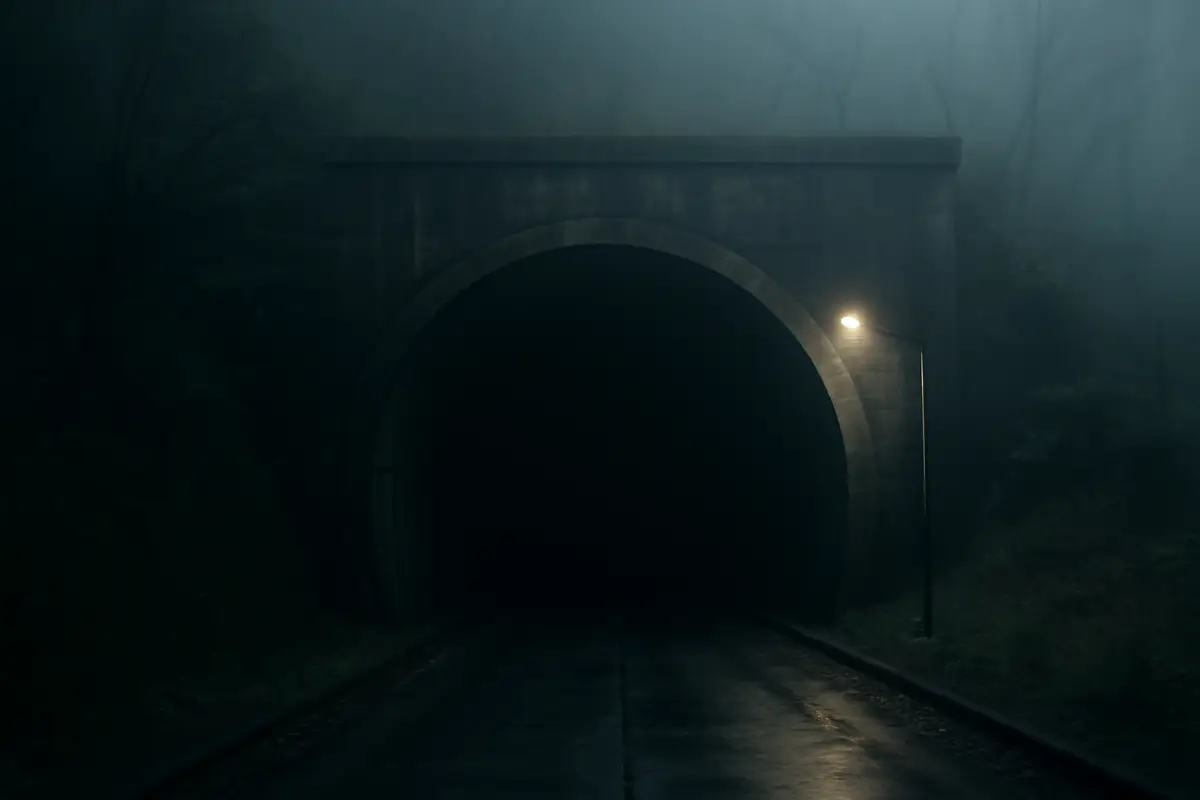
Kotsubo Tunnel is a nickname locals give to a short chain of road tunnels on Route 311, connecting Kamakura and Zushi in Kanagawa Prefecture. It has carried a haunted reputation since at least the early Showa era.
- What is verifiable
- The legend
- What we could not verify
- Separating the Literary Fact From the Embellished Legend
- Part of a Wider Pattern: Haunted Tunnels Across Japan
- Frequently Asked Questions
- Did a train collision really happen near Kotsubo Tunnel?
- Why is Kotsubo Tunnel associated with a crematorium?
- Is there a real literary connection to this tunnel?
- How long has Kotsubo Tunnel had a haunted reputation?
- Why are so many tunnels in Japan considered haunted?
- Is Japan considered a haunted country?
- What makes an abandoned tunnel a likely setting for a ghost story in Japan?
- Related Stories
What is verifiable
The tunnels are real and in everyday use, sitting close to a working crematorium on the Zushi side — the detail most consistently repeated across sources, and the most plausible seed for the rumors. Nobel laureate Yasunari Kawabata used the tunnel as the setting for a supernatural short story, “Mugon” (“Silence”).
The legend
Local rumor holds that a young woman's ghost appears in front of vehicles at night near the tunnel closest to the crematorium, and that drivers sometimes find unexplained handprint-like marks on their windshield. A frequently repeated anecdote about a 1970s celebrity seeing a blue-white handprint-shaped light strike her windshield could not be verified to any primary account.
What we could not verify
Some English-language retellings describe a 1967 train collision killing 13 people near the tunnel's exit, followed by “1980s murders.” We found no corroborating record — no transport ministry accident summary, news archive, or local history — and this narrative does not match Japanese-language sources' description of the site. We treat it as unverified and likely embellishment.
Can you visit: Yes. It is a public road tunnel in regular use between Kamakura and Zushi.
Separating the Literary Fact From the Embellished Legend
Kotsubo Tunnel is an unusual case of a real literary connection (Kawabata’s “Mugon”) getting tangled with an apparently embellished crime narrative that doesn’t hold up under scrutiny. The proximity to a working crematorium is the one detail every source agrees on and the most plausible seed for the haunted reputation — everything past that, including the specific train-collision and 1980s-murder claims, appears to be later addition rather than documented history.
Part of a Wider Pattern: Haunted Tunnels Across Japan
Kotsubo Tunnel is one of dozens of similar sites documented across this site, and it fits a recognizable pattern rather than standing alone. Roughly three-quarters of Japan’s land area is mountainous, which has required over a century of tunnel construction, and older bores are typically sealed or abandoned rather than demolished once a wider, better-lit replacement opens nearby. Those abandoned alignments — not the tunnels still in daily use — are where the folklore tends to concentrate: narrow, unlit, and left to decay in a way that reads as ominous even when the underlying cause is a routine highway upgrade. Japan’s long kaidan (ghost story) storytelling tradition, which attaches spirits to liminal spaces such as tunnels, bridges, and mountain passes, gives these sites a ready-made narrative frame.
Frequently Asked Questions
Did a train collision really happen near Kotsubo Tunnel?
We found no corroborating record for the often-repeated “1967 collision killing 13” claim — no transport ministry summary, news archive, or local history confirms it, and Japanese-language sources don’t describe this event. We treat it as unverified embellishment.
Why is Kotsubo Tunnel associated with a crematorium?
A working crematorium sits on the Zushi side of the tunnel chain — the detail most consistently repeated across sources and the most plausible real-world seed for the ghost rumors.
Is there a real literary connection to this tunnel?
Yes — Nobel laureate Yasunari Kawabata used the tunnel as the setting for his supernatural short story “Mugon” (“Silence”), a genuine, verifiable literary fact distinct from the crime-related claims.
How long has Kotsubo Tunnel had a haunted reputation?
Since at least the early Showa era, according to local accounts — making it one of the longer-running haunted-tunnel reputations covered on this site, independent of the specific embellished claims layered on more recently.
Why are so many tunnels in Japan considered haunted?
Japan’s mountainous terrain (roughly three-quarters of the country) has required over a century of tunnel construction, and old bores are typically abandoned rather than removed once a newer route opens nearby. Combined with a long kaidan (ghost story) tradition of attaching spirits to liminal spaces, these abandoned tunnels became natural settings for local ghost stories.
Is Japan considered a haunted country?
Japan has one of the world’s richest documented traditions of ghost stories and haunted-location folklore, built up over centuries through kaidan storytelling, yokai folklore, and site-specific legends attached to tunnels, forests, and other liminal places. That reflects a deep cultural and narrative tradition — not a verifiable claim about supernatural activity.
What makes an abandoned tunnel a likely setting for a ghost story in Japan?
Age, disuse, and physical decay do most of the work: a dark, damp, overgrown structure that once carried traffic and now carries none reads as unsettling on its own, independent of any specific incident. As with Kotsubo Tunnel, the underlying history is often more mundane — a routine bypass or road realignment — than the legend suggests.
As an Amazon Associate, this site earns from qualifying purchases.
Comments