- Native
- Lebuhraya Karak
- Type
- Haunted Road / Phantom Vehicle Legend
- Region
- Gombak, Selangor to Karak, Pahang (via Genting Sempah Tunnel)
- Origin
- 1990
- Verification
- Partially documented
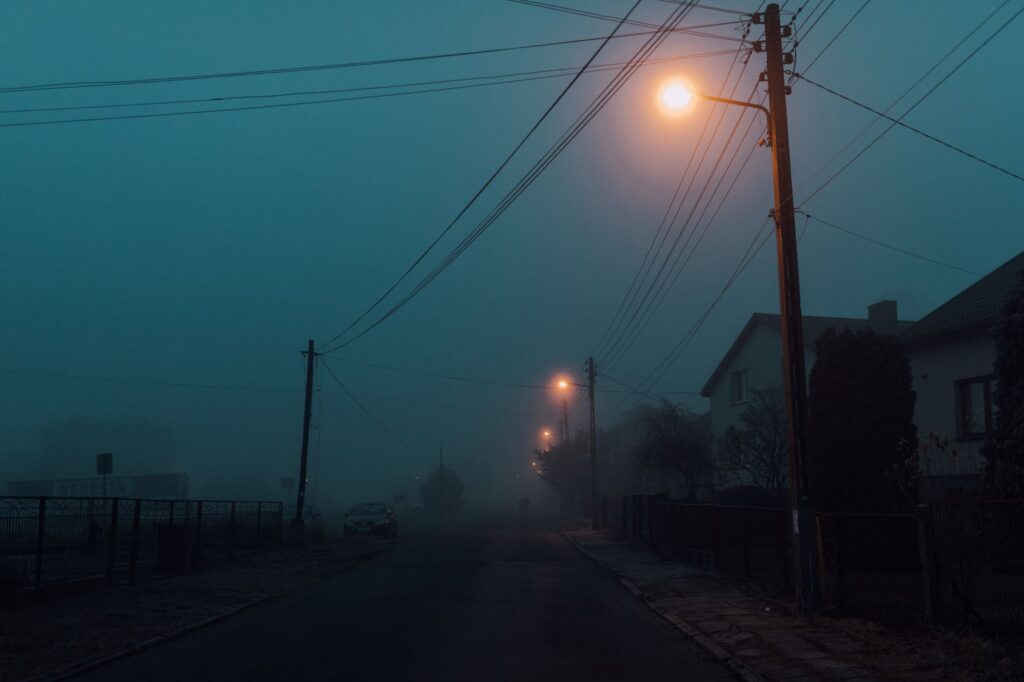
A yellow Volkswagen Beetle with no driver cruises the Karak Highway (Lebuhraya Karak) outside Kuala Lumpur, drifting in front of lone night drivers until they overtake it and find the seat empty. That is the core of Malaysia's most-repeated highway ghost story. The highway itself is real, and so is its death toll — the legend grew directly out of decades of fatal crashes on the same stretch of road.
What's Actually Verifiable
The Kuala Lumpur–Karak Expressway (E8) is a real 60-kilometre controlled-access road connecting Gombak, Selangor to Karak, Pahang, crossing the Titiwangsa mountain range through the Genting Sempah Tunnel. It opened as a two-lane federal road in 1979 and was upgraded to a multi-lane expressway by 1997. It has an official, well-documented reputation as one of Malaysia's most dangerous roads, driven by steep gradients, sharp bends, fog near the tunnel, and heavy freight traffic.
The single worst-documented incident is the 28 February 1990 pile-up near kilometre 30.9, about 5 km from the Genting Sempah Tunnel. A passenger bus collided with a tanker lorry, Federal Reserve Unit (FRU) riot-police vehicles, another lorry, two taxis, and six cars. Seventeen people died, including 11 FRU officers from Troop 4B who were travelling to a drill in Kuala Terengganu; four civilians were also killed. It remains, per contemporary and retrospective Malaysian press coverage, the worst highway disaster recorded since the road opened, and it is the incident local retellings most often point to as the moment Karak Highway's haunted reputation hardened into something everyone repeated. Beyond that single crash, the route's Wikipedia-documented history also includes landslides and sinkholes over the decades — a pattern of infrastructure trouble on top of collision risk that reinforced Karak Highway's overall reputation as one of Malaysia's most dangerous roads, independent of any ghost story.
The 2011 Malaysian horror film Karak, directed by Yusry Abdul Halim, dramatizes the road's reputation: four students detour off Karak Highway during a traffic jam and run into the supernatural. The film is explicitly built on the pre-existing urban legend rather than the other way around — it did not invent the ghost stories, it packaged them.
The Legend
Beyond the documented crash history, the stories told about Karak Highway are oral tradition with no independent verification, and they don't agree with each other.
The Yellow Volkswagen. Drivers report a driverless yellow Beetle that appears behind them on empty stretches of Karak Highway at night, pulls ahead, slows down as if daring them to pass, then reappears behind them again after they overtake — sometimes repeating the cycle for kilometres. Anyone who pulls alongside to look inside reportedly finds no driver at all. Three competing origin stories circulate for who — or what — is driving: a husband who discovered his wife's infidelity mid-drive and crashed in a rage; a jilted husband endlessly searching the highway for a runaway wife; or the spirit of a man who died in a crash on the road and is doomed to relive his final drive. None of the three has a named witness, date, or documented case attached to it — they exist only as retellings, and different tellers pick whichever version they heard first.
The White Lady and the Pontianak. Motorists also describe a solitary female figure on the roadside at night, sometimes said to hitch rides before vanishing from the back seat, and separately, sightings described as a pontianak — a vengeful female ghost figure found across Malay folklore — flying above the road. Both are generic hitchhiker-ghost and pontianak motifs applied to this specific highway rather than legends unique to it.
No newspaper report, police record, or named case file documents an actual encounter with the Beetle, the White Lady, or a highway pontianak. What is consistently documented is the accident rate itself — and Malaysian retellings routinely treat the fatal 1990 crash, and the decades of smaller collisions before and after it, as the explanation for why the road “has ghosts”: enough people died on the same curves that the road accumulated a reputation, and the reputation then generated its own stories.
Why the Legend Persists
Long, poorly lit mountain highways with a genuine crash record are common seedbeds for ghost-road legends worldwide — the same pattern shows up in vanishing-hitchhiker stories on rural roads across many countries. Karak Highway's version is distinctive mainly in how specific and mechanical the haunting is: not a single sighting but a repeating traffic interaction (overtake, reappear, overtake again) that turns an ordinary act of driving into something drivers describe as being toyed with.
Malaysia has more than one infrastructure disaster that generated its own dark folklore — see the 1993 Highland Towers collapse for a case where a real building disaster became the anchor for a separate haunting legend. For how this pattern plays out across other countries, see our guide to ghost stories from around the world.
Related: More Southeast Asian ghosts and folklore.
Comments