This article contains affiliate links. If you buy through them, we may earn a commission at no extra cost to you.
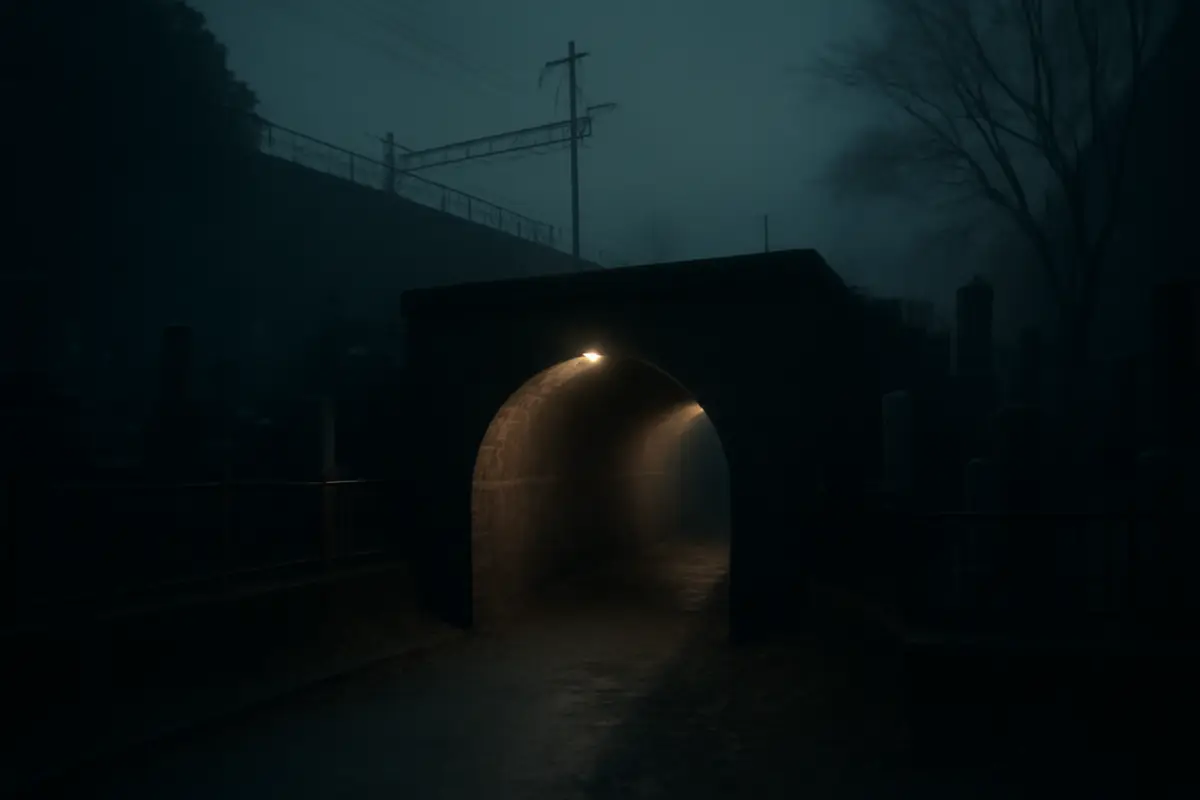
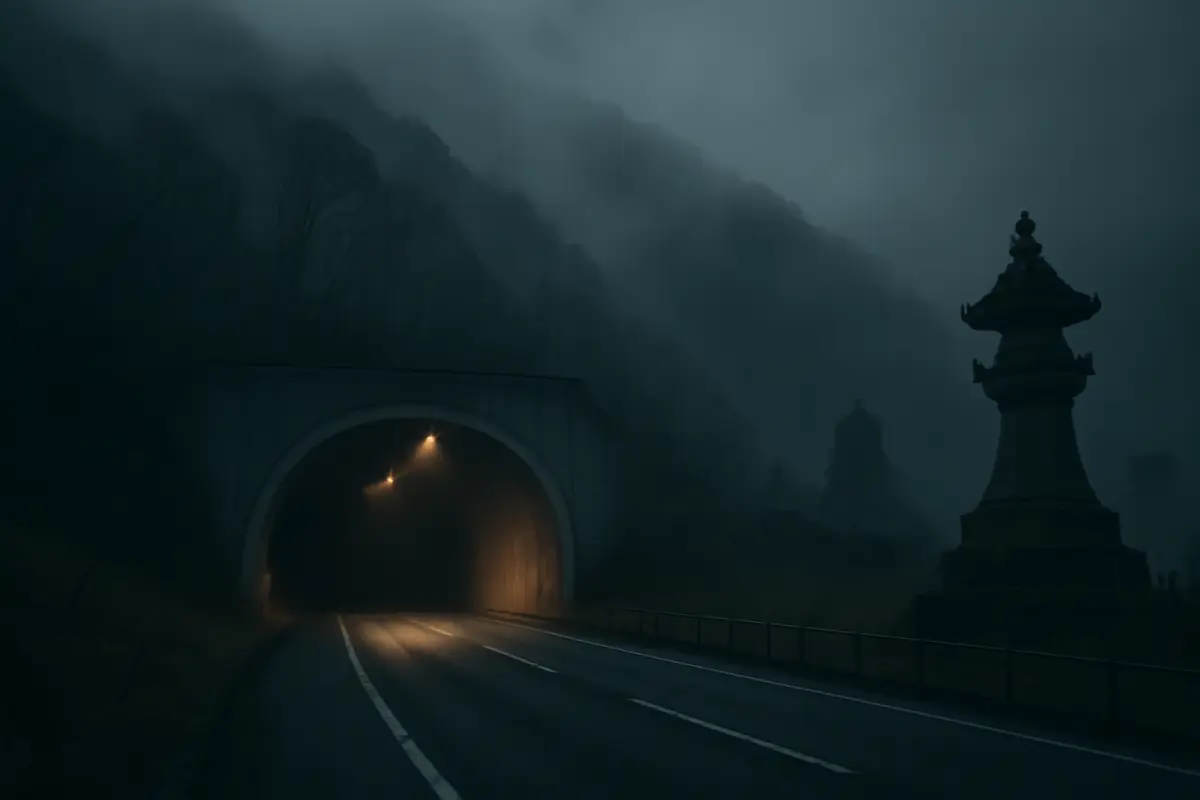
Kurikara Tunnel carries National Route 8 through the Kurikara Pass in Tsubata Town, on the Ishikawa–Toyama border — roughly 957 meters long, a modern highway tunnel.
- The real history nearby
- What locals say about the tunnel
- Borrowed History: A Common Pattern in Tunnel Legends
- Part of a Wider Pattern: Haunted Tunnels Across Japan
- Frequently Asked Questions
- What is the real history behind Kurikara Tunnel’s ghost story?
- Has anyone died in Kurikara Tunnel itself?
- Can you visit the Kurikara battlefield site?
- What is the “other dimension” claim about the tunnel?
- How long is Kurikara Tunnel?
- Why are so many tunnels in Japan considered haunted?
- Is Japan considered a haunted country?
- What makes an abandoned tunnel a likely setting for a ghost story in Japan?
- Related Stories
The real history nearby
The tunnel takes its name from Kurikara Pass, site of the real and well-documented 1183 Battle of Kurikara Pass, where Minamoto no Yoshinaka defeated the Taira army in a night attack, with fleeing Taira troops said to have run off the pass's cliffs. The victory opened the road to Kyoto for Yoshinaka later that year. This history is well-attested and the site is a recognized “Kurikara Old Battlefield” location.
What locals say about the tunnel
Ghost-story sites describe the tunnel growing more unsettling toward its center, claiming it “connects to another dimension.” Reported apparitions include a woman near the prefectural border inside the tunnel, and unexplained wall stains some interpret as suicide marks. Several of the same sources note no significant documented accidents have occurred at the tunnel itself — its haunted reputation appears borrowed from the nearby battlefield's historical weight.
We could not verify the stain-and-suicide claim or the border-ghost sighting independently.
Can you visit: Yes — an active section of National Route 8, with the nearby battlefield site also publicly accessible.
Borrowed History: A Common Pattern in Tunnel Legends
Several sources covering Kurikara Tunnel note the absence of any significant documented accident at the tunnel itself, which points to a pattern seen elsewhere on this site: a modern tunnel inherits the emotional weight of a genuinely dark nearby history — here, the real 1183 battle where fleeing troops reportedly died on the cliffs — without any documented tragedy of its own. The battlefield’s history does the narrative work; the tunnel just happens to run through the same ground.
Part of a Wider Pattern: Haunted Tunnels Across Japan
Kurikara Tunnel (倶利伽羅トンネル), Ishikawa Prefecture is one of dozens of similar sites documented across this site, and it fits a recognizable pattern rather than standing alone. Roughly three-quarters of Japan’s land area is mountainous, which has required over a century of tunnel construction, and older bores are typically sealed or abandoned rather than demolished once a wider, better-lit replacement opens nearby. Those abandoned alignments — not the tunnels still in daily use — are where the folklore tends to concentrate: narrow, unlit, and left to decay in a way that reads as ominous even when the underlying cause is a routine highway upgrade. Japan’s long kaidan (ghost story) storytelling tradition, which attaches spirits to liminal spaces such as tunnels, bridges, and mountain passes, gives these sites a ready-made narrative frame.
Frequently Asked Questions
What is the real history behind Kurikara Tunnel’s ghost story?
The tunnel runs through Kurikara Pass, site of the historically documented 1183 Battle of Kurikara Pass, where fleeing Taira troops reportedly died going off the cliffs — real history the tunnel’s haunted reputation appears to borrow from.
Has anyone died in Kurikara Tunnel itself?
Multiple sources note no significant documented accidents at the tunnel itself, separate from the historical battlefield nearby.
Can you visit the Kurikara battlefield site?
Yes — the “Kurikara Old Battlefield” is a recognized, publicly accessible historical site near the tunnel.
What is the “other dimension” claim about the tunnel?
Some ghost-story sites describe the tunnel growing more unsettling toward its center and claim it connects to another dimension — an atmospheric claim with no documentation behind it, distinct from the tunnel’s genuine historical surroundings.
How long is Kurikara Tunnel?
Roughly 957 meters, carrying National Route 8 traffic between the Ishikawa and Toyama prefectural border in a normal, actively maintained highway tunnel.
Why are so many tunnels in Japan considered haunted?
Japan’s mountainous terrain (roughly three-quarters of the country) has required over a century of tunnel construction, and old bores are typically abandoned rather than removed once a newer route opens nearby. Combined with a long kaidan (ghost story) tradition of attaching spirits to liminal spaces, these abandoned tunnels became natural settings for local ghost stories.
Is Japan considered a haunted country?
Japan has one of the world’s richest documented traditions of ghost stories and haunted-location folklore, built up over centuries through kaidan storytelling, yokai folklore, and site-specific legends attached to tunnels, forests, and other liminal places. That reflects a deep cultural and narrative tradition — not a verifiable claim about supernatural activity.
What makes an abandoned tunnel a likely setting for a ghost story in Japan?
Age, disuse, and physical decay do most of the work: a dark, damp, overgrown structure that once carried traffic and now carries none reads as unsettling on its own, independent of any specific incident. As with Kurikara Tunnel (倶利伽羅トンネル), Ishikawa Prefecture, the underlying history is often more mundane — a routine bypass or road realignment — than the legend suggests.
As an Amazon Associate, this site earns from qualifying purchases.