This article contains affiliate links. If you buy through them, we may earn a commission at no extra cost to you.
Few former prisons anywhere in the world have had a stranger afterlife than Coiba. For nearly a century it was one of Latin America's most feared penal colonies; today it's a UNESCO World Heritage rainforest and diving destination. That transformation, and the darkness it's built on top of, is why Coiba draws both nature tourists and ghost hunters.
The Real History
Coiba Island is the largest island in Central America, located roughly 500 square kilometers off Panama's Pacific coast in the province of Veraguas. From 1919 to 2004, the island served as a penal colony, holding at its peak roughly 3,000 inmates spread across about 30 separate open-air camps. Its remote location, dense jungle, and surrounding shark-filled waters made escape extraordinarily difficult, which is part of why Panama chose it as a prison site in the first place. Conditions were harsh even in ordinary times — inmates faced scorching tropical heat, intense storms, and outdoor cells with minimal protection from the elements or from the island's wildlife. The prison's darkest period came during the military dictatorships of Omar Torrijos (in power 1968–1981) and later Manuel Noriega (1983–1989). During these years, Coiba developed a reputation as a site of brutal treatment, torture, and political killings; it is widely believed to be connected to “Los Desaparecidos” (“the Disappeared”), the hundreds to possibly thousands of Panamanians who vanished after being arrested or abducted under the military governments of the 1970s and '80s. Multiple journalistic and travel-history sources report that some victims are believed to have been buried in unmarked graves on the island, while others are said to have been dismembered and fed to sharks in the surrounding waters — though, as with the broader Desaparecidos cases across Panama, exact numbers and individual identities remain largely undocumented and unresolved. Noriega's regime fell in 1989 following the U.S. invasion of Panama, and the prison itself continued operating until its final closure in 2004. The following year, in 2005, the Coiba National Park and surrounding marine areas were designated a UNESCO World Heritage Site, recognized for exceptionally preserved rainforest — roughly 80% of it undisturbed — and marine biodiversity that includes nearly 1,000 fish species and dozens of shark species.
The Haunting
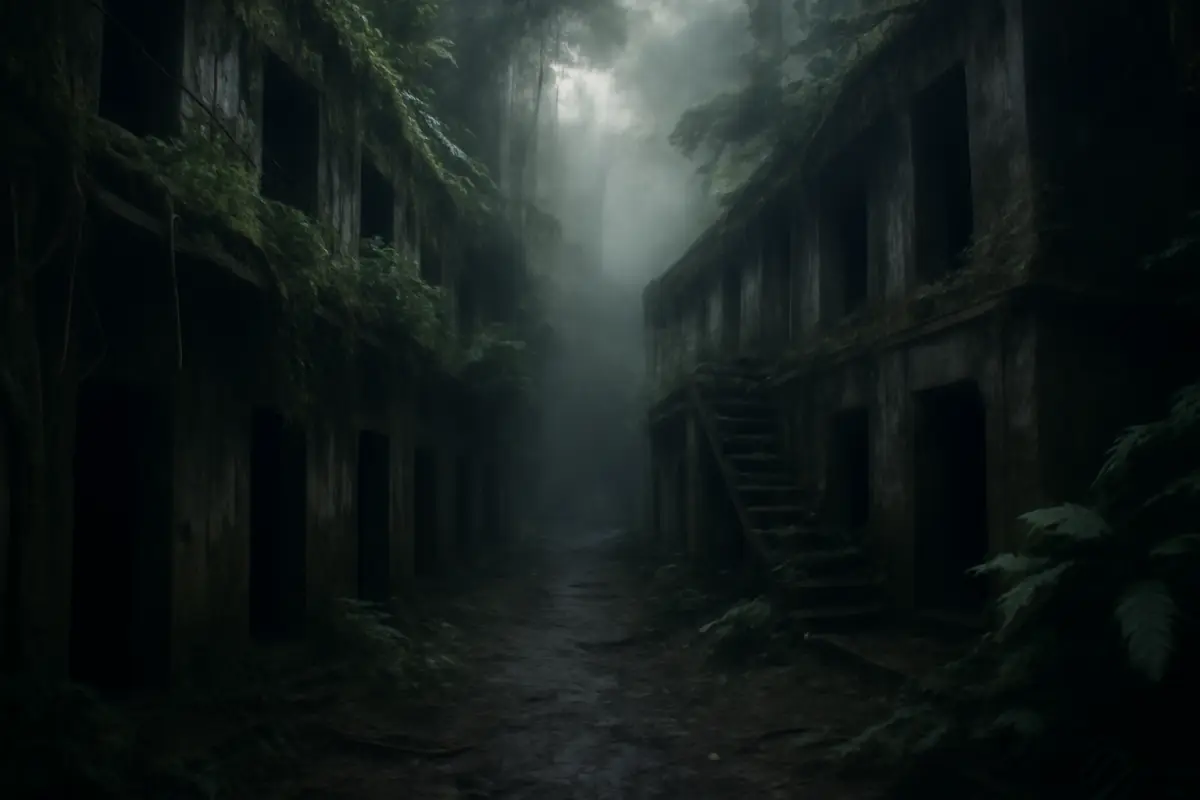
Given its history, it's little surprise that Coiba has become known as one of Panama's most haunted places. Visitors and guides who have toured the abandoned camp structures describe an oppressive, heavy atmosphere in the ruins, particularly around the old cell blocks and isolation areas said to have been used for the harshest punishments. Local guides and some travel accounts describe unexplained sounds — footsteps, voices, or metal clanging — reported by those who have explored the crumbling structures, along with a persistent, widely shared sense that the island “remembers” what happened there. Some accounts connect feelings of unease directly to the disappeared prisoners, suggesting their spirits remain tied to the unmarked graves and shark-infested waters where their remains are believed to lie. As with most reportedly haunted former-prison sites, these are subjective, unverified experiences passed along by visitors and staff rather than documented paranormal evidence — but the very real historical brutality of the site gives the legends an unusually grounded, somber weight compared to more fantastical hauntings elsewhere.
Can You Visit?
Yes — Coiba National Park is open to visitors, primarily as a nature and diving destination, and guided tours can include the ruins of the old penal colony buildings, though access typically requires a permit and an authorized tour operator due to the island's protected status. Because Coiba remains remote and undeveloped, trips usually depart from the nearby mainland town of Santa Catalina, and visitors should plan for a full-day excursion by boat rather than overnight stays on the island itself.
Related: More legends from Mexico and Central America.
Frequently Asked Questions
Is Coiba Island prison still operating?
No. The prison closed permanently in 2004, and the island was designated a UNESCO World Heritage Site in 2005.
Were people really killed or disappeared at Coiba?
Yes, historically. Coiba is widely linked to Panama's “Desaparecidos” under the Torrijos and Noriega dictatorships, with credible reports of torture, executions, and unmarked graves, though exact numbers of victims remain undocumented.
Can tourists visit the old prison buildings today?
Yes, guided tours of Coiba National Park can include the ruins of the former penal colony, typically as part of a permitted day trip focused on the island's rainforest and marine life.
As an Amazon Associate, this site earns from qualifying purchases.