This article contains affiliate links. If you buy through them, we may earn a commission at no extra cost to you.
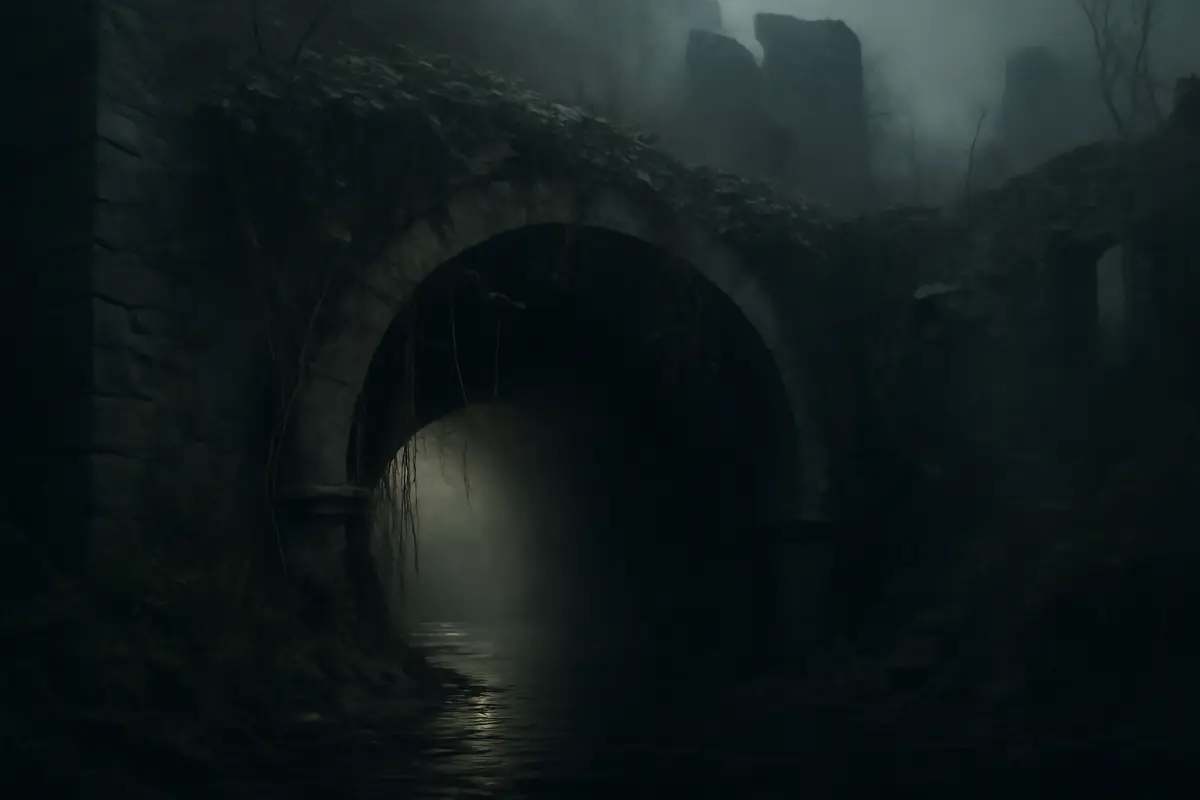
The Former Sawayama Tunnel (旧佐和山トンネル) is an abandoned road tunnel in Hikone City, Shiga Prefecture, near the ruins of Sawayama Castle.
- The documented history
- Current condition
- The ghost legend
- Why Abandoned Tunnels Attract Ghost Stories Faster Than Active Ones
- Part of a Wider Pattern: Haunted Tunnels Across Japan
- Frequently Asked Questions
- Why was the Former Sawayama Tunnel abandoned?
- Is it safe to visit the Former Sawayama Tunnel?
- Is the ghost story connected to Sawayama Castle?
- How long was the tunnel in active use?
- Why are so many tunnels in Japan considered haunted?
- Is Japan considered a haunted country?
- What makes an abandoned tunnel a likely setting for a ghost story in Japan?
- Related Stories
The documented history
Sources place the tunnel's completion in 1923 or 1924. The Shiga Prefecture Civil Engineering Centennial Chronology records it at 230.0 meters long, 4.5 meters wide, 7.5 meters high, built at a cost of ¥130,756. It is credited as an early work of engineer Tsuru Murata. The tunnel was bypassed and closed in 1955 when a new Sawayama Tunnel opened on National Route 8.
Current condition
Visits documented by road-history bloggers describe the entrances as obscured by vegetation, the interior partially flooded, and the south approach overgrown.
The ghost legend
Local ghost-story sites describe a ghost of a man with a broken neck near the exit, footsteps that follow visitors, and a crying baby heard inside. We could not verify any of this. No source ties the story to a named individual or accident from the tunnel's 32 years of active use. The nearby castle ruins (once home to Ishida Mitsunari) may lend the area a general aura of tragedy attached to the tunnel by association.
Can you visit: Partially. The tunnel is on unmaintained land with flooded and overgrown sections; visiting is possible but not officially sanctioned.
Why Abandoned Tunnels Attract Ghost Stories Faster Than Active Ones
A tunnel bypassed and left to nature, like this one since 1955, tends to accumulate folklore faster than the busy highway tunnel that replaced it — decay itself reads as evidence of something wrong, even when the actual cause is simply that a newer, straighter route made the old one obsolete. Sawayama’s proximity to a historically tragic castle site likely accelerates that effect further, lending the abandoned tunnel a borrowed weight it may not have earned on its own construction history.
Part of a Wider Pattern: Haunted Tunnels Across Japan
The Former Sawayama Tunnel is one of dozens of similar sites documented across this site, and it fits a recognizable pattern rather than standing alone. Roughly three-quarters of Japan’s land area is mountainous, which has required over a century of tunnel construction, and older bores are typically sealed or abandoned rather than demolished once a wider, better-lit replacement opens nearby. Those abandoned alignments — not the tunnels still in daily use — are where the folklore tends to concentrate: narrow, unlit, and left to decay in a way that reads as ominous even when the underlying cause is a routine highway upgrade. Japan’s long kaidan (ghost story) storytelling tradition, which attaches spirits to liminal spaces such as tunnels, bridges, and mountain passes, gives these sites a ready-made narrative frame.
Frequently Asked Questions
Why was the Former Sawayama Tunnel abandoned?
It was bypassed in 1955 when a new Sawayama Tunnel opened on National Route 8 — a routine highway upgrade, not any documented incident.
Is it safe to visit the Former Sawayama Tunnel?
Only partially — road-history bloggers who’ve visited describe flooded and overgrown sections, and the site is unmaintained rather than officially closed.
Is the ghost story connected to Sawayama Castle?
Only by proximity. The castle ruins (once home to Ishida Mitsunari) carry a genuine historical weight of tragedy, but we found no source directly linking that history to the tunnel’s specific ghost claims.
How long was the tunnel in active use?
32 years — from its 1923 or 1924 completion until the 1955 bypass — with no documented accident or named individual tied to that entire operating period.
Why are so many tunnels in Japan considered haunted?
Japan’s mountainous terrain (roughly three-quarters of the country) has required over a century of tunnel construction, and old bores are typically abandoned rather than removed once a newer route opens nearby. Combined with a long kaidan (ghost story) tradition of attaching spirits to liminal spaces, these abandoned tunnels became natural settings for local ghost stories.
Is Japan considered a haunted country?
Japan has one of the world’s richest documented traditions of ghost stories and haunted-location folklore, built up over centuries through kaidan storytelling, yokai folklore, and site-specific legends attached to tunnels, forests, and other liminal places. That reflects a deep cultural and narrative tradition — not a verifiable claim about supernatural activity.
What makes an abandoned tunnel a likely setting for a ghost story in Japan?
Age, disuse, and physical decay do most of the work: a dark, damp, overgrown structure that once carried traffic and now carries none reads as unsettling on its own, independent of any specific incident. As with The Former Sawayama Tunnel, the underlying history is often more mundane — a routine bypass or road realignment — than the legend suggests.
As an Amazon Associate, this site earns from qualifying purchases.
Comments