This article contains affiliate links. If you buy through them, we may earn a commission at no extra cost to you.
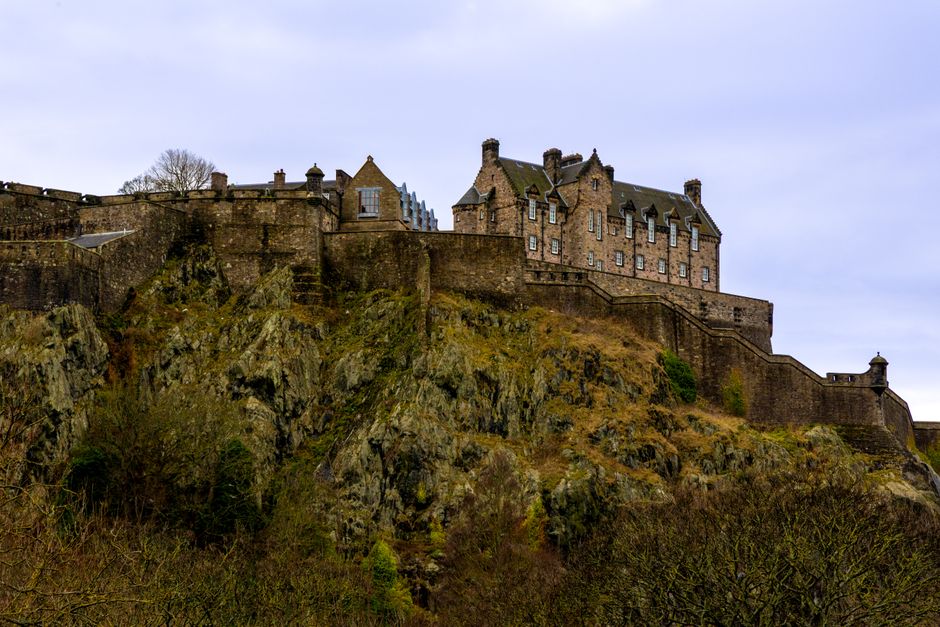
Perched above Scotland's capital, Edinburgh Castle has survived at least 26 documented sieges over its history — and among the countless haunted castles across Europe, it stands out for having been the subject of one of the largest formal scientific paranormal investigations ever conducted.
The Legend
The castle's dungeons are consistently described as its most active area for reported hauntings, tied to prisoners who died there from poor conditions, malnourishment, disease, or torture over centuries of use. Construction and restoration workers have reportedly refused to work alone in the dungeons, and in 2003, a group carrying out restoration work claimed they were harassed by the ghosts of prisoners dating to the Napoleonic Wars — enough to unsettle experienced tradespeople doing routine renovation.
One specific, recurring story involves a ghostly figure said to smell distinctly of manure, reportedly attempting to push visitors over the castle's battlements. According to the legend behind this figure, a desperate prisoner once tried to escape by hiding inside a wheelbarrow full of muck, hoping to be carted out with the waste — only for the wheelbarrow to be tipped over the battlements instead, ending the escape attempt fatally.
The 2001 Scientific Investigation
This is where Edinburgh Castle's history genuinely diverges from most haunted-location folklore: in April 2001, psychologist Dr. Richard Wiseman of the University of Hertfordshire conducted what remains one of the largest paranormal investigations ever undertaken, involving nine research team members and more than 200 participants over a ten-day period. The study's documented finding was that more than half of participants reported an unexplainable experience during their time in the castle — a genuinely notable result, though Wiseman's broader research program has generally attributed such experiences to environmental factors (infrasound, lighting, architectural features of specific rooms) rather than confirming supernatural causation.
What's Actually Verifiable
We could not verify the specific manure-smelling prisoner's escape attempt or the 2003 construction-worker harassment claims against independent documentation beyond the accounts themselves. What is genuinely documented and verifiable is the 2001 Wiseman study itself — a real, peer-reviewed-adjacent piece of paranormal research with a specific methodology and published participant count, which is rarer supporting evidence than almost any other haunted castle claim this site has covered.
Cultural Significance Today
Edinburgh Castle's combination of centuries of real siege warfare, documented prisoner suffering, and one of the paranormal research field's most cited formal studies has made it a recurring fixture on “most haunted” lists worldwide. Unlike many castles whose reputation rests purely on oral tradition, Edinburgh's haunted status is unusual in having actual academic research attached to it, even where that research stops short of confirming anything supernatural.
Can You Visit?
Edinburgh Castle remains one of Scotland's most visited historic sites, open to the public with extensive tours covering its dungeons, battlements, and centuries of documented history. Visitors interested in the castle's paranormal reputation can explore the same dungeon areas featured in the 2001 study, alongside the site's substantial, independently verifiable military history.
Frequently Asked Questions
Was Edinburgh Castle really the subject of a scientific paranormal investigation?
Yes — a 2001 investigation is one of the largest formal scientific paranormal studies ever conducted at a single site, a documented research event distinct from the individual ghost claims themselves.
Is the wheelbarrow-escape story confirmed history?
No — it circulates as local legend explaining one specific recurring apparition, without independent documentation of the escape attempt itself.
Ghost-Hunting Gear & Further Reading
- Books on Scottish castle history and Edinburgh Castle
- Paranormal investigation and haunted castle research books
As an Amazon Associate, this site earns from qualifying purchases.

Comments