This article contains an affiliate link. If you buy something through it, this site may earn a small commission at no extra cost to you.
In the market towns of southern Niger, a woman collapses mid-sentence, and the people around her do not call for help. They call for a drummer. Within minutes she is on her feet again, but her voice has dropped an octave, her walk has changed, and she is asking for tobacco she never smokes. The neighbors greet the new voice by name. Something has arrived, they say, and it is riding her.
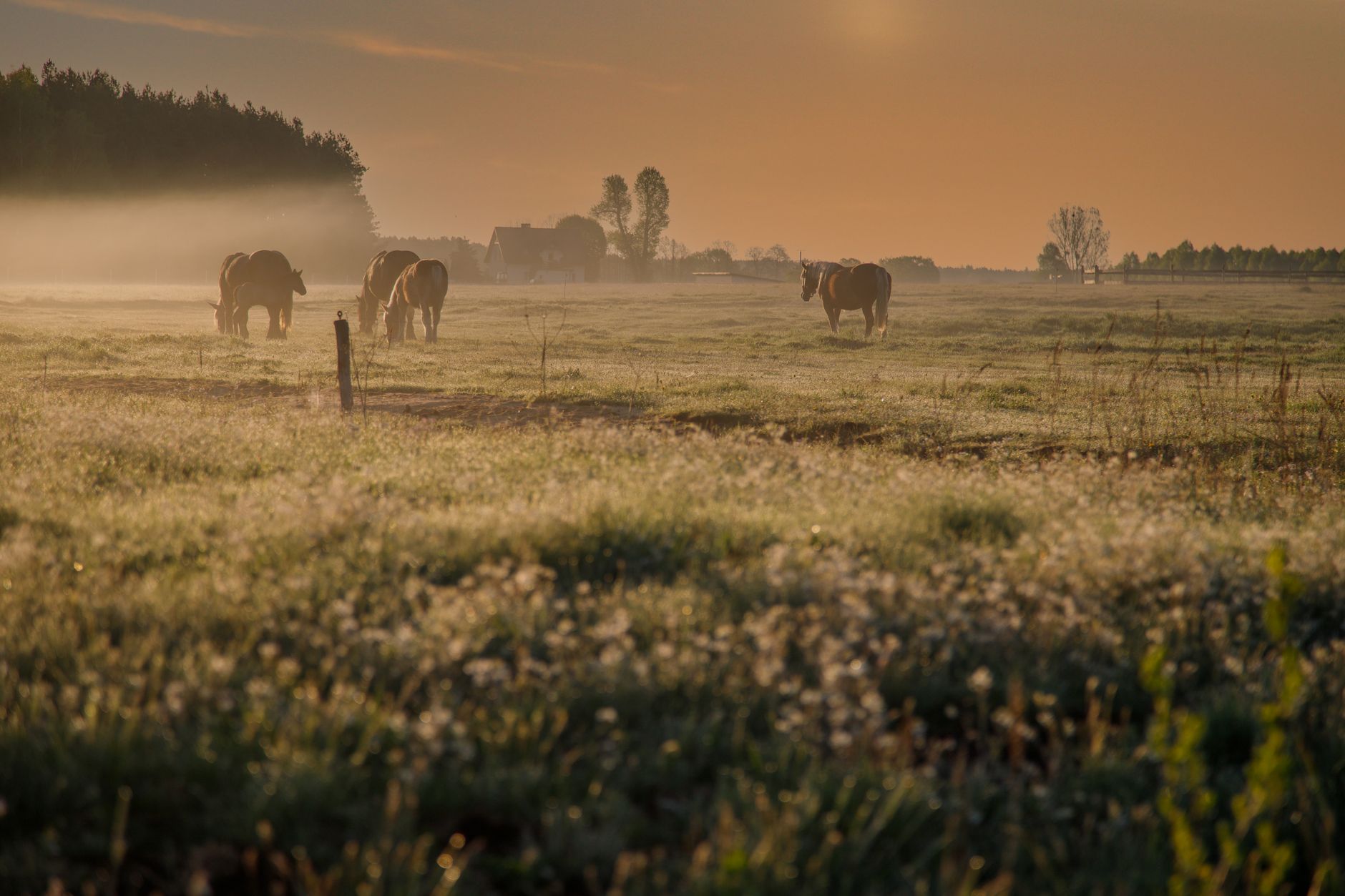
That is Bori — not a superstition tucked away in a museum case, but a living possession tradition practiced today among Hausa communities in Niger and northern Nigeria. It centers on spirits called iskoki, and it comes with its own grammar for describing what happens when one of them enters a human body: the possessed are not “taken over,” they are ridden. A man in trance is called doki, a horse. A woman is called godiya, a mare. The attendants who steady them are herders. The whole event is staged like a rider mounting an animal that did not ask to be broken.
A Council of Invisible Neighbors
Bori spirits are not vague forces. They have names, temperaments, and grudges, and Hausa oral tradition organizes them into roughly twelve family houses with a chief who presides over a spirit city called Jangare. Some spirits carry Muslim leanings and are described as “white.” Others predate Islam entirely and are called “black.” A few, like the scholarly spirit Malam Alhaji, are said to recite the Qur'an through their mount instead of dancing — proof that even the invisible world in Hausa belief did not stay untouched by the religion that arrived to replace it.
Illness in this worldview is rarely random. A wasting fever might belong to Dan Galadima, a spirit whose mounts are seized by an urge to give away money they cannot afford to lose. A paralysis that comes on overnight might be the work of Inna, a fierce Fulani matriarch spirit whose arrival demands immediate ritual attention or the sickness can be fatal within days. A spirit called Danko, tied to rivers and snakes, is blamed for stomach trouble and infertility — his mounts move in slow, sinuous ripples and are known to eat raw eggs during trance, whole, shell aside.
None of this is treated as performance by the people involved. The diagnosis matters because the cure depends on it: you cannot bargain with a fever until you know which spirit sent it.
The Ceremony Itself
A full Bori initiation, called girka, can run six to thirteen days of music, offerings, and staged encounters between the initiate and the spirit that has chosen them. Musicians are essential rather than decorative — a fiddle player and a calabash drummer will tell you plainly that a spirit will not descend without its own tune playing. Each iska has a signature rhythm, the way a phone has a specific ringtone, and until that rhythm sounds, the spirit simply does not pick up.
When a medium does go under, attendants move fast. Rings come off fingers before a spirit like the leper-spirit Kuturu takes hold, because mounts under his influence sometimes claw at their own hands. A microphone gets held close to the mount's mouth, because the words that come out belong to the spirit, not the person, and the community wants to hear the verdict clearly. What looks from the outside like theater is, to the people inside the circle, closer to a house call from a doctor who happens to be invisible and occasionally short-tempered.
Living Under Two Roofs
The uneasy part of the story is what Bori has had to survive. Islam arrived in Hausaland centuries ago and reshaped the region's spiritual life almost completely; most Hausa communities are devoutly Muslim today, and Bori has been condemned from local pulpits more than once. In the Nigerien town of Dogondoutchi, anthropologist Adeline Masquelier documented residents who put the tension into six blunt words: prayer has spoiled everything. For them, the spread of daily prayer wasn't just a private devotion — it read as the slow erasure of an older way of managing illness, grief, and the unpredictable moods of the invisible.
Yet Bori never simply disappeared into resistance. It borrowed as much as it resisted, folding Muslim spirits and Qur'anic recitation into its own pantheon, surviving in refugee towns and rural markets even as the cities around it turned devoutly Islamic. It is neither a relic nor a rebellion exactly — it is a tradition that kept negotiating with the religion that was supposed to replace it, and in places like Dogondoutchi and Konni, that negotiation is still going on this year, not in a history book.
The next time someone tells you a fever “came out of nowhere,” remember there's a whole region of the world with a more specific answer — and a drummer who might be able to summon it by name.
Learn More
Readers curious about West African spirit-possession traditions and the ethnography behind this piece may want to start with Adeline Masquelier's field study of Bori in Niger, one of the most detailed English-language accounts available.
- Prayer Has Spoiled Everything: Possession, Power, and Identity in an Islamic Town of Niger — Adeline Masquelier's ethnography of Bori possession in Dogondoutchi, Niger. As an Amazon Associate, this site earns from qualifying purchases.
Comments