This article contains affiliate links. If you buy through them, we may earn a commission at no extra cost to you.
On the morning of August 4, 1577, a clergyman named Abraham Fleming printed a pamphlet describing a black dog that had reportedly burst into two Suffolk churches during a violent thunderstorm, leaving parishioners dead and scorch marks that locals still point to on a church door today. That pamphlet, “A Straunge and Terrible Wunder,” is one of the earliest surviving printed accounts of what English folklore calls Black Shuck — a huge, shaggy, glowing-eyed phantom dog said to haunt the lanes, coastline, and churchyards of East Anglia.
Verified History: The 1577 Church Incidents
According to Fleming’s contemporary account, the dog appeared first at St Mary’s Church in Bungay, Suffolk, during a Sunday service disrupted by an unusually violent storm. The pamphlet describes the animal running through the congregation, and two people inside the church were said to have died. The same day, a black dog was reported roughly twelve miles away at Holy Trinity Church in Blythburgh, where it allegedly killed a man and a boy and left claw-like scorch marks on the church’s north door — marks that are still visible on the door today and are a genuine, physically documented feature of the building, even though their actual cause (lightning damage, later folklore attribution, or something else) cannot be independently confirmed.
Fleming’s pamphlet is treated by historians as a real 16th-century printed record of a local event, written in the aftermath of a documented severe storm, rather than a later invention — the storm damage and deaths at both churches are corroborated by parish and local records from the period. What can’t be verified from a 21st-century vantage point is whether the “black dog” element was an eyewitness description of an actual animal, a supernatural interpretation of storm damage and lightning strikes, or an embellishment added to an already tragic event. Some historians have proposed that ball lightning or a genuinely large stray dog panicked by the storm could explain elements of the account, though no single explanation has been established as definitive.
The Legend Itself
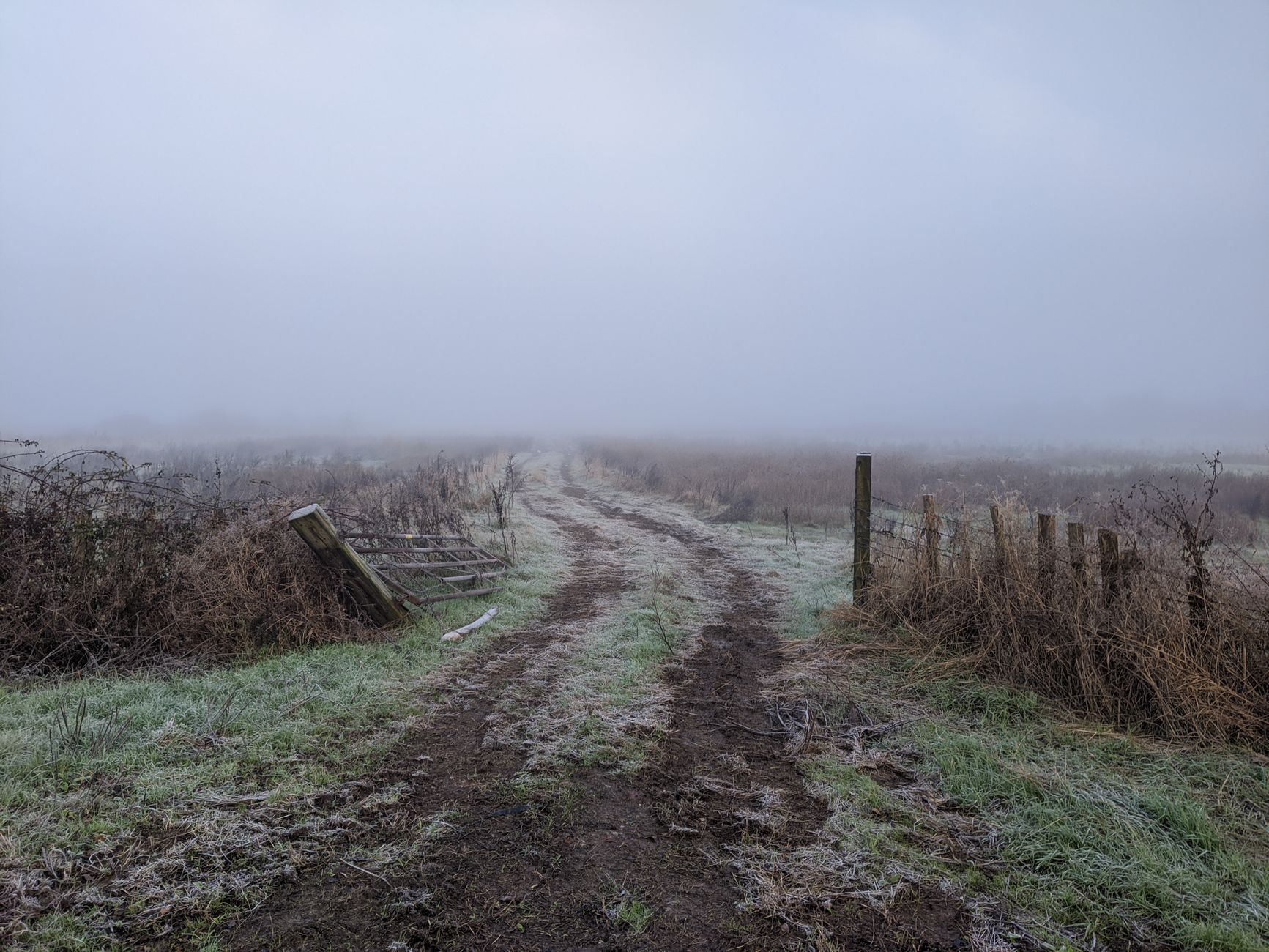
In the wider East Anglian tradition that grew up around and beyond the 1577 pamphlet, Black Shuck is described as an enormous black dog, often shaggy-coated, with glowing red or green eyes, that travels the coast roads, footpaths, and old lanes of Norfolk and Suffolk at night. Local tellings vary on whether encountering the dog is fatal: some versions hold that seeing Black Shuck is an omen of death within the year, while other regional variants describe the dog as more protective than malevolent, escorting lone travelers safely home along dangerous stretches of road. The name “Shuck” is generally traced by linguists to the Old English word “scucca,” meaning devil or fiend, though a competing theory ties it to a regional dialect word for “shaggy.”
Black Shuck belongs to a much broader category of British folklore: spectral black dogs are recorded across England, Wales, and Scotland under many regional names, and some folklorists point to a possible mention of a monstrous black hound in the Peterborough Abbey continuation of the Anglo-Saxon Chronicle from around 1127 as a much earlier precedent, though that account does not name the creature Shuck specifically and the link between the two is an inference rather than a documented continuity.
What’s Actually Verifiable
No scientific or forensic investigation has ever confirmed a supernatural black dog as the cause of any death associated with the legend. What is verifiable is the documentary record: Fleming’s 1577 pamphlet is a real historical source, the deaths and storm damage at Bungay and Blythburgh are corroborated by the historical record of that storm, and the scorch marks on Blythburgh’s north door are a genuine physical feature of a building that still stands and can be visited. Whether those marks were caused by the animal in the story, by lightning during the same storm, or added to local memory afterward is not something that can be independently confirmed today — we could not verify a single, conclusive physical cause.
Can You Visit?
Holy Trinity Church in Blythburgh, Suffolk, is an active, publicly accessible parish church, and the scorch marks associated with the legend remain visible on the north door for visitors. St Mary’s Church in Bungay is likewise open to the public. Both sites sit within the wider Suffolk coast region covered in our guide to haunted places in the UK, and travelers interested in Britain’s other famous cryptid mystery may also want to read our breakdown of what’s actually documented about the Loch Ness Monster.
FAQ
Q1: Did Black Shuck really kill people in 1577?
A 1577 pamphlet by clergyman Abraham Fleming reports deaths at churches in Bungay and Blythburgh during a violent storm, attributed in the account to a black dog. The storm and deaths are corroborated by the historical record; the supernatural cause is not independently verifiable.
Q2: What do the scorch marks at Blythburgh church actually show?
Claw-like burn marks are visible on the north door of Holy Trinity Church, Blythburgh, and are a real, documented physical feature of the building. Their cause — lightning, later folklore attribution, or something else — has not been conclusively established.
Q3: Where does the name “Shuck” come from?
Most linguists trace it to the Old English “scucca,” meaning devil or demon, though a secondary theory connects it to a local dialect word meaning shaggy.
Q4: Is Black Shuck considered evil in every version of the legend?
No. Some regional tellings describe the dog as a death omen, while others describe it as a protective presence that accompanies lone travelers safely along dangerous roads at night.
Q5: Are there similar black dog legends elsewhere in Britain?
Yes. Spectral black dog folklore appears across England, Wales, and Scotland under various regional names, and some folklorists connect the broader tradition to a possible black-hound mention in a 12th-century continuation of the Anglo-Saxon Chronicle, though that link is an inference rather than a proven continuity.
Q6: Can you still visit the sites connected to the legend?
Yes. Both Holy Trinity Church, Blythburgh, and St Mary’s Church, Bungay, are standing, publicly accessible churches in Suffolk, England.
Ghost-Hunting Gear & Further Reading
- Books on British folklore and phantom black dogs
- East Anglia history and legends guides
- Portable EMF and ghost-hunting equipment
As an Amazon Associate, this site earns from qualifying purchases.
Frequently Asked Questions
What is the earliest documented account of Black Shuck?
A pamphlet titled “A Straunge and Terrible Wunder,” printed by clergyman Abraham Fleming on August 4, 1577, describing a black dog that reportedly killed parishioners at two Suffolk churches during a violent storm.
Are the scorch marks at Blythburgh church real?
Yes. Claw-like scorch marks on the north door of Holy Trinity Church in Blythburgh are a genuine, physically documented feature of the building, though whether their cause was lightning, later folklore, or something else can’t be independently confirmed.
Is seeing Black Shuck considered a bad omen?
Tellings vary: some versions hold that encountering the dog is an omen of death within the year, while other regional variants describe it as more protective than malevolent, escorting lone travelers safely home.
Where does the name “Shuck” come from?
Linguists generally trace it to the Old English word “scucca,” meaning devil or fiend, though a competing theory ties it to a regional dialect word for “shaggy.”

Comments