This article contains affiliate links. If you buy through them, we may earn a commission at no extra cost to you. As an Amazon Associate, we earn from qualifying purchases.
A night watchman at St. Coletta School near Jefferson, Wisconsin, saw something digging at an old burial mound on the property in 1936. It stood upright, six or seven feet tall, covered in dark hair, with a face that wasn't quite wolf and wasn't quite man. He came back the next night and it was there again. He reported it. Nobody outside the county paid much attention, and the story sat mostly forgotten for fifty years.
Then, in the late 1980s, it came back — or something like it did.
A Road Gets a Name
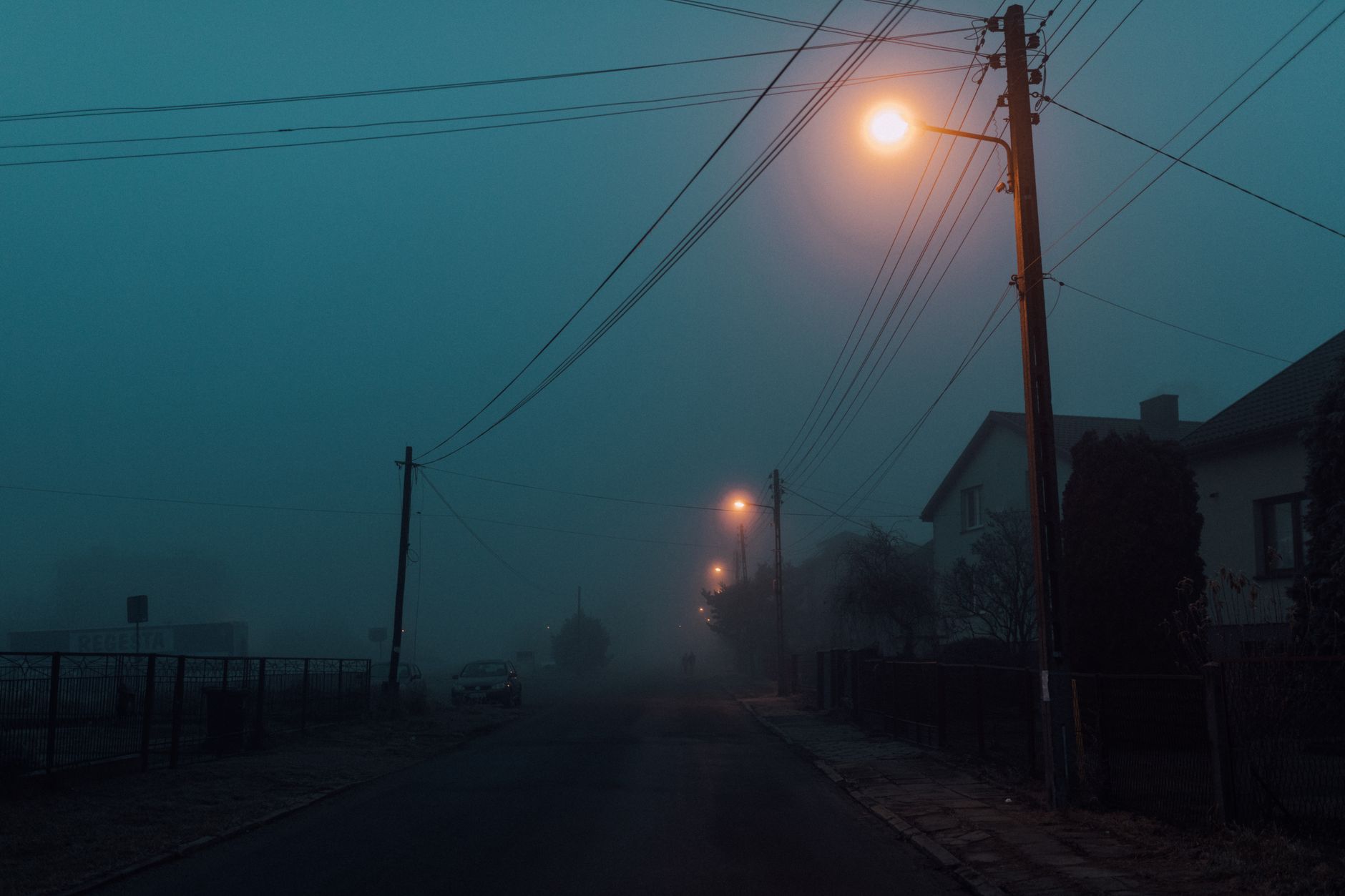
Sightings started clustering around Walworth, Racine, and Jefferson counties, southeast Wisconsin farm country dotted with cornfields and gravel county roads. Drivers reported a heavyset, upright animal crossing the road ahead of their headlights. Farmers reported livestock spooked for no obvious reason. One stretch of rural road near Elkhorn, Bray Road, came up often enough in the reports that it eventually gave the creature its name, even though sightings were never confined to that one road.
By the time a local reporter started asking questions, the sightings weren't rumors passed at the diner. They were a paper trail.
Linda Godfrey Follows the Folder
Linda Godfrey was a writer and illustrator for The Week, a small paper based in Delavan, Wisconsin, when she started chasing the story in 1991. Before she wrote a word, she stopped by the Walworth County Animal Control office to ask whether anyone had reported strange animal encounters. The officer pulled out a folder. It was already thick with sighting reports, and someone in the office had labeled it, only half-joking, “Werewolf.”
Godfrey's first article on the creature ran in The Week on December 29, 1991. She hadn't set out to write a monster story — she'd set out to write about a pattern of eyewitness reports her local government was quietly tracking. The piece went out over the Associated Press wire not long after, and what had been a county-level curiosity turned into national news almost overnight. Godfrey kept reporting on it for years, interviewing witnesses across the region, and eventually folded the material into a book, "The Beast of Bray Road: Tailing Wisconsin's Werewolf," first published in 2003.
What Witnesses Described
Across the reports Godfrey collected, the descriptions hold together with unusual consistency. Witnesses described an animal standing six to seven feet tall on its hind legs, with a muscular, humanoid build under a coat of dark or grayish fur. The head reads as canine or wolflike, with a pointed muzzle rather than a flat human face. Several accounts mention eyes that catch headlights and throw back an orange or reddish glow, the same effect you'd get from a dog or deer at night, just mounted much higher off the ground than anyone expects. A few witnesses reported the animal dropping to all fours and running, then rising back onto two legs — a detail that shows up often enough in unrelated interviews to be one of the case's stranger consistencies.
None of this proves the existence of an actual creature. It does establish that a specific, repeatable description was independently reported by strangers across a fairly compact stretch of farm country, which is exactly the kind of pattern that makes a regional cryptid case durable instead of forgettable.
From County Folder to Cable TV
Once the AP wire picked up Godfrey's reporting, the Beast of Bray Road became a fixture of American cryptozoology coverage. Cable documentary and paranormal-investigation programs — the same genre of show that built episodes around Bigfoot and the Chupacabra — sent crews to Walworth County to interview witnesses and walk the same rural roads. The case is regularly cited alongside better-known “dogman” sightings reported across the Midwest, and Godfrey herself went on to write additional books connecting Wisconsin's reports to similar upright-canine sightings in Michigan and beyond.
The story crossed fully into pop culture in 2005, when The Asylum released a low-budget horror film titled “The Beast of Bray Road,” directed by Leigh Scott. The movie takes the setting and the name and builds a slasher plot around them — it isn't a documentary, and it isn't trying to be one. But its existence is a useful marker of how far the story had traveled: from one animal control officer's folder to a title on a video store shelf, in under fifteen years.
Not the Same Werewolf as the Trial Records
It's worth being clear about what the Beast of Bray Road is not. It has nothing to do with the werewolf trials of 16th- and 17th-century Europe, where courts convicted and executed people — Peter Stumpp, Gilles Garnier, and others — for the crime of lycanthropy under torture and religious panic. That older story is about law, confession, and persecution. This one is about a rural community, a stack of independent eyewitness reports filed with a county office, and a reporter who decided the pattern was worth writing down. No one was ever accused, tried, or harmed because of the Bray Road sightings. It stayed exactly what it started as: an unsolved wildlife mystery that a lot of ordinary people say they've seen with their own eyes.
Whatever crossed those cornfields outside Elkhorn, it left behind something rarer than most folklore does — a dated paper trail, a named reporter, and a county file that still exists.
FAQ
Where is the Beast of Bray Road from?
The legend centers on Bray Road, a rural road near Elkhorn, Wisconsin, in Walworth County. Related sightings have been reported across Walworth, Racine, and Jefferson counties in the state's southeast farm country.
Who first reported the Beast of Bray Road?
Reporter Linda Godfrey, writing for the Delavan paper The Week, published the first investigative article on December 29, 1991, after finding that Walworth County Animal Control already had a folder of witness reports labeled “Werewolf.”
Is the Beast of Bray Road based on a true story?
The sightings themselves are real in the sense that they are documented eyewitness reports filed with local authorities and a newspaper, going back to a 1936 account at St. Coletta School. Whether an actual unidentified animal caused the sightings remains unresolved; no physical evidence has ever confirmed the creature's existence.
Is there a Beast of Bray Road movie?
Yes. The Asylum released “The Beast of Bray Road,” directed by Leigh Scott, in 2005. It is a horror film that borrows the name and setting rather than a documentary account of the case.
Learn More
As an Amazon Associate, this site earns from qualifying purchases.

Comments