This article contains affiliate links. If you buy through them, we may earn a commission at no extra cost to you.
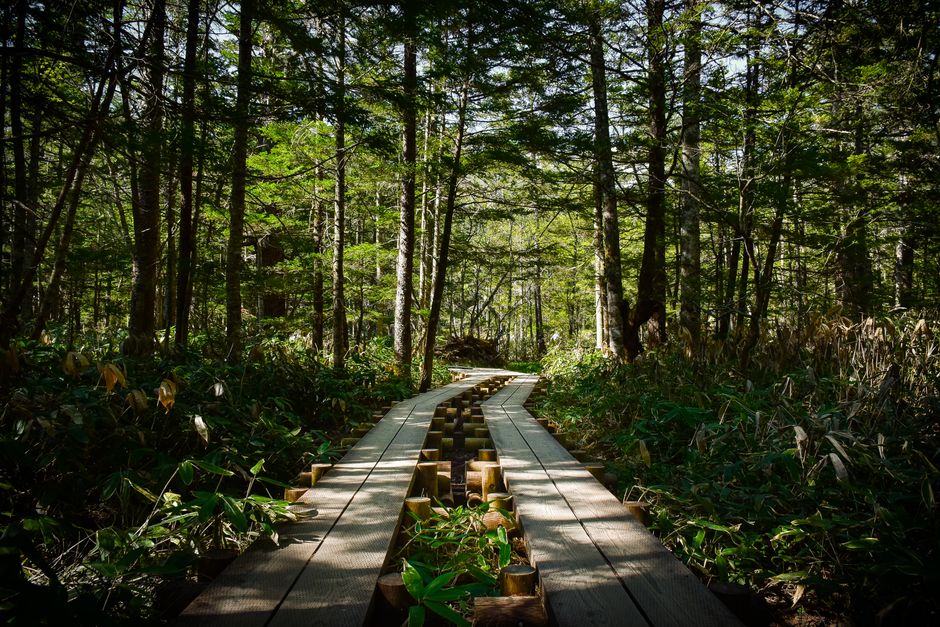
Aokigahara, known in Japanese as Aokigahara Jukai — literally “the sea of trees” — sits at the northwest base of Mount Fuji in Yamanashi Prefecture, covering roughly 35 square kilometers of dense forest grown over hardened lava. It is one of the most searched “haunted” locations connected to Japan, but much of what circulates about it online blends real, documented history with sensationalized retelling. This article separates the two, and handles the forest's association with suicide the way the subject deserves: factually, without detail that could be read as instructional or as spectacle.
The Volcanic Origins
The forest grew on lava rock left by a major eruption of Mount Fuji in 864 CE, one of the largest recorded eruptions in the mountain's history. Over the following centuries, trees took root directly in the porous volcanic rock, producing a forest floor riddled with cave systems, exposed roots, and famously dense, quiet undergrowth. The mineral composition of the volcanic rock is often cited as a reason compasses can behave unreliably in parts of the forest — a real, physically explainable phenomenon, not a supernatural one, though it has fed decades of folklore about people losing their way.
A History Older Than Its Modern Reputation
Aokigahara's association with death predates any modern media reference. Historical accounts describe the practice of ubasute in parts of Japan — the abandonment of elderly or infirm family members in remote areas during times of famine — and some regional traditions place instances of this practice in areas including Aokigahara, into as late as the nineteenth century by some accounts. We could not independently verify specific, documented instances tied to this exact forest rather than the wider regional practice, so this should be read as a documented historical practice associated with the area, not a confirmed site-specific event.
The forest's modern reputation is more precisely dated. Seichō Matsumoto's 1961 novel Nami no Tō (Tower of Waves) featured a character's suicide in Aokigahara, and the book's popularity is widely credited by historians and journalists with cementing the forest's association with suicide in the postwar public imagination — a case where fiction measurably shaped how a real place was perceived afterward.
What the Records Actually Show
Japanese authorities did track suicide numbers in the forest for years: reporting cited 105 bodies recovered in 2003, exceeding a previous high of 78 the year before, and roughly 54 confirmed suicides among more than 200 recorded attempts in 2010. That same year, Japanese authorities stopped publicly releasing yearly suicide figures for the forest specifically, a decision widely reported as an attempt to reduce the location's notoriety and discourage further association between the site and suicide — a media-effects concern researchers call the Werther effect, where detailed reporting on a suicide location or method is linked to increased incidence.
Because of this, we do not report current-year figures here, and readers should treat any recent statistic circulating online with skepticism unless it cites an official source.
Handling This Respectfully
Japanese outlets have generally avoided naming or dwelling on suicide locations for exactly the reason above, and international coverage that treats Aokigahara as a spectacle — hunting for personal items, filming for shock value — has been widely criticized by mental health advocates and by people connected to the location itself. If you are affected by anything in this article, in the US you can reach the 988 Suicide & Crisis Lifeline by calling or texting 988; in Japan, TELL Lifeline (03-5774-0992) offers support in English and Japanese.
Can You Visit?
Aokigahara is a real, publicly accessible forest with marked hiking trails, ice caves, and wind caves open to visitors, and it draws tourists and nature enthusiasts for reasons entirely separate from its darker reputation — its volcanic geology and unusual ecosystem are genuinely significant. Visitors who go should stay on marked trails, treat the area with the same care they would any place with a documented history of loss, and avoid photographing or disturbing personal items if any are encountered, reporting anything concerning to local authorities rather than documenting it.
Frequently Asked Questions
Can you actually visit Aokigahara Forest?
Yes. It’s a public forest with several marked hiking trails and two commercially operated cave sites — Narusawa Ice Cave and Fugaku Wind Cave — that welcome ordinary tourists year-round. Most visitors never leave the marked paths and see nothing beyond dense forest, volcanic rock, and cave formations.
Do compasses really not work in Aokigahara?
The forest floor is volcanic rock with enough mineral content to cause localized compass deflection in some spots, which is real and physically explainable — but it isn’t strong or consistent enough across the whole forest to reliably strand a prepared hiker on a marked trail. The phenomenon is genuine; the folklore that’s grown around it (that the forest “pulls people off course”) outpaces what the geology actually does.
Is Aokigahara safe to hike?
On the marked trails, yes, and it’s treated as a normal nature destination by domestic tourists. Off-trail is a different matter — the terrain is dense, disorienting, and genuinely easy to get lost in regardless of any compass effect, which is why staying on marked paths is the standard visitor guidance rather than a nod to the ghost stories.
Why do people call Aokigahara the “Suicide Forest”?
The nickname traces to a specific, documented chain of events: a 1960 novel that used the forest as a suicide setting, followed by decades of Japanese media coverage of real recovered-body counts, which authorities stopped publishing after 2010 specifically to reduce the location’s association with the practice. It’s a case where the nickname has a real documented history — unlike most of what circulates about the forest as ghost lore.
The Wider Fuji Five Lakes Region
Aokigahara sits inside a much larger area known as the Fuji Five Lakes (Fujigoko): Kawaguchiko, Yamanakako, Saiko, Shojiko, and Motosuko, ringing the northern base of Mount Fuji in Yamanashi Prefecture. The forest is one small part of this region, and the lakes themselves are ordinary, well-established domestic tourist destinations with no connection to the forest’s history. Kawaguchiko is the most visited of the five, with Mount Fuji viewpoints, the Itchiku Kubota Art Museum, and easy access by train and bus from Tokyo. Nearby Oshino Hakkai is a small village built around eight spring-fed ponds, part of Mount Fuji’s UNESCO World Heritage listing. Around the quieter Saiko, Shojiko, and Motosuko, the landscape opens into less developed countryside popular for camping and lake views; Motosuko itself is the lake depicted on the 1,000 yen note. None of this is a reason to seek out Aokigahara specifically — it’s simply useful context that the forest is one landmark within a region most visitors experience through its lakes, viewpoints, and villages rather than the woods. Readers planning a trip to this part of Japan more broadly may also find our guide to planning a haunted-Japan trip useful for logistics.
Local Specialties of the Fuji Region
The Yamanashi side of the Fuji region has its own food identity, separate from anything discussed above. Hoto is the prefecture’s signature dish: flat, hand-cut wheat noodles simmered in a miso broth with kabocha squash and vegetables, said to date back to the 16th-century warlord Takeda Shingen and recognized by Japan’s Ministry of Agriculture as one of the country’s 100 selected local dishes. Yoshida Udon, from nearby Fujiyoshida City on the Kawaguchiko side of the lakes, is known for unusually firm, chewy noodles served with a soy-and-miso broth. Just across the prefectural border in Shizuoka, Fujinomiya yakisoba is a regionally protected specialty built on specific steamed noodles and pork-fat cracklings. These are simply the everyday food of the wider Fuji-area, worth mentioning because they’re what most visitors to the region actually encounter, with no connection to the forest’s history. Related cookbooks and regional food guides are searchable on Amazon for readers who want to recreate hoto or Yoshida udon at home.
Ghost-Hunting Gear & Further Reading
As an Amazon Associate, this site earns from qualifying purchases.
Pin this for later

Comments