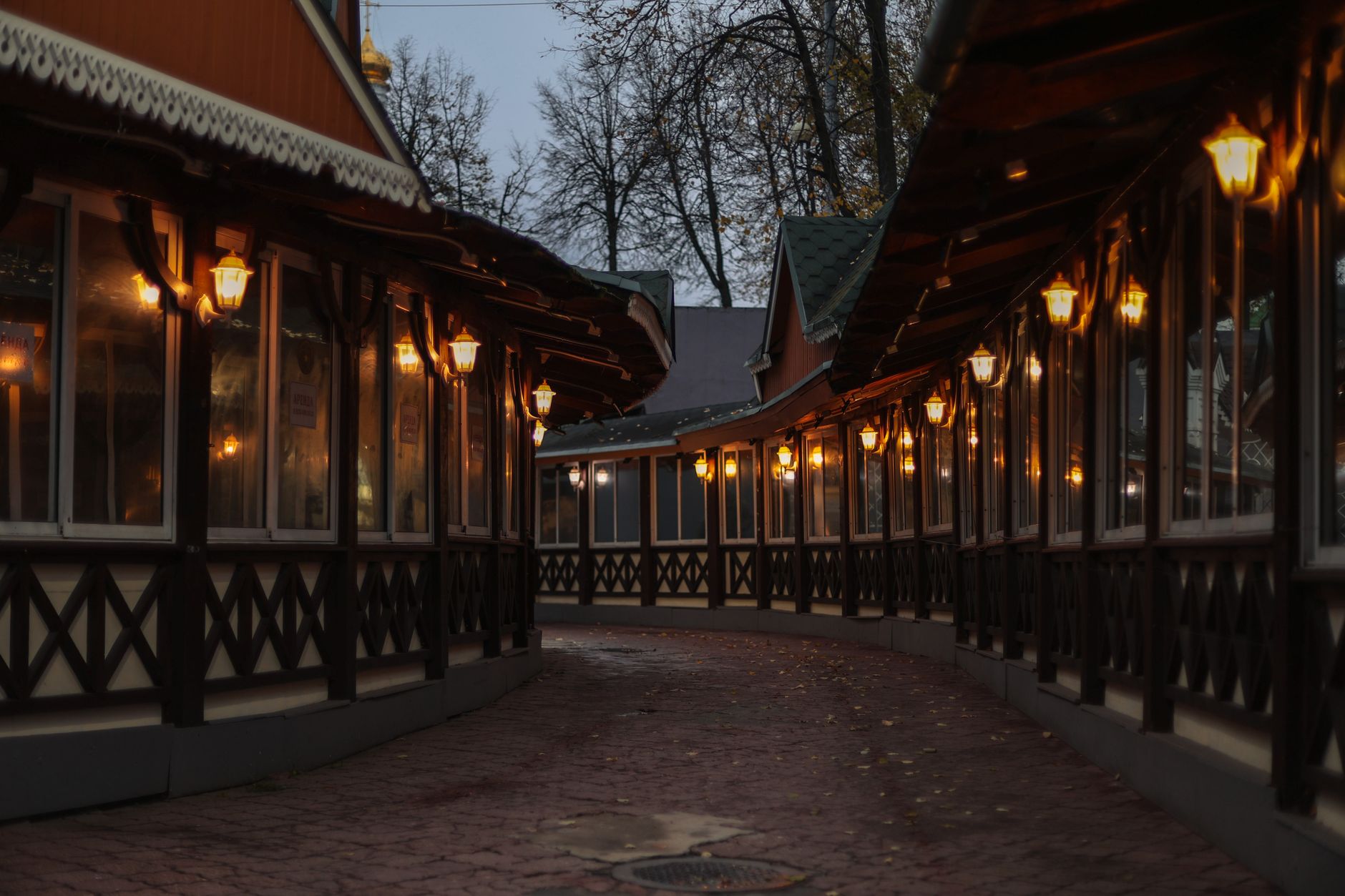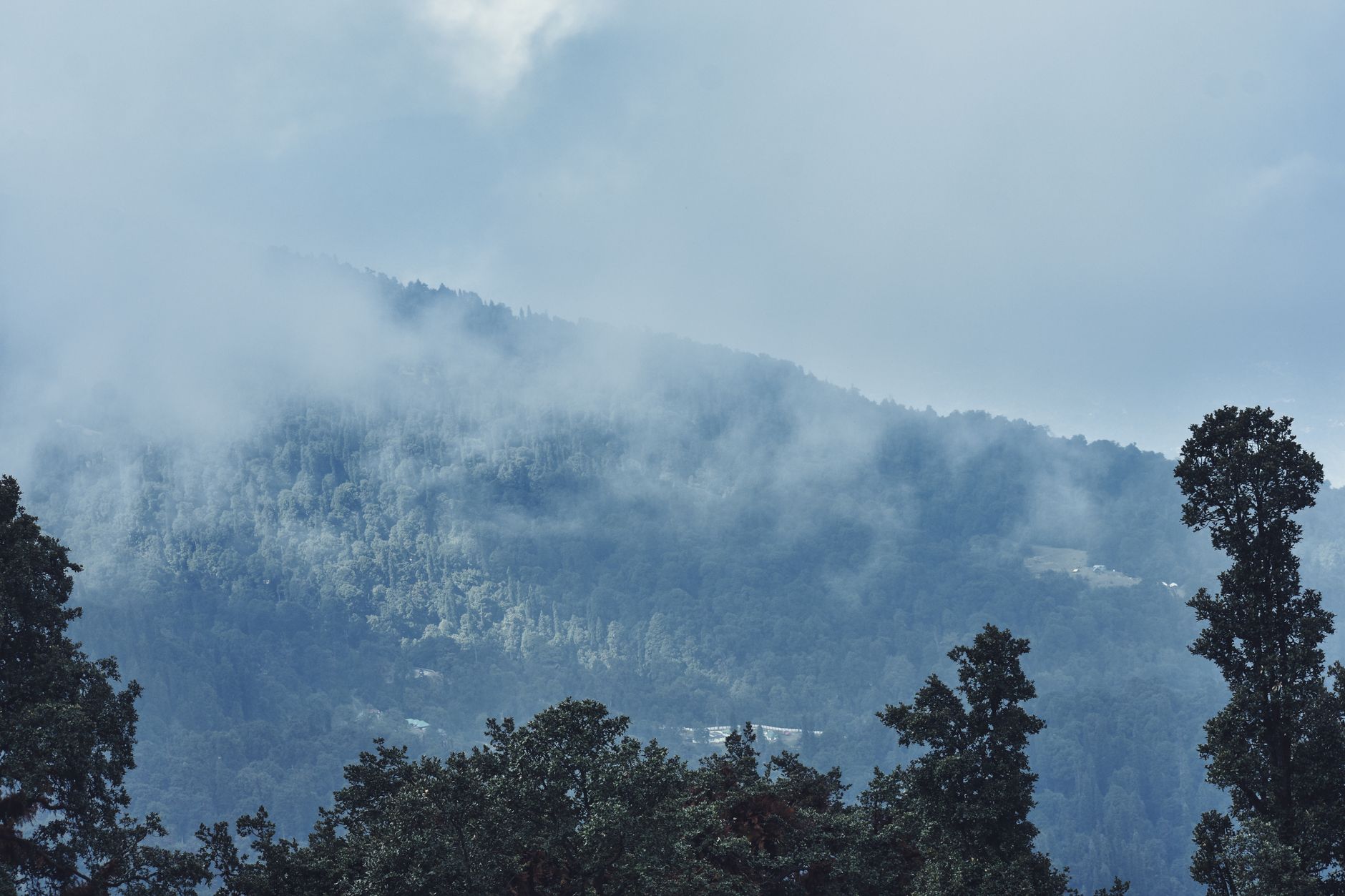
A traveler loses the trail at dusk somewhere in the mountains of old Japan. Smoke rises from a hut he swears wasn't there an hour ago. An old woman opens the door before he knocks, already talking about how cold the night will get. According to legend, this is the moment to turn around. It's also, in a different telling from a different valley, the moment a lost child gets saved. Both stories claim to be about the same woman: Yamauba, the mountain hag of Japanese folklore, and one of the few yokai who never settled on being just one thing.
The Hag Who Eats Her Guests
In most tellings, Yamauba (山姥, “mountain crone”) lives alone in the deep mountains, far past where farmers keep their fields. She's described as an old woman with wild, tangled hair — sometimes white, sometimes an unsettling gold — wrapped in a filthy kimono that was once red. Her mouth, in the more frightening accounts, splits wider than a human face should allow, and some versions give her a second mouth hidden under her hair.
The core of the legend is a trap built out of hospitality. A traveler gets lost. The old woman offers a room, a meal, a place by the fire — exactly what anyone stranded on a mountain at night would want. Only later, often at the darkest hour, does she revert to what she actually is and turn on her guest. Some versions have her stalking travelers directly, snaring them in her own hair like a net. Others let her get close first, fattening a guest before turning predator.
Folklorists tend to read this less as a monster story and more as a memory. Japan's mountain villages went through real famines, and some regional traditions describe elderly relatives being left in the mountains when a household couldn't feed everyone (a practice sometimes associated with the term ubasute). Yamauba, in that reading, is what an abandoned old woman becomes in the stories a village tells itself afterward — grief and guilt reshaped into something with claws. Names for her shift by region: river-dwelling variants in Kagawa are called kawajorō, a mountain road haunting near what's now Hamamatsu goes by hocchopā, and in Hokkaido, Shikoku, and southern Kyushu she's paired with a child yokai called yamawaro and known instead as yamahaha, “mountain mother.”
The Same Hag Raises a Hero
Then there's the other Yamauba — the one who isn't hunting anyone.
In several versions of the Kintaro legend, the same mountain crone is the one who raises him. Kintaro (also called Sakata Kintoki) is the folk hero known for superhuman strength as a child, wrestling bears and outrunning the animals of Mount Ashigara. Where he came from depends on the telling: one version gives him a noble mother, Princess Yaegiri, fleeing into the mountains after her husband's clan fell to ruin, and says the hardship of that life is what turned her into what people started calling Yamauba. A stranger version skips the noble mother altogether and has Yamauba herself as his birth mother, struck pregnant by a bolt of thunder from a dragon on the mountain.
Whichever thread you pull, the woman who might devour a lost traveler is the same one credited with raising Japan's strongest child. It isn't presented as a contradiction to smooth over. It's closer to how the mountains themselves get talked about — a place that kills people who don't respect it and feeds the ones who belong there. Yamauba carries both jobs because the mountain does.
From Folk Terror to Noh Stage
That duality is exactly what classical Japanese theatre latched onto. Yamamba (also written Yamauba) is a Noh play from the tradition Zeami helped codify in the 14th and 15th centuries, and it does something the village folktales never bother to: it lets the hag explain herself. In the play, a dancer famous for performing a piece about the mountain crone meets a mysterious woman in the mountains who turns out to be the real Yamauba — and asks to see her own legend performed back to her. Rather than staying a horror figure, she's given a long, meditative speech folding in Buddhist ideas about impermanence, framed with the nostalgic, almost cosmic weight Noh reserves for its most complex roles. The thing villagers feared enough to leave grandmothers on a mountain over eventually got a mask, a robe, and a monologue about the universe.
Where Yamauba Sits Among Japan's Yokai
Yamauba belongs to a crowded shelf of Japanese supernatural women — Yuki-onna freezes travelers in the snow, Kuchisake-onna asks a question before she cuts, Jorogumo lures men in as a spider wearing a beautiful face. What sets her apart is that she isn't purely predatory in any single, agreed-upon version; she's also a working part of rural moral instruction, punishing carelessness while occasionally rewarding the deserving. The complete guide to Japanese yokai and urban legends covers the wider cast she shares the mountains with.
She isn't alone globally, either. Slavic folklore has its own solitary witch of the deep woods, Baba Yaga, who likewise offers travelers a hut, a fire, and a test — and just as often a death sentence for guessing wrong. The parallels are close enough that folklorists have long noted them side by side; our in-depth look at Baba Yaga lays out her own legend and where the two “witch of the woods” archetypes overlap and diverge.
Cultural Significance Today
Yamauba hasn't stayed confined to old ghost stories. Her name got a second life in the late 1990s, when Japanese teenage subculture adopted “yamanba” for an extreme fashion look built on deep tans and bleached hair — a campy nod to the old crone's wild appearance. She still turns up in Noh and Kabuki repertoires and in manga and games that mine yokai folklore for characters. Like a lot of the oldest yokai, she's outlasted the fear that first shaped her.
FAQ
Is Yamauba based on a real person?
Not a specific individual. Folklorists generally connect her to the harsh realities of mountain village life — food scarcity and, in some regional traditions, the abandonment of elderly relatives in the mountains. The legend is thought to have grown out of that collective memory rather than a single documented case.
Is Yamauba good or evil?
Both, depending on which version you're told. Most folk tales cast her as a predator who tricks travelers into staying the night before attacking them. Other traditions, especially around the Kintaro legend, cast her as a nurturing, if strange, foster mother.
What does Yamauba look like?
An old woman with wild, unkempt hair (sometimes white, sometimes an eerie gold) and a tattered kimono that was once red. Some accounts give her an unnaturally wide mouth or a second mouth concealed beneath her hair.
Is Yamauba related to Baba Yaga?
They aren't the same figure and come from unconnected traditions, but the resemblance is strong enough that they're frequently compared: both are solitary old women living deep in the woods, both offer travelers shelter that can turn dangerous, and both blur the line between predator and guide depending on the telling.