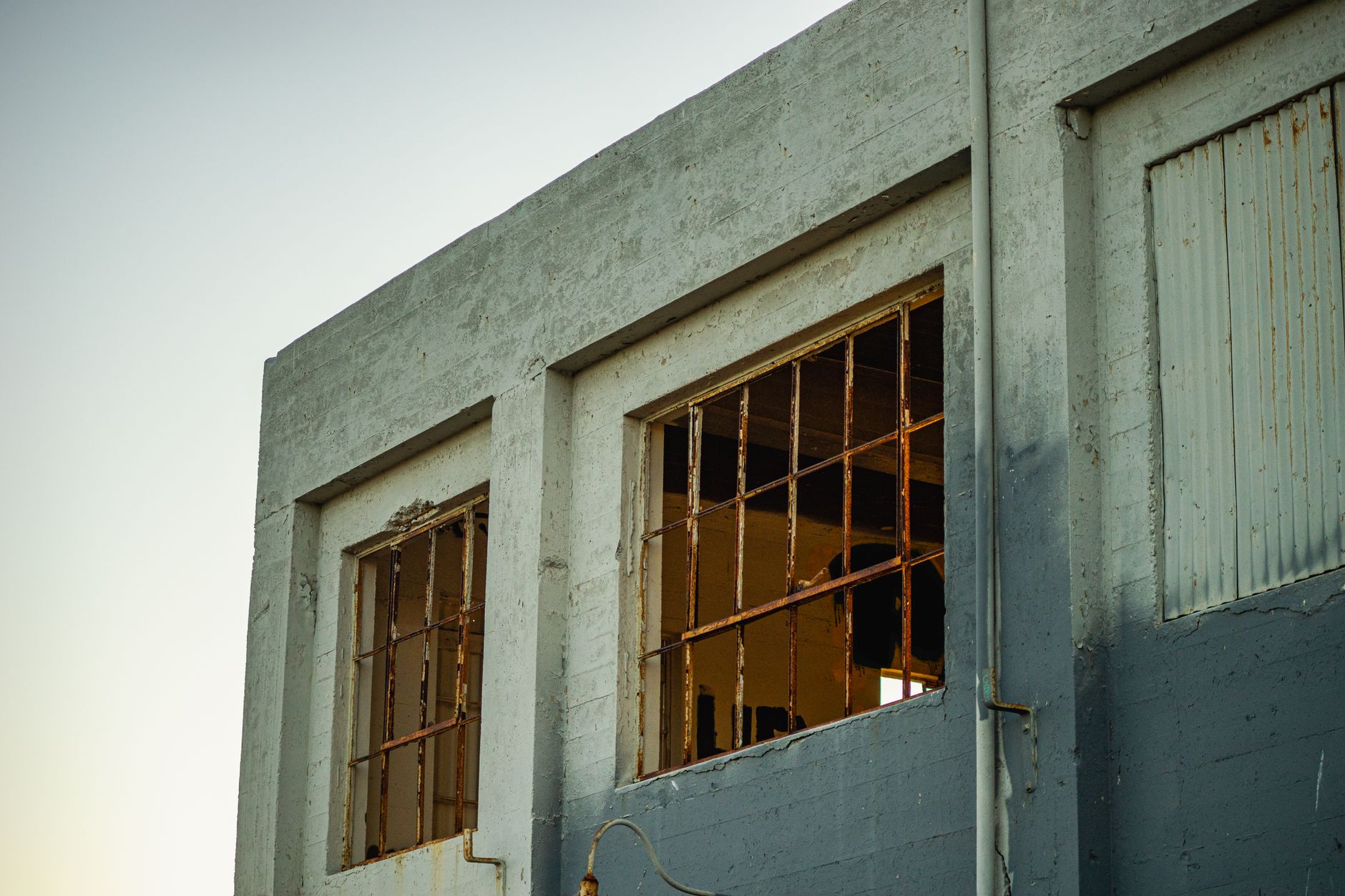
A window on the fourth floor of Harastølen still has a curtain in it. Nobody has lived in the building since 1991, and the road up from the fjord is gated, but hikers who get close enough with a zoom lens keep photographing the same pale curtain, moving.
Harastølen sits on a shelf of land some 500 meters above Lustrafjorden, in Luster municipality in Sogn, western Norway, with a view that was chosen on purpose: mountain air was considered a treatment. The building opened in 1902 as a tuberculosis sanatorium — Norway's largest — with 96 beds that grew to 150 by mid-century. Roughly 15,000 patients passed through its wards before TB stopped being the death sentence it once was. In 1958, with the disease in retreat, Harastølen became a psychiatric hospital instead, and stayed one until 1991. For a short stretch after that it held refugees from the former Yugoslavia. Then the funding ran out, the last staff locked the doors, and the mountain took the building back.
What's left is not a ruin in the postcard sense. It's intact enough that you can still read exit signs in the corridors and find bed frames rusting in rows, which is exactly why it unsettles people more than an actual pile of stones would. Norwegian urban explorers and paranormal groups treat it as one of the country's essential “spøkelseshus” — ghost houses — alongside places like Lier. The stories that circulate about Harastølen aren't the tidy kind with a single named ghost. They're procedural: visitors report a temperature drop that starts exactly at the psychiatric wing's threshold, not gradually before it. Recording equipment left running in the old day room picks up voices under the static, though nobody agrees on what the voices say. A few explorers describe an urge to leave a specific corridor on the third floor that has nothing to do with the dark — they say it's more like being watched by someone standing just behind a door that, when checked, is empty.
Locals in Luster are more matter-of-fact about it than the ghost-hunting videos suggest. Older residents who grew up watching the sanatorium's lights from across the fjord remember it as a place of quiet tragedy long before it was a filming location — thousands of TB patients isolated from their families, some of them children, some of whom never went home. That history is arguably the real weight behind the modern reports. A building that held that much loss for that long doesn't need invented monsters; the accumulated grief does the work. It's the same logic behind Norway's older folklore about the restless dead, the kind collected under the umbrella term of the gjenganger. Read more about that belief in Gjenganger: The Norwegian Dead Who Walk Home Again — the belief that a death handled wrong, or a life ended too abruptly, leaves something behind that keeps walking the old routine. Harastølen, with its decades of terminal patients and its abrupt final closure, fits that inherited pattern almost too neatly.
The building's most visible brush with pop culture came in 2015, when the horror film Villmark 2 used its corridors as a location, which only widened the audience of people willing to drive the gravel road up from the valley floor at night. Local authorities have since fenced sections of the site for safety — the floors are not stable everywhere — but that hasn't stopped the traffic.
What makes Harastølen worth knowing, compared to the country's more famous haunted names, is the specificity of what people report. Nobody claims to have met a draugr here, the seafaring undead of old Norse belief that guarded burial mounds and dragged drowned sailors back to shore — that's a different, older stratum of Norwegian ghost lore entirely. Harastølen's hauntings are institutional: doors that were locked being found open, a curtain that shouldn't move, corridors people won't finish walking. It reads less like myth and more like an unresolved building still running on habit.
Frequently Asked Questions
Is Harastølen open to the public?
Access is restricted. The site is private property and parts of the structure are structurally unsafe, so entry is generally not permitted without authorization, though the exterior and surrounding trail are visible from public paths.
Why did the sanatorium close?
It closed as a psychiatric hospital in 1991 after budget cuts ended its operation; a brief second life housing refugees in the early 1990s was its last official use before it was abandoned outright.
What is the most common ghost story associated with the building?
Visitors most often describe an abrupt temperature change at the entrance to the former psychiatric wing and unexplained voices picked up on recording equipment left in the old day room, rather than any single named apparition.
Is Harastølen the same as Lier Hospital, Norway's other famous haunted asylum?
No. Lier Psychiatric Hospital, near Oslo, is a separate and more frequently visited site. Harastølen is farther west, in Sogn, and remains comparatively obscure — one reason its reports haven't been picked apart by decades of tourism the way Lier's have.