This article contains affiliate links. If you buy through them, we may earn a commission at no extra cost to you. As an Amazon Associate, we earn from qualifying purchases.
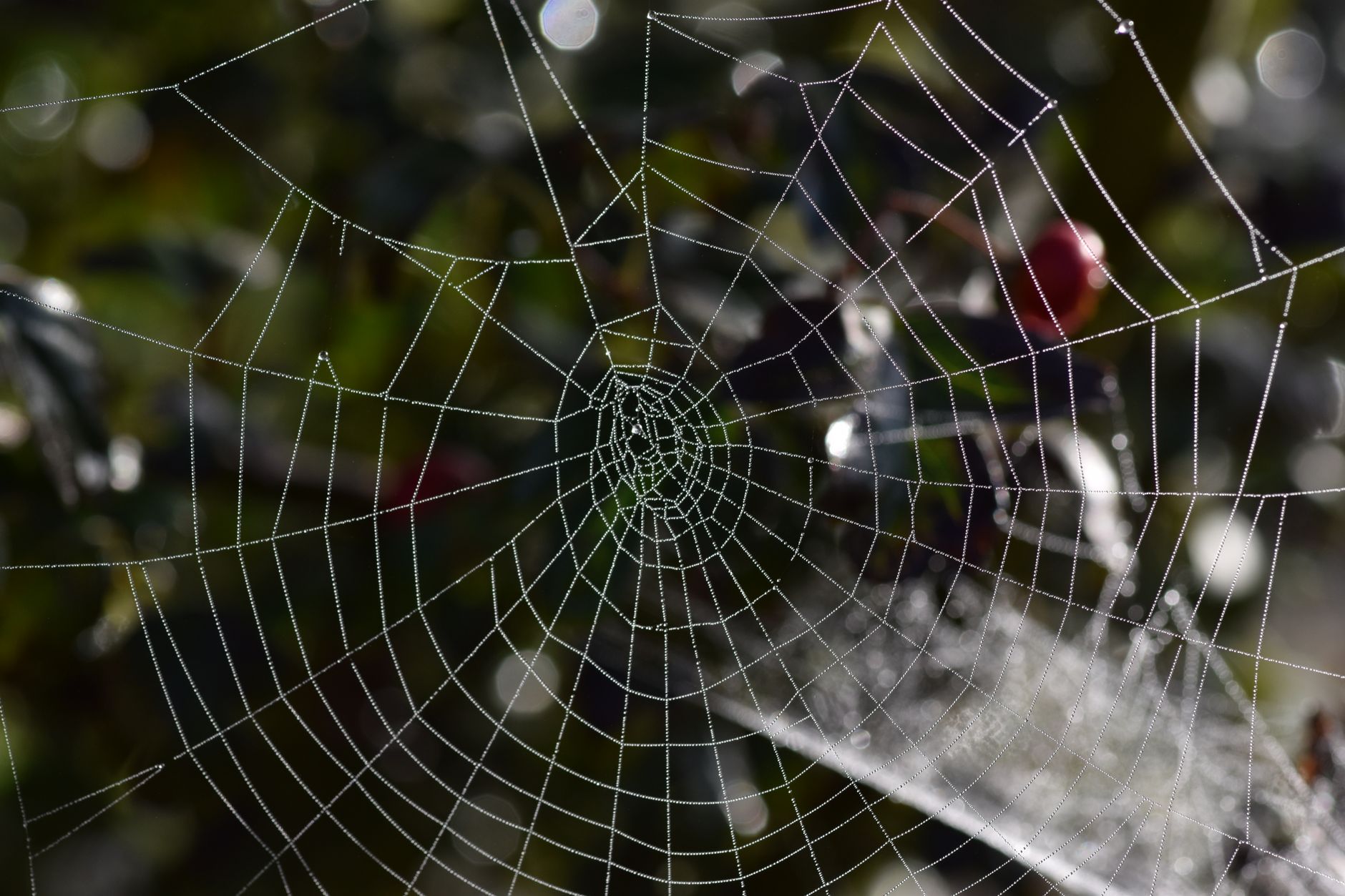
Picture total darkness. No sky, no ground, no line between up and down — just black water stretching in every direction, and inside it, a single mussel shell drifting with nothing to bump into and nowhere to go. That shell is the entire universe in the creation story of Nauru, the tiny Pacific island nation that sits almost exactly on the equator. And inside it, alone, waits a spider named Areop-Enap — “Old Spider” — who has been there, as far as the story is concerned, since before time had a reason to start counting.
Nauru is one of the smallest countries on Earth, barely eight square miles of coral rock in Micronesia. Its old religion never had the missionary reach that carried Greek or Norse myth around the world. What survives of Areop-Enap comes mostly through 19th- and early 20th-century ethnographers who recorded Nauruan oral tradition before it thinned under colonization and Christian conversion. It's a short myth. Everything that exists gets built from what's already sealed inside one shell, by one very patient spider.
Trapped Inside the Shell
The story opens with Areop-Enap already inside the mussel, and he isn't there by choice. He shares the cramped dark with a small snail, a larger snail, and a worm — creatures who will matter enormously later. None of them can see anything. There is no sun, no moon, not even the idea of light yet, just the four of them pressed together with no way out.
Old Spider is the one who acts. He finds the smaller snail first and does something the myth never explains the mechanics of: he transfers part of his own power into it. The snail begins to glow — not sunlight, nothing that bright, but enough. For the first time inside that shell, Areop-Enap can see what he's dealing with. That first dim glow is often treated as the true start of the myth, the moment creation stops being formless and becomes a project with visible parts.
Splitting the Shell in Two
With light to work by, Areop-Enap turns to the worm and orders it to brace against the top and bottom of the shell and push. The worm strains against the only world it has ever known, and eventually the shell gives, cracking open into two halves. The effort costs it dearly: in the versions ethnographers recorded, the exertion drenches the worm in sweat, and that sweat becomes the sea, spreading between the two broken halves.
Once the shell is split, Areop-Enap sets the pieces where they belong. The lower half becomes the earth beneath his feet. The upper half rises above him and becomes the sky, arched over everything like the roof it once literally was. What had been the soft body of the mussel itself is shaped into land — the scattered islands that break up the endless water, Nauru presumably somewhere among them, though the myth doesn't pause to specify.
The Snails Become Sun and Moon
The two snails, meanwhile, are promoted. The smaller one — already glowing from the power Areop-Enap gave it back in the dark — becomes the moon, its light gentle and secondhand, a reminder of that first spark inside the shell. The larger snail becomes the sun, blazing hot and steady, and between the two of them day and night finally exist as separate things instead of one long undifferentiated dark.
Some tellings carry the story one step further and have Areop-Enap shaping the first human beings out of stone, setting them to hold the sky in place so it can never collapse back down onto the earth and undo everything he just built. It's a practical ending for a practical creator: even after the sea, the sky, the sun, and the moon are finished, someone still has to do the ongoing work of keeping the world standing up.
A Creator Who Solves Problems, Not One Who Commands
What sets Areop-Enap apart from a lot of creation figures is how unglamorous his method is. He doesn't speak the universe into being or battle a rival god for control of the cosmos. He's stuck in a shell with three other creatures, and he thinks his way out — sharing his power strategically, giving the worm a job it's suited for, treating the snails as raw material with potential rather than finished symbols. Nauruan oral tradition, as ethnographers recorded it, seems to have valued that kind of resourcefulness as much as raw strength, which tracks with life on an isolated coral island where there was never much room for waste.
It's also a myth built entirely from what was already at hand. Nothing arrives from outside the shell. The sea, the sky, the sun, and the moon all come from four creatures and one broken mussel, which gives the story a tightness that larger, sprawling pantheon myths rarely bother with.
Frequently Asked Questions
What does the name Areop-Enap mean?
It translates roughly to “Old Spider,” reflecting both the being's age — present since before the world existed — and its spider form, which shows up consistently across the versions ethnographers recorded from Nauruan storytellers.
Is Areop-Enap worshipped in Nauru today?
Nauru is overwhelmingly Christian today, and Areop-Enap survives mainly as cultural heritage and oral history rather than active religious practice, preserved through ethnographic records and retellings rather than ongoing ritual.
Why does the creation myth start inside a shell instead of open space?
Enclosed, self-contained starting points — an egg, a shell, a gourd — appear across many Pacific and Asian creation traditions. For an isolated coral island culture, a sealed shell holding everything needed for the world may have felt like a natural image for how a universe could begin with nothing to draw on but itself.
Learn More
As an Amazon Associate, this site earns from qualifying purchases.
Comments