This article contains affiliate links. If you buy through them, we may earn a commission at no extra cost to you.
Most legends on this site drift back centuries, their origins lost to oral tradition long before anyone wrote them down. The chupacabra is the opposite kind of case: a legend with a documented birth year, a named first witness, a radio personality credited with coining its title, and a strong argument — made by a professional investigator — that the whole thing may trace back to a Hollywood monster suit.
The Legend
The chupacabra (“goat-sucker,” from the Spanish chupar, to suck, and cabra, goat) is described as a creature that attacks livestock — most commonly goats, though other animals have been implicated — and drains them of blood through small, precise puncture wounds, leaving the rest of the carcass largely undisturbed. Descriptions of its appearance vary considerably by region and telling, ranging from a bipedal, reptilian or alien-like creature with large eyes and spines down its back, to a more animal-like, hairless canine form reported in later decades — a shift in description that itself has become part of the legend's story.
Where the Legend Actually Started
Unlike most entries on this site, the chupacabra's origin can be dated with real precision. The first documented cluster of livestock attacks attributed to the creature occurred in March 1995, in the town of Canóvanas, Puerto Rico, where farmers reported finding eight sheep dead with puncture wounds and drained of blood. Reports multiplied quickly from there — Puerto Rico alone logged more than 200 chupacabra-attributed sightings and incidents that year.
The name itself has a specific, credited origin: Puerto Rican comedian and radio personality Silverio Pérez coined “chupacabras” in 1995 while discussing the attacks on air, and the label stuck immediately and permanently.
The Named Eyewitness
Much of the creature's popular physical description traces to one specific account. Madelyne Tolentino, a resident of Canóvanas, described seeing the creature through a picture window at her house during the second week of August 1995, describing a roughly four-foot-tall bipedal creature with dark, damp, protruding eyes that ran up toward its temples — a description that became foundational to how the chupacabra was depicted in the following years' media coverage and popular imagery.
The Movie Connection
This is where the chupacabra's history gets genuinely unusual for a modern legend: a specific, documented investigation into where that description came from. Researcher Benjamin Radford spent five years investigating the case, publishing his findings in the 2011 book Tracking the Chupacabra. Radford's conclusion was that Tolentino's original description bore a striking resemblance to “Sil,” the alien creature from the 1995 science-fiction horror film Species — a movie that had been released in U.S. theaters just weeks before Tolentino's reported sighting. Radford's argument doesn't claim Tolentino invented the story dishonestly; rather, it suggests the vivid, recently-viewed film image may have shaped how she interpreted or later described whatever she actually saw. We present this as a documented, published investigative theory rather than settled fact — Radford's account has been influential but is one researcher's conclusion, not a universally accepted resolution.
Why the Description Changed Over Time
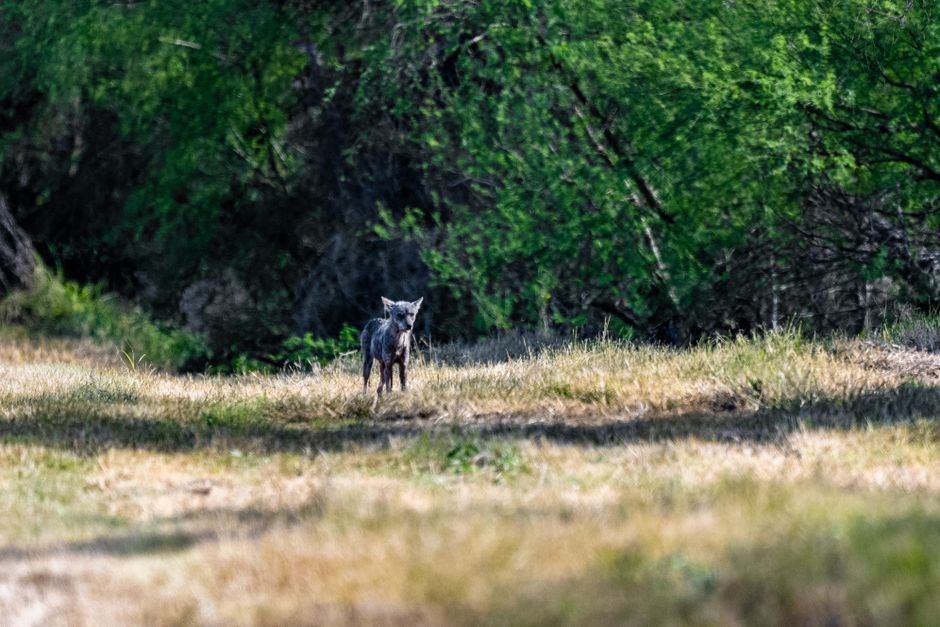
Later chupacabra reports, particularly from Texas and other parts of the American Southwest starting in the 2000s, describe a noticeably different creature: hairless, dog-like or coyote-like, with visible mange rather than an alien or reptilian appearance. Wildlife biologists examining several captured “chupacabra” specimens from this later wave identified them as coyotes or dogs suffering from severe sarcoptic mange, a parasitic skin condition that causes significant hair loss and skin disfigurement — a documented, scientifically confirmed explanation for that specific later wave of sightings, even though it doesn't resolve the earlier, distinctly different 1995 Puerto Rico reports.
Cultural Significance Today
The chupacabra has become one of the most recognizable cryptids across the Americas in just three decades — a remarkably fast rise for a folklore figure, given that most legends on this site took centuries to reach comparable cultural saturation. Its documented, near-immediate origin — a named town, a named witness, a named coiner of the term, and a serious published investigation into its likely inspiration — makes it one of the best case studies available for watching a modern legend form in close to real time, media coverage and all.
Frequently Asked Questions
When was the chupacabra first reported?
March 1995, in Puerto Rico — an unusually precise, documented starting point compared to most legends on this site, which typically lack a dateable origin.
Is there a theory for what started the legend?
A professional investigator has argued the image may trace back to a Hollywood monster suit design, though this remains one proposed explanation rather than a settled origin.
Learn More
As an Amazon Associate, this site earns from qualifying purchases.

Comments