

This article contains affiliate links. If you buy through them, we may earn a commission at no extra cost to you.
Two tools — an EMF meter and a digital voice recorder — cover the two most common investigation techniques for under $100 combined, and that’s genuinely all a beginner needs to start. This guide breaks down all five tools real beginner investigators use, what each costs, and what to look for so you don’t overspend on features you won’t touch for your first dozen investigations.
| Gear | Start here if… | Price range |
|---|---|---|
| EMF Meter | You want to detect energy spikes and rule out mundane causes | $20–$60 |
| Digital Voice Recorder | You want the cheapest, no-setup entry point (EVP) | $30–$80 |
| Full-Spectrum Flashlight/Camera | You want to see and film in near-total darkness | $40–$400 |
| Infrared Thermometer | You want to confirm or rule out “cold spots” | $15–$35 |
| Motion Sensor | You want to monitor a room you’re not actively watching | $10–$80 |
EMF Meters
An EMF (electromagnetic field) meter measures fluctuations in the electromagnetic field around it. Investigators use them on the theory that spirits may disrupt or generate electromagnetic energy, so a sudden, unexplained spike — especially one that isn't near wiring, appliances, or electronics — gets flagged as a point of interest. EMF meters are also genuinely useful for a boring but important reason: they help you rule out mundane causes (bad wiring, old appliances, cell towers) behind “haunted” sensations like nausea or unease, since real-world high EMF exposure can cause both.
Two names come up constantly in the hobby: the K2 meter, which uses five color LED lights to show field strength at a glance (popularized by shows like Ghost Adventures for its simple “light up to answer” yes/no communication method), and the Ghost Meter Pro, a needle-and-LED unit with an adjustable audio signal and a silent mode so it doesn't bleed noise into your EVP recordings.
Price range: $20–$60 for beginner units; $100+ for more sensitive tri-field or digital models.
What beginners should look for: a silent/vibrate mode (so it doesn't ruin audio evidence), a simple analog readout you can read in the dark, and decent build quality — cheap units drift and give false positives near their own batteries.
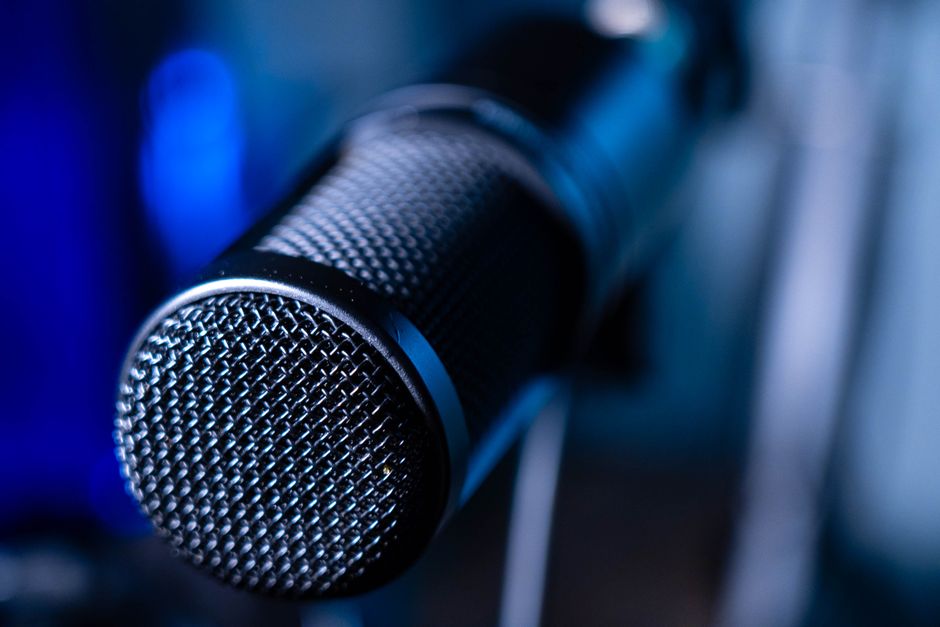
Digital Voice Recorders for EVP
EVP (Electronic Voice Phenomenon) is the practice of recording audio in a quiet space and reviewing it afterward for voices or sounds that weren't audible during the session. This is arguably the most accessible and most commonly used tool in the hobby because the barrier to entry is so low.
You don't need a broadcast-quality recorder — you need a low noise floor (so you're not just amplifying hiss when you boost the volume during review), long battery life, and a format that's easy to pull onto a computer (WAV over MP3 if you can get it, since MP3 compression can introduce artifacts that get mistaken for EVPs). A dedicated digital recorder will consistently outperform a phone app because phones apply background noise suppression that can filter out faint anomalies before you ever hear them.
Price range: $30–$80 for a solid entry-level dedicated recorder.
Shop digital voice recorders for EVP on Amazon
Full-Spectrum Flashlights and Cameras
Standard cameras and flashlights filter out ultraviolet and infrared light because the human eye can't see it and it distorts normal photos. Full-spectrum equipment removes or bypasses that filter, capturing a wider range of light — the theory being that some anomalies may only show up outside the visible spectrum. A full-spectrum flashlight paired with a full-spectrum or IR-converted camera lets you light a dark room in a way that shows up on camera without flooding the space with visible light that could wash out subtle detail.
For beginners, a converted point-and-shoot or camcorder is more practical than converting your good DSLR — you'll want to test the workflow before committing a $1,000 camera to a permanent sensor modification.
Price range: $40–$100 for a basic full-spectrum flashlight; $150–$400 for an entry-level full-spectrum camera or camcorder.
Shop full-spectrum cameras on Amazon
Shop full-spectrum flashlights on Amazon
Infrared Thermometers
A non-contact IR thermometer (the kind that shoots a laser dot and reads surface temperature) is used to check for “cold spots” — localized temperature drops that are widely believed among investigators to signal paranormal activity. Realistically, most cold spots have a mundane explanation (a draft, an exterior wall, an HVAC vent), which is exactly why this tool is worth having: it lets you quickly confirm or rule out a temperature anomaly instead of just guessing based on how a room feels.
What to look for: a fast reads (under 1 second), a laser pointer for aiming accuracy, and a reasonable distance-to-spot ratio so you can check a spot across a room without walking up to it.
Price range: $15–$35 for a perfectly adequate model — this is not a category where you need to spend more.
Shop infrared thermometers on Amazon
Motion Sensors
Motion sensors — whether simple battery-powered alarm units or laser grid pads — are used to monitor a space you're not actively watching, alerting you if something crosses through it. They're especially useful for “trigger object” setups, where investigators place an object in a sealed room with a motion sensor and see if anything registers movement while no one is present.
What beginners should look for: adjustable sensitivity (so a moth or draft doesn't trigger constant false alarms), a visible or audible alert you can pick up from another room, and a battery indicator — few things are more frustrating than realizing your sensor died an hour into an all-night investigation.
Price range: $10–$30 for basic motion alarm units; $40–$80 for laser grid pads that show the beam pattern in camera footage.
Shop motion sensors for ghost hunting on Amazon
Frequently Asked Questions
Q1: What's the single most important piece of gear for a beginner ghost hunter?
A digital voice recorder. It's the cheapest entry point, requires no technical setup, and EVP review is something you can do from home after any investigation — no special location access needed to practice the skill.
Q2: Do I need to buy everything at once?
No. Start with an EMF meter and a voice recorder — those two cover the most common investigation techniques (energy detection and EVP) for under $100 combined. Add a full-spectrum camera and thermometer once you know how often you'll actually be investigating.
Q3: Are expensive “ghost hunting kits” worth it?
Bundled kits can be convenient, but you'll often get better individual components — and better resale value if your interest doesn't stick — by buying each tool separately based on the guidance above rather than a pre-packaged bundle.
As an Amazon Associate, this site earns from qualifying purchases.

Comments