This article contains affiliate links. If you buy through them, we may earn a commission at no extra cost to you.
Note on the name: this tunnel is sometimes mistranslated in English listings as “kitchen back tunnel” — a misreading of 厨子奥 (Zushi-oku, a Yamashina neighborhood name). The correct name is Zushi-oku Tunnel, with no connection to a kitchen.
- What the tunnel is
- What locals say
- The Curse-Legend Pattern Behind This Story
- Part of a Wider Pattern: Haunted Tunnels Across Japan
- Frequently Asked Questions
- Is “Kitchen Back Tunnel” the tunnel’s real name?
- What happens if you deface the Kannon statue near the tunnel?
- Is the Awataguchi execution ground actually connected to this tunnel?
- Do the cemeteries on either side of the tunnel add to its reputation?
- Is this an active, publicly accessible tunnel today?
- Why are so many tunnels in Japan considered haunted?
- Is Japan considered a haunted country?
- What makes an abandoned tunnel a likely setting for a ghost story in Japan?
- Related Stories
What the tunnel is
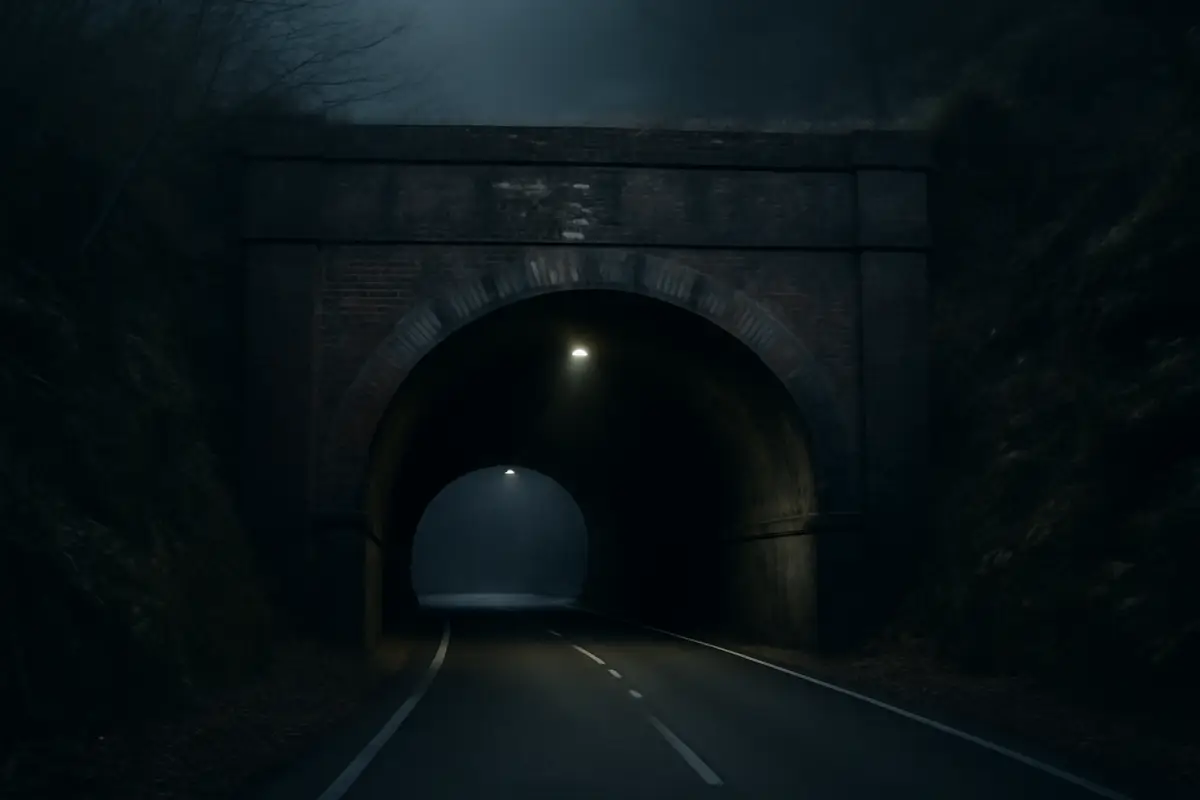
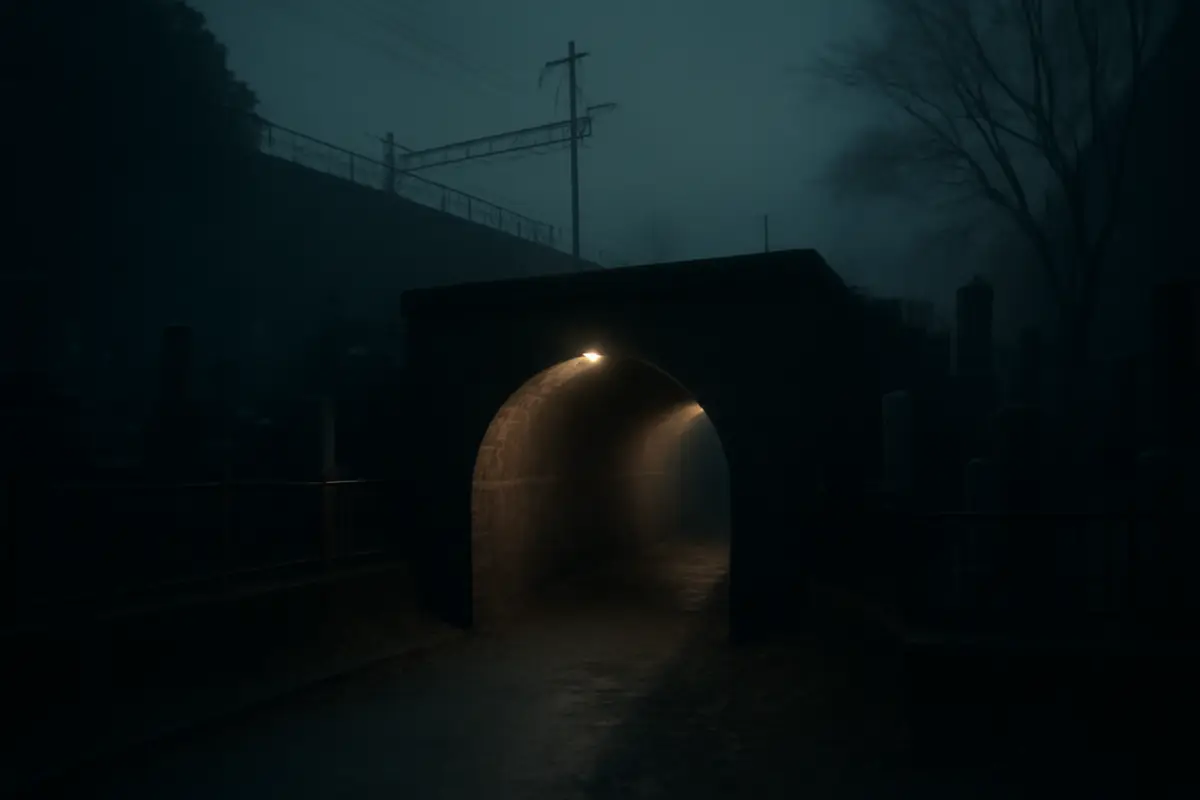
A pedestrian- and bicycle-only brick underpass beneath JR railway tracks in Yamashina Ward, Kyoto City, a ten-minute walk from Misasagi Station. It is real, still in use, and flanked on both sides by cemeteries.
What locals say
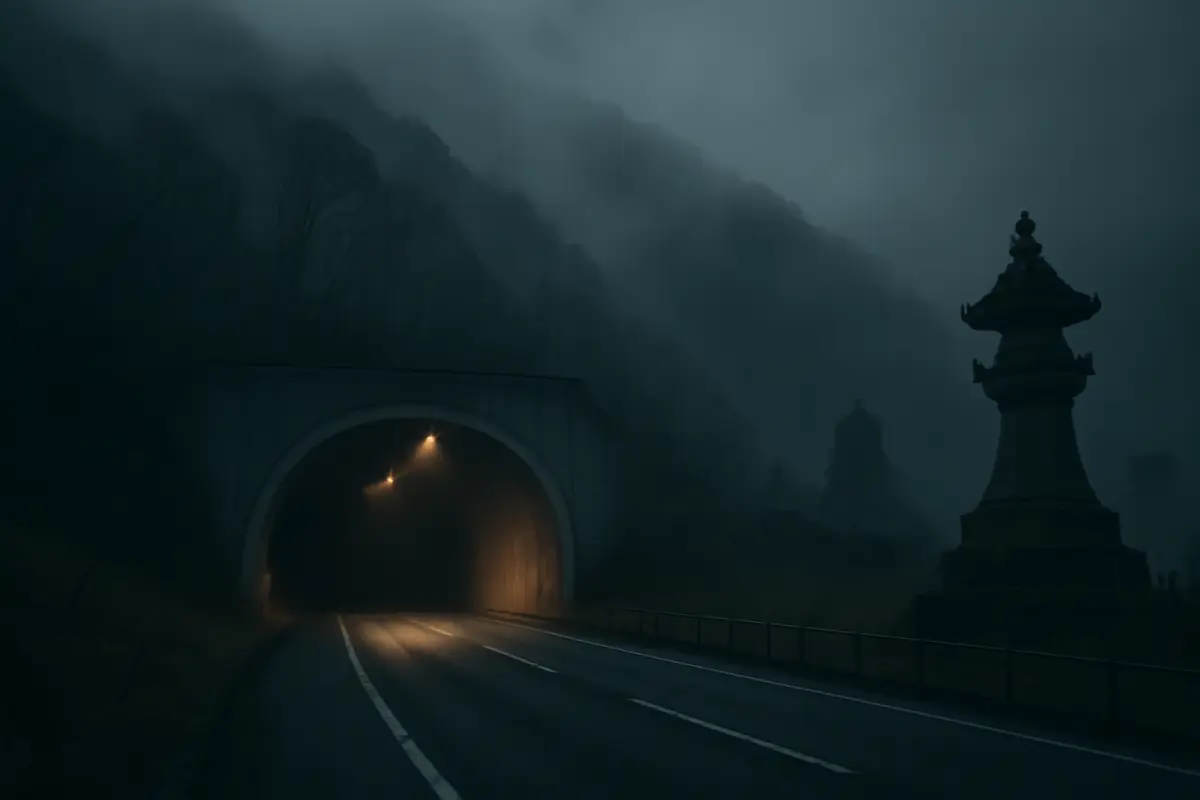
The core legend concerns a Kannon image near the tunnel entrance, said to curse anyone who defaces it with mysterious illness. Some versions tie the area's unease to the nearby historical Awataguchi execution grounds.
We could not verify the specific curse claim — a classic protective-taboo legend type attached to roadside religious images across Japan, with no documented case of anyone actually being harmed. The Awataguchi execution ground is real and historically attested, but its connection to this specific tunnel is more geographic proximity than direct link.
Can you visit: Yes — a public underpass in regular use, enclosed by cemeteries on both sides.
The Curse-Legend Pattern Behind This Story
A roadside religious image said to curse anyone who defaces or disrespects it is one of the most common protective-taboo story types in Japan, attached to countless Kannon and Jizo statues nationwide — not a pattern unique to Zushi-oku. These legends function as informal deterrents against vandalism of religious sites, which may explain why no documented case of the curse “working” exists: the story’s job is prevention, not proof.
Part of a Wider Pattern: Haunted Tunnels Across Japan
Zushi-oku Tunnel (厨子奥トンネル), Kyoto Prefecture is one of dozens of similar sites documented across this site, and it fits a recognizable pattern rather than standing alone. Roughly three-quarters of Japan’s land area is mountainous, which has required over a century of tunnel construction, and older bores are typically sealed or abandoned rather than demolished once a wider, better-lit replacement opens nearby. Those abandoned alignments — not the tunnels still in daily use — are where the folklore tends to concentrate: narrow, unlit, and left to decay in a way that reads as ominous even when the underlying cause is a routine highway upgrade. Japan’s long kaidan (ghost story) storytelling tradition, which attaches spirits to liminal spaces such as tunnels, bridges, and mountain passes, gives these sites a ready-made narrative frame.
Frequently Asked Questions
Is “Kitchen Back Tunnel” the tunnel’s real name?
No — that’s a mistranslation of 厨子奥 (Zushi-oku), the Yamashina neighborhood the tunnel is named after. The correct name is Zushi-oku Tunnel.
What happens if you deface the Kannon statue near the tunnel?
Local legend says it causes mysterious illness, but we found no documented case of anyone actually being harmed — this is a common protective-taboo legend type attached to roadside religious images across Japan.
Is the Awataguchi execution ground actually connected to this tunnel?
The execution ground is real and historically documented, but its link to this specific tunnel appears to be geographic proximity rather than a direct historical connection.
Do the cemeteries on either side of the tunnel add to its reputation?
Almost certainly — a pedestrian underpass flanked by graveyards on both sides has an obvious atmospheric case for a haunted reputation, independent of whether the specific curse or execution-ground claims hold up under scrutiny.
Is this an active, publicly accessible tunnel today?
Yes — it’s a functioning pedestrian and bicycle underpass beneath the JR railway tracks, in regular daily use by local commuters.
Why are so many tunnels in Japan considered haunted?
Japan’s mountainous terrain (roughly three-quarters of the country) has required over a century of tunnel construction, and old bores are typically abandoned rather than removed once a newer route opens nearby. Combined with a long kaidan (ghost story) tradition of attaching spirits to liminal spaces, these abandoned tunnels became natural settings for local ghost stories.
Is Japan considered a haunted country?
Japan has one of the world’s richest documented traditions of ghost stories and haunted-location folklore, built up over centuries through kaidan storytelling, yokai folklore, and site-specific legends attached to tunnels, forests, and other liminal places. That reflects a deep cultural and narrative tradition — not a verifiable claim about supernatural activity.
What makes an abandoned tunnel a likely setting for a ghost story in Japan?
Age, disuse, and physical decay do most of the work: a dark, damp, overgrown structure that once carried traffic and now carries none reads as unsettling on its own, independent of any specific incident. As with Zushi-oku Tunnel (厨子奥トンネル), Kyoto Prefecture, the underlying history is often more mundane — a routine bypass or road realignment — than the legend suggests.
As an Amazon Associate, this site earns from qualifying purchases.