This article contains affiliate links. If you buy through them, we may earn a commission at no extra cost to you.
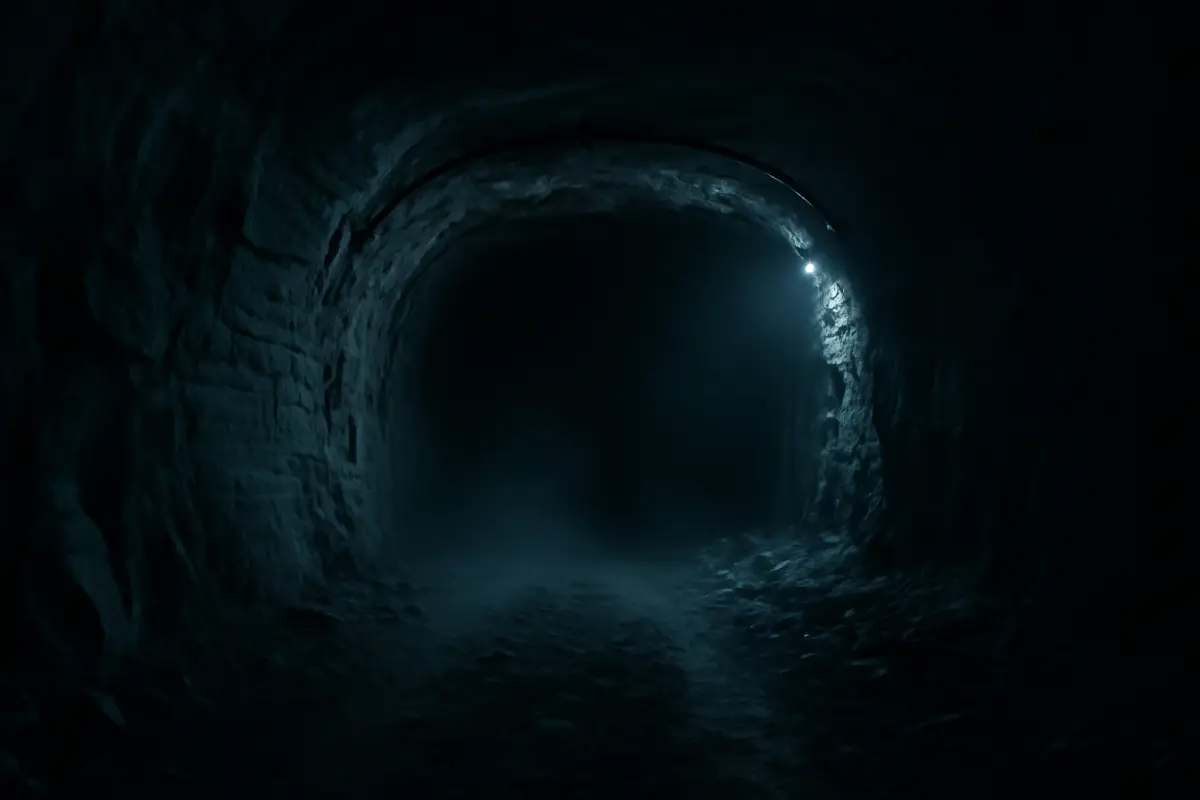
Near Gokurakuji Temple in Kamakura, Kanagawa Prefecture, a short road tunnel connects Gokurakuji to the Uchikoshi and Usui districts. Locals call it Obake Tonneru (“Ghost Tunnel”); formal name Uchikoshi Tunnel (打越トンネル). Some lists render the name “Ofuchikoshi” — an apparent garbled transliteration of the same tunnel.
- What is actually documented
- The ghost stories
- Why So Many Japanese Sites Are Named “Obake”
- Part of a Wider Pattern: Haunted Tunnels Across Japan
- Frequently Asked Questions
- Why is it called “Obake Tunnel”?
- Is Ofuchikoshi Tunnel the same as Uchikoshi Tunnel?
- What did the Japanese military use the tunnel for in WWII?
- Can you still see the old Kamakura-stone quarry marks?
- Why are so many tunnels in Japan considered haunted?
- Is Japan considered a haunted country?
- What makes an abandoned tunnel a likely setting for a ghost story in Japan?
- Related Stories
What is actually documented
The nickname predates any specific ghost story. The original passage was a rough, exposed-rock cutting; the Gokurakuji-side rock face still bears quarrying marks from the local Kamakura-stone trade. It has since been reinforced and is a normal, currently used route.
During WWII, the tunnel and hillside were reportedly used by the Imperial Japanese military, which dug side-passages to store supplies — common practice locally given the soft rock. We could not verify details of what was stored or whether deaths occurred.
The ghost stories
We could not find a well-sourced, specific haunting narrative — no widely repeated account of a particular death or date. It is plausible the “obake” name alone, combined with the WWII excavations, generated rumors over the decades, a pattern common to many “obake” place names in Japan.
Can you visit: Yes. The tunnel is a public road near Gokurakuji Station, walkable during normal daylight hours.
Why So Many Japanese Sites Are Named “Obake”
Obake Tonneru is one of dozens of “ghost tunnel” nicknames scattered across Japan, and the pattern is worth understanding on its own terms. Place names incorporating obake (お化け, a general word for ghost or shapeshifting spirit) often predate any specific documented haunting — the name itself, applied generations ago for reasons now lost, becomes the seed that later ghost stories grow around. That appears to be the case here: the nickname existed before any specific narrative did, and the WWII-era excavation work likely supplied the narrative once the name was already in circulation.
Part of a Wider Pattern: Haunted Tunnels Across Japan
Uchikoshi Tunnel is one of dozens of similar sites documented across this site, and it fits a recognizable pattern rather than standing alone. Roughly three-quarters of Japan’s land area is mountainous, which has required over a century of tunnel construction, and older bores are typically sealed or abandoned rather than demolished once a wider, better-lit replacement opens nearby. Those abandoned alignments — not the tunnels still in daily use — are where the folklore tends to concentrate: narrow, unlit, and left to decay in a way that reads as ominous even when the underlying cause is a routine highway upgrade. Japan’s long kaidan (ghost story) storytelling tradition, which attaches spirits to liminal spaces such as tunnels, bridges, and mountain passes, gives these sites a ready-made narrative frame.
Frequently Asked Questions
Why is it called “Obake Tunnel”?
The nickname (meaning “ghost tunnel”) predates any specific haunting story we could find — it’s one of many Japanese place names using obake generically, which later attracts folklore rather than commemorating a known event.
Is Ofuchikoshi Tunnel the same as Uchikoshi Tunnel?
Yes. “Ofuchikoshi” appears to be a garbled transliteration that circulates on some listing sites; the tunnel’s actual name is Uchikoshi Tunnel (打越トンネル).
What did the Japanese military use the tunnel for in WWII?
Reportedly supply storage in side-passages dug into the soft rock, a common wartime practice in the area — though we could not verify specifics of what was stored or whether any deaths occurred there.
Can you still see the old Kamakura-stone quarry marks?
Yes — the Gokurakuji-side rock face still bears visible quarrying marks from the historical Kamakura-stone trade, one of the few physically verifiable details at the site.
Why are so many tunnels in Japan considered haunted?
Japan’s mountainous terrain (roughly three-quarters of the country) has required over a century of tunnel construction, and old bores are typically abandoned rather than removed once a newer route opens nearby. Combined with a long kaidan (ghost story) tradition of attaching spirits to liminal spaces, these abandoned tunnels became natural settings for local ghost stories.
Is Japan considered a haunted country?
Japan has one of the world’s richest documented traditions of ghost stories and haunted-location folklore, built up over centuries through kaidan storytelling, yokai folklore, and site-specific legends attached to tunnels, forests, and other liminal places. That reflects a deep cultural and narrative tradition — not a verifiable claim about supernatural activity.
What makes an abandoned tunnel a likely setting for a ghost story in Japan?
Age, disuse, and physical decay do most of the work: a dark, damp, overgrown structure that once carried traffic and now carries none reads as unsettling on its own, independent of any specific incident. As with Uchikoshi Tunnel, the underlying history is often more mundane — a routine bypass or road realignment — than the legend suggests.
As an Amazon Associate, this site earns from qualifying purchases.
Comments