This article contains affiliate links. If you buy through them, we may earn a commission at no extra cost to you.
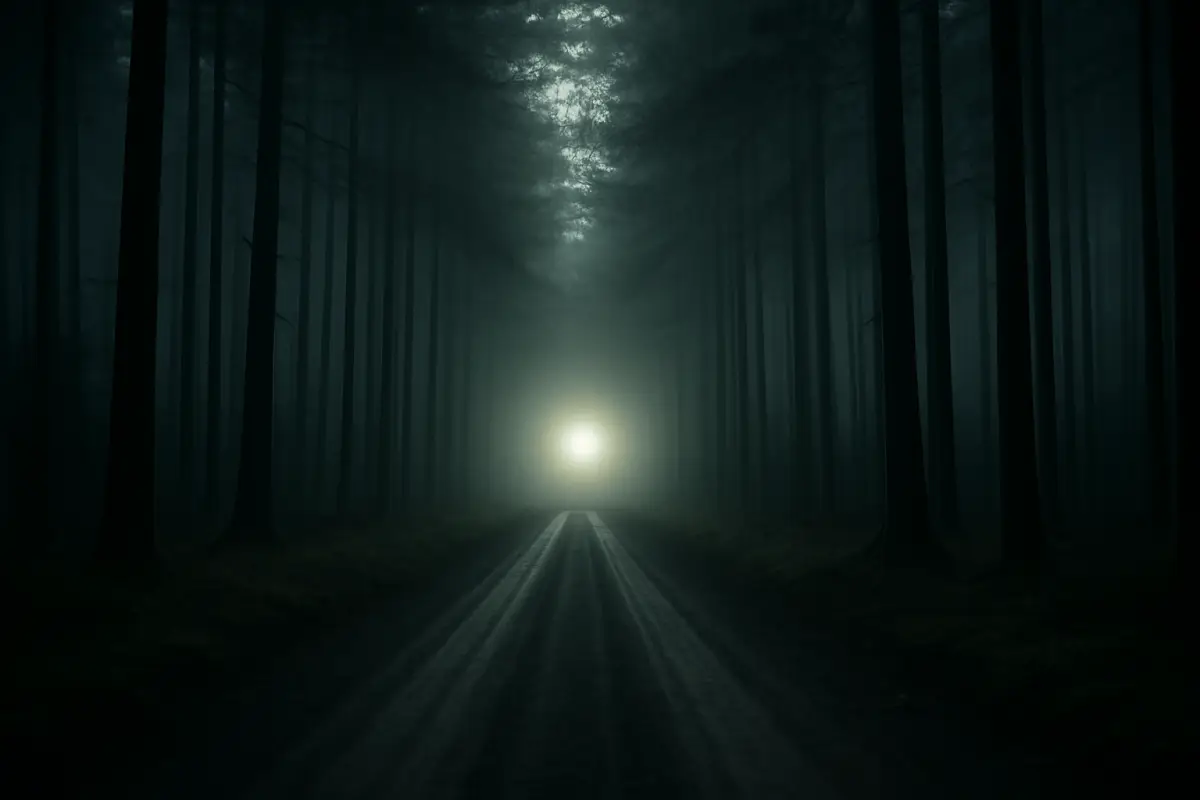
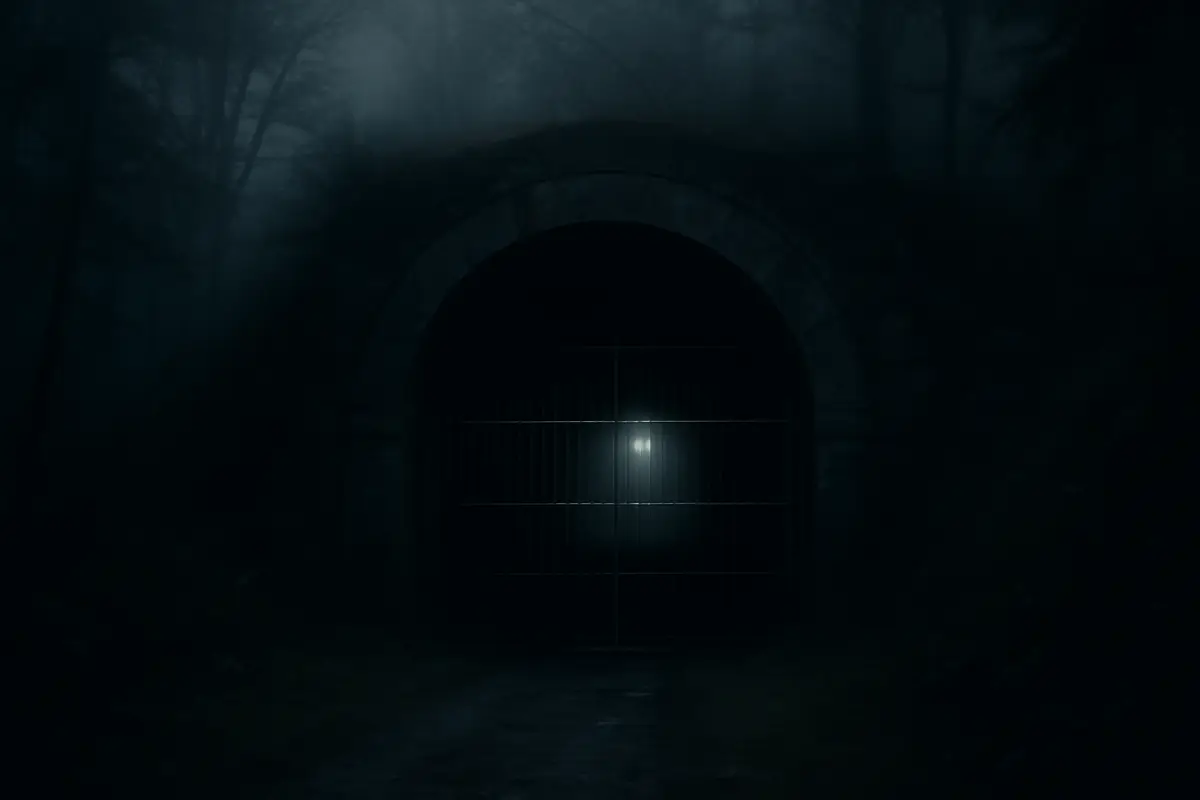
At the northern edge of Arashiyama, a single narrow lane threads 444 meters through the mountains toward the village of Kiyotaki at the base of Mt. Atago. Kiyotaki Tunnel is widely regarded as one of Japan's most famous haunted locations, drawing paranormal tourists from across the country — but underneath the ghost stories is a genuinely documented, century-old piece of railway and wartime history.
The Real History
Kiyotaki Tunnel was built as part of the Atago Railway (愛宕鉄道), a short rail line constructed to carry pilgrims and tourists from Arashiyama toward Mt. Atago, home to Atago Shrine and long considered one of the sacred peaks of the Kyoto region. The tunnel and railway opened on April 12, 1929, and the line itself ran just 3.39 kilometers, connecting five stations — Arashiyama, Saga-Nishi, Shakado, Toriimoto, and Kiyotaki — where a connecting cable car once carried visitors further up toward the mountain's shrine complex.
The Atago Railway operated for only about fifteen years. On December 11, 1944, in the middle of the Second World War, the line was shut down as part of Japan's wartime “tettei kyoshutsu” (鉄供出) metal-collection efforts, in which train tracks, rails, and other metal infrastructure were dismantled and requisitioned for military production. Regional histories note that the tunnel itself was subsequently repurposed during the war for industrial use connected to aircraft parts manufacturing for Mitsubishi Heavy Industries, reflecting the intense wartime pressure on Japan's industrial capacity in the war's final years.
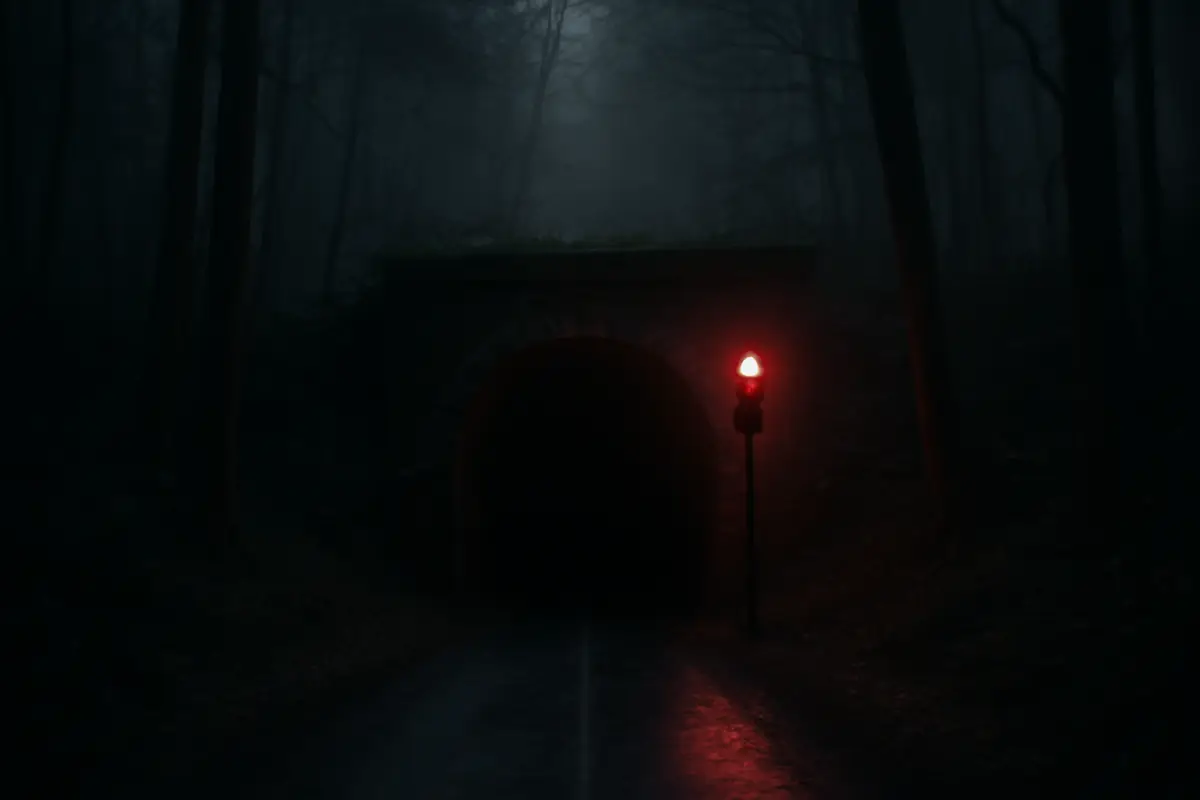
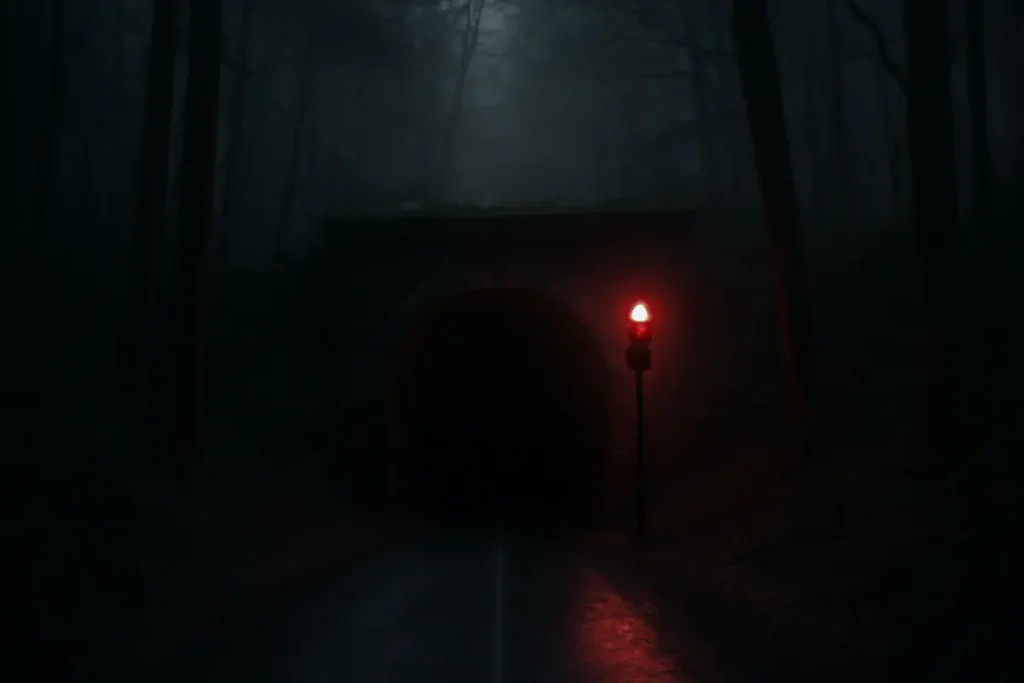
After the war, the rail line was never rebuilt, but the tunnel itself survived and was converted into a road passage, which is the form it still exists in today. It remains strikingly narrow — built for a single rail track, it now functions as a one-lane road wide enough for only one vehicle at a time, with a traffic light system at each end so that cars alternate directions through the passage, since two vehicles cannot pass each other inside. This unusual signal-controlled, single-lane design is itself a big part of what makes the site feel unsettling to visitors, independent of any ghost story.
The Haunting
Kiyotaki Tunnel's reputation as Kyoto's most notorious haunted site draws on several overlapping strands of legend. The most consistently repeated is the story of a woman in a white dress said to be seen standing inside the tunnel or, in some tellings, glimpsed falling onto the hood of a car as it passes through. Locals and paranormal enthusiasts link this figure to older, unverified stories of a sexual assault and a subsequent suicide said to have occurred near the tunnel, though no confirmed police record or news account of such an incident has been documented in available sources — it should be treated as local legend rather than established fact.
Other strands of the haunting trace back to the tunnel's construction and wartime past: stories of laborers who died during the railway's construction in harsh conditions, and of people executed or who died by suicide in the surrounding forest of Mt. Atago, a mountain with a long folk-religious association with the supernatural. Reports from visitors include sudden temperature drops, mechanical trouble with cars and mirrors, and the traffic signal allegedly malfunctioning or refusing to change.
Can You Visit?
Yes — Kiyotaki Tunnel remains a functioning single-lane road open to vehicle and foot traffic, controlled by a traffic signal at each end, and it's a legitimate route toward the village of Kiyotaki and hiking trailheads for Mt. Atago. Because it's genuinely narrow, poorly lit, and popular with late-night visitors seeking a scare, it's worth treating with the same caution as any real, active, low-visibility road.
Frequently Asked Questions
Why is Kiyotaki Tunnel only one lane wide?
It was originally built to carry a single railway track for the Atago Railway, which operated from 1929 to 1944. When it was converted to a road after the war, its narrow, single-track dimensions were kept, so a traffic light system now controls alternating one-way car traffic.
Is the “woman in white” story based on a real death?
No verified police or news record confirming the specific assault-and-suicide story has been found in available sources. It circulates widely as local legend but is not documented as a confirmed historical event.
What happened to the Atago Railway itself?
It was dismantled in December 1944 as part of Japan's wartime metal-collection program, and the rail line was never rebuilt after the war.
As an Amazon Associate, this site earns from qualifying purchases.