This article contains affiliate links. If you buy through them, we may earn a commission at no extra cost to you.
Unlike most entries on this site built around fear alone, Yajagamā occupies a dual role in Okinawan folklore — simultaneously a protector worth honoring and a threat worth respecting, depending entirely on how it's treated.
The Legend
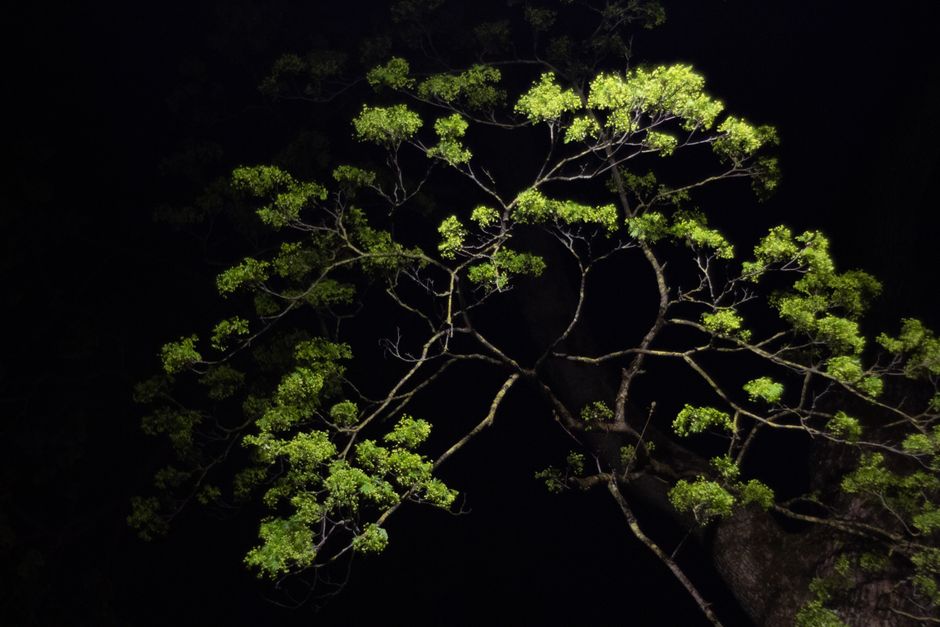
According to local tradition, Yajagamā is an ancient spirit dwelling within a sacred tree, said to be large enough that its movement shakes the ground and produces a sound like thunder. As a guardian spirit, it's credited with protecting the surrounding region from evil and misfortune, and villagers have historically gathered around the tree each year to perform rituals appeasing the spirit and ensuring its continued protection — some tellings even claim it has the power to stop rain when needed.
The spirit's more fearsome side emerges when its tree is disturbed or disrespected. Local legend holds that anyone who approaches the tree at night may hear a loud voice from within, warning them to leave immediately. Those who ignore the warning risk being cursed — accounts describe sudden illness, misfortune, or in the most severe version of the legend, death shortly after an encounter, as in the story of a young man who reportedly fell ill and died after refusing to heed the spirit's warning in a bamboo field.
What's Actually Verifiable
We could not verify specific individual curse incidents against documented sources — these read as cautionary folk tales rather than confirmed events. What's more broadly verifiable is the cultural pattern itself: sacred tree worship, involving specific large or old trees treated as dwelling places for protective spirits, is a well-documented feature of Okinawan folk religion, distinct from mainland Japanese Shinto tradition even where the two share some conceptual similarities.
A Spirit That Rewards Respect and Punishes Disregard
Yajagamā's dual nature — protector to those who honor it, threat to those who don't — reflects a common structure in guardian-spirit folklore worldwide: the same entity that blesses a community can turn dangerous the moment it's disrespected. That structure gives villages a built-in incentive to maintain the annual rituals, since neglecting them isn't simply forgetting a tradition but risking the guardian's protection turning into its opposite.
A Spirit Tied to a Living Tree, Not a Ruin
Unlike most entries on this site, Yajagamā's dwelling place is a living, growing tree rather than an abandoned building or sealed tunnel. That distinction matters: a sacred tree can be tended, protected, and ritually honored indefinitely in a way a decaying structure cannot, which may partly explain why annual appeasement rituals remain a meaningful, ongoing practice here rather than a historical curiosity locals no longer observe.
Cultural Significance Today
Yajagamā remains a meaningful part of Okinawan cultural identity, and reverence for sacred trees as spirit dwellings persists in parts of the region today, distinct from the imported Buddhist and mainland Shinto traditions found elsewhere in Japan. The legend illustrates how Okinawa's folk religious practices developed with their own distinct character, shaped by the islands' separate cultural and political history as the former Ryukyu Kingdom.
Frequently Asked Questions
Is Yajagamā considered good or evil?
Both, depending on how it’s treated — a guardian spirit when honored through annual rituals, and a source of curses when its tree is disturbed or disrespected.
Is the story of the man who died after ignoring the warning documented?
No — we could not verify this specific claimed death against any independent record.
Learn More
As an Amazon Associate, this site earns from qualifying purchases.
Comments